Illustrated identification guide — PestControlBasics.com
🔍 Identification
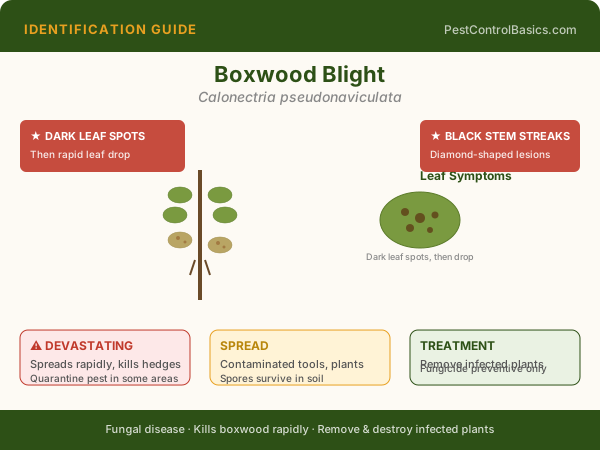
Boxwood Blight (fungal disease — Calonectria pseudonaviculata): Tan/straw spots on leaves with dark borders; leaves drop rapidly; black streaking on young stems; spreads rapidly in wet weather. NOT an insect problem — a fungal disease requiring fungicide.
Boxwood Leafminer (Monarthropalpus flavus): Blistering of leaves (look at leaf against light — you see a pocket); leaves turn orange-yellow; tiny orange-yellow flies in spring. IS an insect problem requiring systemic insecticide.
Boxwood Psyllid: Cupped/cupped new growth in spring; feeding damage visible on the inside of the cups; treated with imidacloprid.
🧬 Biology & Behavior
Boxwood blight spreads through water splash and contaminated pruning tools — the fungus can persist in soil for years. Boxwood leafminer is a tiny fly whose larvae mine between leaf surfaces, producing the characteristic blistering. Both cause leaf discoloration and drop but through completely different mechanisms.
⚠️ Damage & Health Risk
Defoliation; plant death in severe blight cases; reduced ornamental value; replacement cost for large established boxwoods can be significant.
🔧 DIY Treatment
Blight: remove infected plant material; apply labeled fungicide (chlorothalonil, tebuconazole); sterilize pruning tools between plants; avoid overhead irrigation. Leafminer: apply imidacloprid soil drench in early spring (April) to kill emerging larvae; permethrin spray in May at adult fly emergence.
👷 When to Call a Pro
For valuable boxwood hedges with established blight, a licensed arborist or plant pathologist should evaluate and develop a treatment program.