🀒 BMSB Agricultural Impact

Halyomorpha halys Β· Hemiptera: Pentatomidae

BMSB's fall home invasions get the headlines β€” but the real story is $21 billion in cumulative crop losses. Understanding agricultural impact explains why there's no easy solution.

Stink BugBMSBAgriculturalCrop DamageInvasiveBiological Control
🀒
Risk Level
Agricultural Pest
πŸ“ FIELD GUIDE ILLUSTRATION
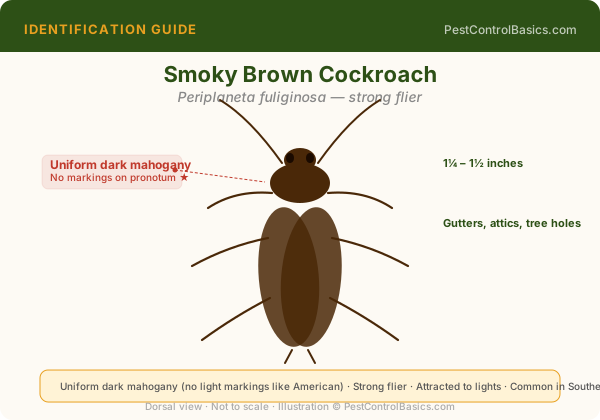
Smoky Brown Cockroach (Periplaneta fuliginosa) identification illustration with labeled anatomical features β€” PestControlBasics.com

Original illustration by PestControlBasics.com. Use anatomical labels above to confirm your identification.
πŸ“ FIELD GUIDE ILLUSTRATION
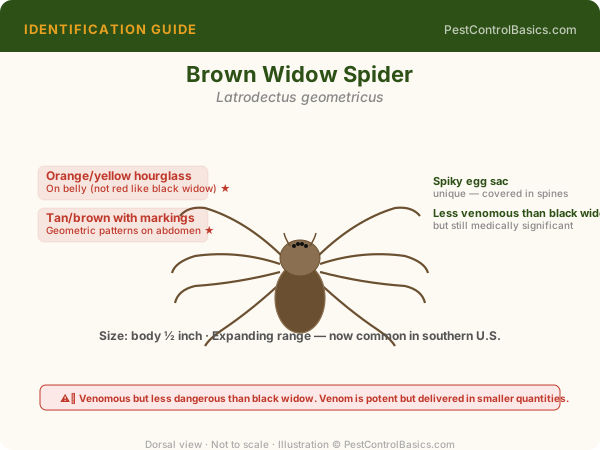
Brown Widow (Latrodectus geometricus) identification illustration with labeled anatomical features β€” PestControlBasics.com

Original illustration by PestControlBasics.com. Use anatomical labels above to confirm your identification.
πŸ“ FIELD GUIDE ILLUSTRATION
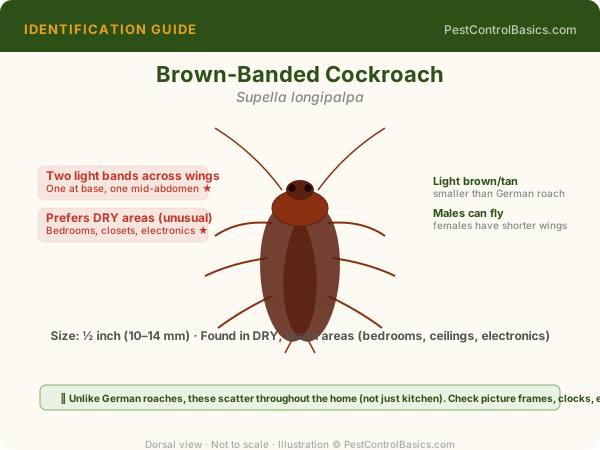
Brown Banded Cockroach (Supella longipalpa) identification illustration with labeled anatomical features β€” PestControlBasics.com

Original illustration by PestControlBasics.com. Use anatomical labels above to confirm your identification.

πŸ”¬
PestControlBasics Editorial Team
Reviewed by Derek Giordano Β· Updated 2026

πŸ” Identification

BMSB feeds on 300+ plant species using piercing-sucking mouthparts. Crop damage: apples and pears (corky spots and cat-facing under skin); peaches (internal brown streaks); corn (kernel discoloration and abortion); soybeans (seed shriveling). The damage is cosmetic but causes commodity grade failure β€” making economically sound fruit unmarketable.

🧬 Biology & Behavior

Mid-Atlantic apple orchards lost 37-50% of their crop value in 2010 β€” the year BMSB pressure peaked in that region. Total estimated US agricultural losses: $21 billion through 2023. The pest's biological control is limited β€” native predators don't control it effectively, and it has developed resistance to some pyrethroid sprays in high-pressure areas.

⚠️ Damage & Health Risk

Crop losses in fruit, vegetable, and grain production; cosmetic damage causing market grade failures; significant economic impact on mid-Atlantic and Pacific Northwest agriculture; expanding losses as range increases.

πŸ”§ DIY Treatment

Residential: September bifenthrin perimeter spray (same as nuisance management). Agricultural: pheromone lures for monitoring; pyrethroid sprays timed to adult entry in orchards; exclusion netting (the most effective but expensive approach) for high-value tree fruits.

πŸ‘· When to Call a Pro

USDA APHIS has released the samurai wasp (Trissolcus japonicus) β€” a host-specific egg parasitoid from Asia β€” as biological control. Early release results are promising, showing 60-80% egg parasitism in some orchards.

❓ FAQ

Why can't we just spray to stop stink bugs?
BMSB populations are enormous and mobile β€” they fly in from surrounding regions after any spray treatment. Orchard sprays kill bugs on the tree but are immediately repopulated from field margins and woodlands. Exclusion netting that physically prevents entry is the only approach providing sustained protection in high-value orchards.
What is the samurai wasp and does it work?
Trissolcus japonicus is a tiny parasitoid wasp native to Asia that parasitizes BMSB eggs β€” the same host-specificity relationship that keeps BMSB controlled in its native range. Released by USDA in 2021, early monitoring shows establishment and 60-80% egg parasitism in some mid-Atlantic orchards. It's the most promising long-term biological control option.
πŸ“š Sources: CDC Rodent Control Β· EPA Rodenticide Safety
Published: Jan 1, 2025 Β· Updated: Apr 7, 2026
🧪 Recommended Treatment Products
Rodenticide Comparison Bromethalin Zinc Phosphide IPM Guide Bifenthrin
Full product guides with mixing rates and safety info. → Browse All 130 Pesticide Guides

πŸ—ΊοΈ US Distribution β€” Stink Bug Agricultural Damage

image/svg+xml
Common Occasional Not Present
States Present
32
Occasional
6
Primary Region
Eastern United States
πŸ“Š Source: University extension services, USDA, CDC vector data, and published entomological surveys.