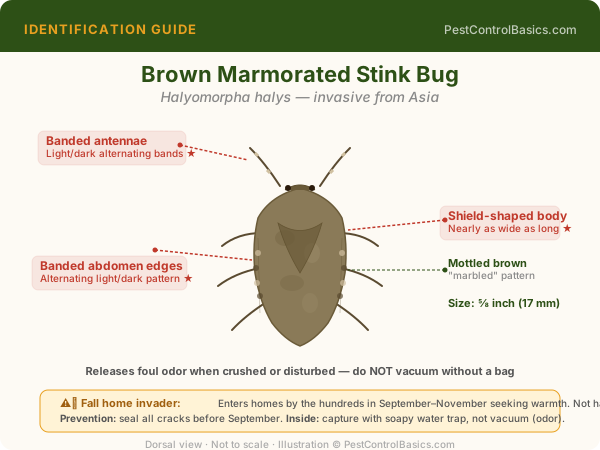
Illustrated identification guide — PestControlBasics.com
🔍 Identification
BMSB preferentially attacks: apples (cosmetic damage from injection sites creating corky, pitted areas), peaches (internal necrosis), sweet corn (kernel damage), soybeans (seed shriveling), peppers, tomatoes, grapes, and blueberries. Host plant preference varies by season — early summer: weeds and tree fruit; late summer: soybean, corn, vegetables.
🧬 Biology & Behavior
BMSB causes three types of damage: external injection site damage (cosmetic pitting), direct internal feeding damage, and secondary pathogen entry through feeding wounds. Organic orchards suffer disproportionately because the only effective management requires synthetic insecticides — kaolin clay and other OMRI-listed products provide limited protection.
⚠️ Damage & Health Risk
Annual agricultural losses exceeding $37 million in the mid-Atlantic; up to 90% of apple crops damaged in outbreak years; expansion of economic losses as BMSB spreads; disproportionate impact on organic and reduced-spray operations.
🔧 DIY Treatment
Border spray programs (treating only the orchard perimeter) are most effective for tree fruit — 85% of BMSB enters through orchard perimeters. Kaolin clay provides partial protection in organic systems. Samurai wasp (Trissolcus japonicus) — BMSB's natural egg parasitoid from Asia — has been released and is establishing in several states, offering long-term biological control hope.
👷 When to Call a Pro
Commercial fruit and vegetable operations should consult state extension IPM resources for current registered products and border spray guidelines specific to their crops.