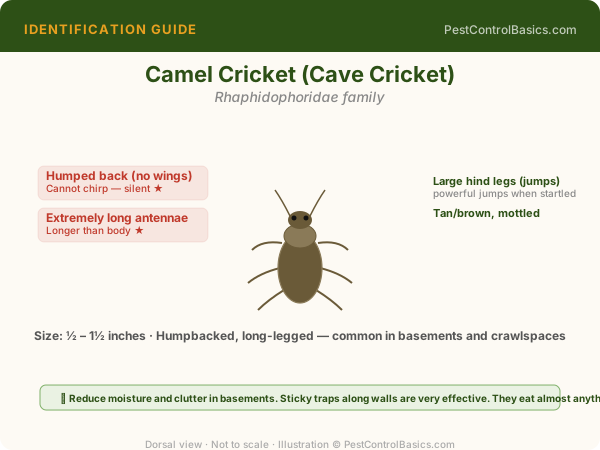
Original illustration by PestControlBasics.com. Use anatomical labels above to confirm your identification.
🔍 Identification
Adults: 13-33mm; humpbacked appearance (arched thorax — the source of both common names); brown to tan; extremely long antennae; very long hind legs; no wings; no chirping (they're silent). Eyes: small. Jump toward threats (seeking shelter in the threat's shadow — an instinct that surprises people). Found in: basements, crawl spaces, garages, caves, and anywhere dark and moist.
🧬 Biology & Behavior
Camel crickets require high humidity to survive. They feed on fungi, decaying organic matter, and occasionally fabrics and cardboard. Their erratic jumping toward perceived threats is startling but is an escape behavior — they're seeking darkness. They cannot bite, sting, or cause harm. Large populations in basements indicate chronically high humidity that could support other moisture-dependent pests.
⚠️ Damage & Health Risk
Psychological distress from appearance and jumping behavior; minor fabric and cardboard damage in heavy infestations; indicator of basement moisture problem.
🔧 DIY Treatment
Dehumidifier reducing humidity below 50% is the complete long-term solution. Sticky traps capture individuals. Bifenthrin spray along baseboard reduces numbers. The camel crickets disappear when moisture is corrected.
👷 When to Call a Pro
Never warranted specifically for camel crickets — address moisture.