πŸ¦— Cat Scratch Disease / Bartonella

Bartonella henselae (bacteria) Β· Medical / Disease Vector

Cat scratch disease isn't really from scratches β€” it's from flea dirt (dried flea feces) that contaminated a cat's claws. Flea control prevents the disease, not scratch prevention.

BartonellaCat Scratch DiseaseFlea-TransmittedPublic HealthDisease VectorPrevention
πŸ¦—
Risk Level
Cat / Flea Disease
πŸ”¬
PestControlBasics Editorial Team
Reviewed by Derek Giordano Β· Updated 2026
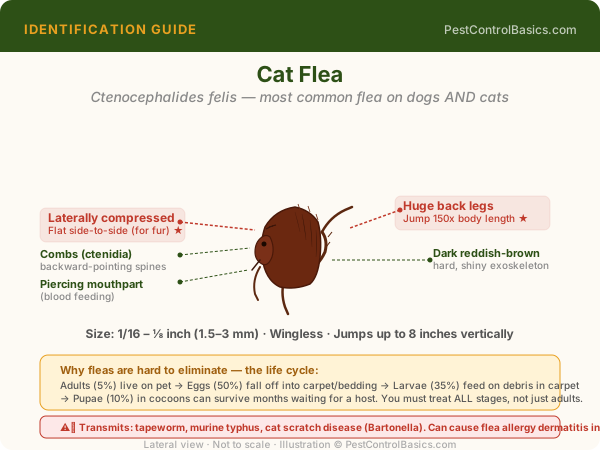
Cat Scratch Disease identification guide illustration

Illustrated identification guide β€” PestControlBasics.com

πŸ” Identification

Cat scratch disease (CSD): bacterial infection from Bartonella henselae, transmitted when flea dirt (dried flea feces containing bacteria) on a cat's claws or saliva enters a scratch wound. Symptoms: swollen lymph node near the scratch site, fever, fatigue β€” resolves in 2-4 months. Severe forms: encephalitis, bacillary angiomatosis (in immunocompromised individuals). Cats are asymptomatic carriers β€” they're infected by fleas and don't show disease signs.

🧬 Biology & Behavior

The transmission chain: Fleas feed on Bartonella-infected cats β†’ flea feces contain Bartonella β†’ feces contaminate cat fur and claws β†’ cat scratches human β†’ bacteria enter wound. Cats are not themselves sick and not directly contagious. The prevention solution is flea control on the cat, not avoiding cats or preventing all scratches.

⚠️ Damage & Health Risk

Bartonella infection causing lymph node swelling, fever, and fatigue; severe complications in immunocompromised individuals; rarely, ocular, neurological, or systemic complications.

πŸ”§ DIY Treatment

Year-round veterinary flea control on cats (Revolution Plus, Bravecto) reduces the flea burden that transmits Bartonella to cats. Wash hands after handling cats. Clean scratches promptly with soap and water. Immunocompromised individuals should consult their physician about cat interaction precautions.

πŸ‘· When to Call a Pro

Veterinary prescription flea prevention is the most effective disease prevention measure β€” not avoiding cats.

❓ FAQ

If my cat has fleas, can I get cat scratch disease?
Risk is increased when cats carry fleas, because fleas transmit Bartonella to cats and leave flea dirt on their claws. Year-round flea control on cats significantly reduces Bartonella transmission to cats and therefore human CSD risk. Most flea-free cats do not carry Bartonella at detectable levels.
Should I get rid of my cat if I get cat scratch disease?
No β€” CSD in healthy people is self-limiting and resolves in 2-4 months. The intervention is treating fleas on the cat (eliminating the transmission source) and avoiding situations that cause deep scratches. Declawing is not recommended and doesn't address the underlying flea-Bartonella transmission chain.

πŸ“š More on This Topic

Related guides and profiles:

πŸ”— Rodent Control HubπŸ”— RodentsπŸ”— House MouseπŸ”— πŸ€ Norway Rat β€” Complete Elimination Guide
πŸ“š Sources: CDC Rodent Control Β· EPA Rodenticide Safety
Published: Jan 1, 2025 Β· Updated: Apr 7, 2026

πŸ—ΊοΈ US Distribution β€” Cat Scratch Disease and Bartonella

image/svg+xml
Common Occasional Not Present
States Present
51
Occasional
0
Primary Region
All 50 states (indoor pest)
πŸ“Š Source: University extension services, USDA, CDC vector data, and published entomological surveys.