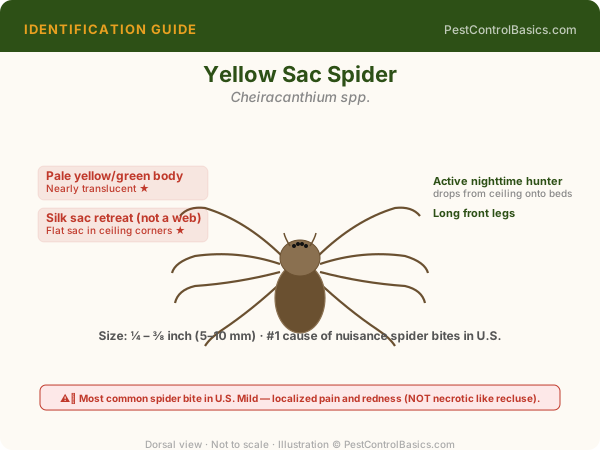
Original illustration by PestControlBasics.com. Use anatomical labels above to confirm your identification.
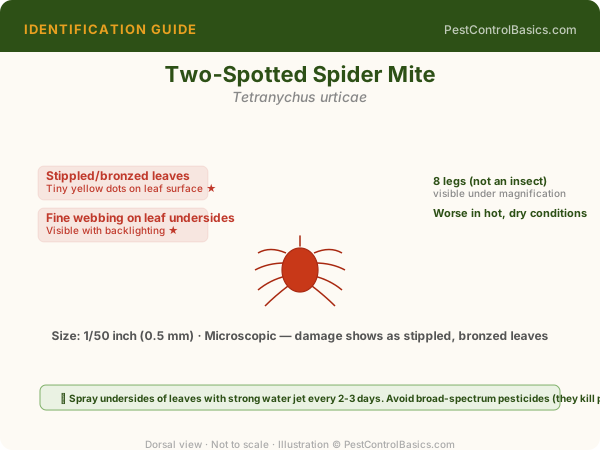
Original illustration by PestControlBasics.com. Use anatomical labels above to confirm your identification.
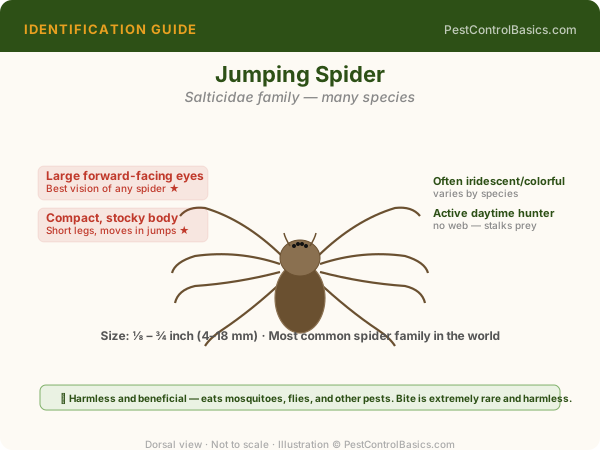
Original illustration by PestControlBasics.com. Use anatomical labels above to confirm your identification.
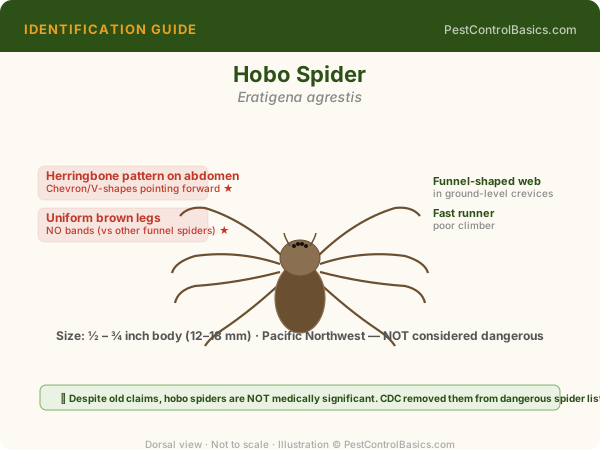
Original illustration by PestControlBasics.com. Use anatomical labels above to confirm your identification.
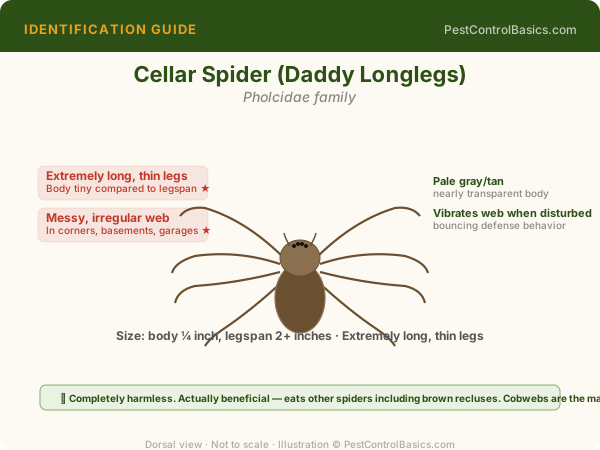
Original illustration by PestControlBasics.com. Use anatomical labels above to confirm your identification.
🔍 Identification
Adults: 8-10mm body; extremely long, thin legs (span of 70mm+); translucent grey-brown body; irregular, tangled web in corners. Confused with harvestmen ('daddy long legs'), which are not spiders. Cellar spiders are true spiders with 8 legs, two body segments, and produce silk. Harvestmen have one body segment and produce no silk.
🧬 Biology & Behavior
Cellar spiders are highly effective predators — they capture and kill prey much larger than themselves, including other spiders (including black widows in their range overlap). When disturbed, they vibrate rapidly in their web — this movement deters predators. They prey on flies, mosquitoes, and other insects caught in their webs.
⚠️ Damage & Health Risk
Messy, irregular webs in corners and ceiling junctions — the primary aesthetic concern. Zero damage, zero biting risk (their small chelicerae can't penetrate human skin in most cases). Actually beneficial by reducing other pest populations.
🔧 DIY Treatment
No treatment warranted. If web accumulations are the concern: vacuum down webs periodically. Reducing other insects (their prey) reduces cellar spider populations naturally.
👷 When to Call a Pro
Never warranted.