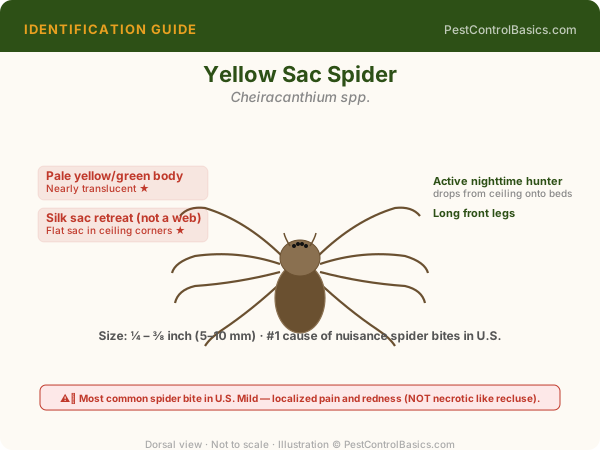
Original illustration by PestControlBasics.com. Use anatomical labels above to confirm your identification.
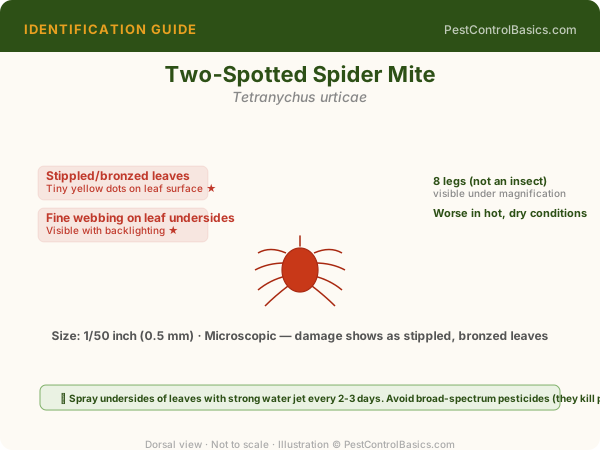
Original illustration by PestControlBasics.com. Use anatomical labels above to confirm your identification.
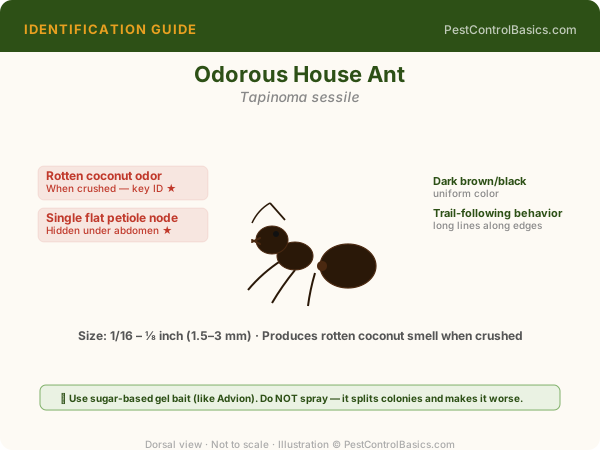
Original illustration by PestControlBasics.com. Use anatomical labels above to confirm your identification.
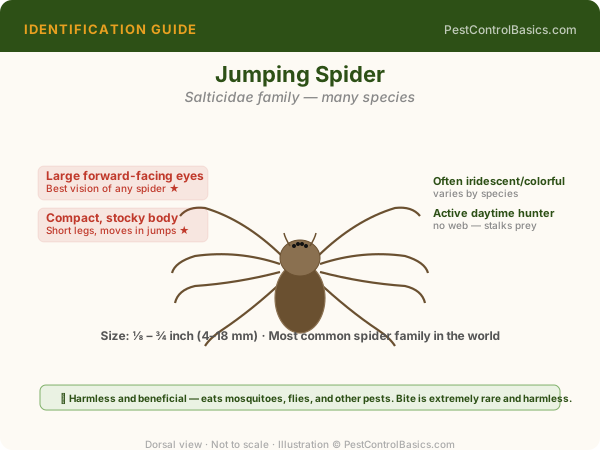
Original illustration by PestControlBasics.com. Use anatomical labels above to confirm your identification.
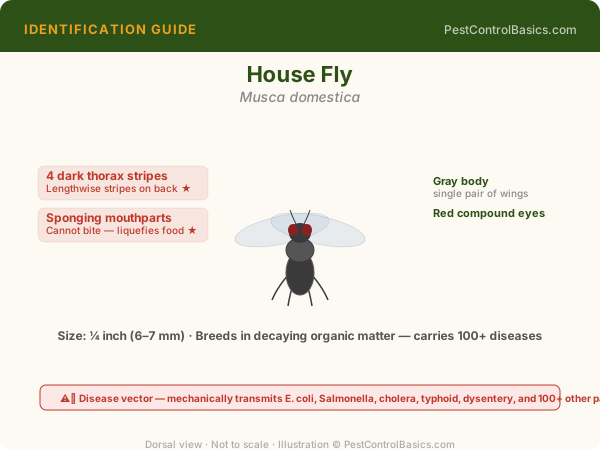
Original illustration by PestControlBasics.com. Use anatomical labels above to confirm your identification.
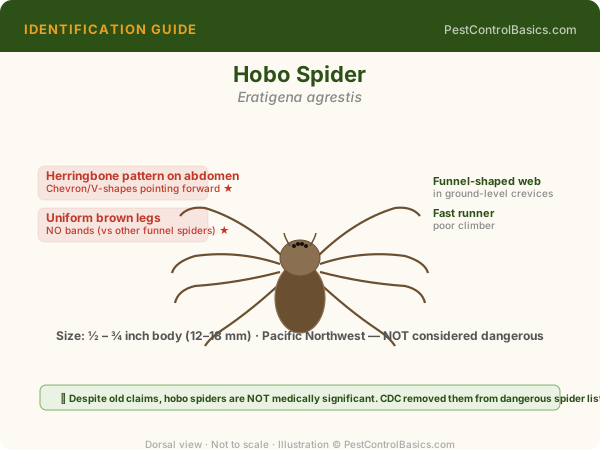
Original illustration by PestControlBasics.com. Use anatomical labels above to confirm your identification.
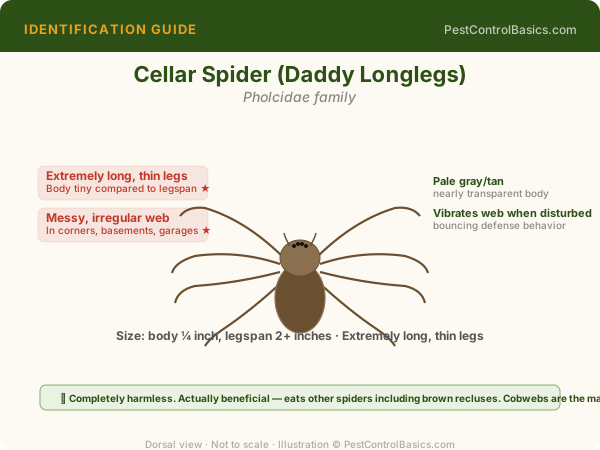
Original illustration by PestControlBasics.com. Use anatomical labels above to confirm your identification.
🔍 Identification
The most commonly encountered house spiders:
- Common House Spider (Parasteatoda tepidariorum): Tan/brown with mottled pattern; irregular cobwebs in corners; most commonly seen indoors; harmless
- Cellar Spider (Pholcus phalangioides): Very long thin legs; 'daddy long-legs spider'; vibrates web when disturbed; harmless
- Bold Jumping Spider: Black with white markings; excellent vision; curious behavior; harmless
- Yellow Sac Spider: Pale yellow; silk sac retreats in wall-ceiling junctions; mild defensive bite
- Cobweb Spider: Various brown species building messy cobwebs; mostly harmless
- Wolf Spider: Large, fast, ground-hunting; intimidating but harmless
🧬 Biology & Behavior
Most house spiders are accidental immigrants that wander in from outdoors or are carried in on wood, plants, or belongings. They're primarily beneficial — consuming pest insects. Cellar spiders actively hunt and kill other spiders, including occasional black widows.
⚠️ Damage & Health Risk
Nearly zero for most species. Web nuisance (cosmetic). Yellow sac spider defensive bites are the primary concern — possible but rarely significant. Spiders in the home actually reduce other pest insect populations.
🔧 DIY Treatment
Reduce clutter (spider harborage). Vacuum webs and egg sacs regularly. Reduce outdoor lighting (reduces prey insects). Seal exterior gaps. Apply residual bifenthrin along baseboards if control is needed. Sticky trap monitors capture spiders and provide population data.
👷 When to Call a Pro
For very high populations or if venomous species are present (black widows, brown recluse), professional treatment is worthwhile.