πŸ•·οΈ Yellow Sac Spider

Cheiracanthium inclusum Β· Araneae: Cheiracanthiidae

Yellow sac spiders are responsible for more US spider bites than any other species β€” yet most people have never heard of them. They're the pale yellow spiders that build flat silk retreats in the upper corners of rooms.

SpiderBite RiskAraneaeCommonIndoorsSilk Sac
πŸ•·οΈ
Risk Level
Mild Bite Risk
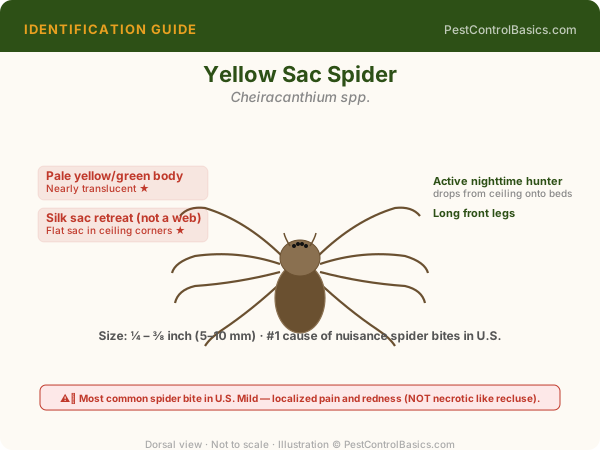
πŸ“ FIELD GUIDE ILLUSTRATION
Yellow Sac Spider (Cheiracanthium spp.) identification illustration with labeled anatomical features β€” PestControlBasics.com

Original illustration by PestControlBasics.com. Use anatomical labels above to confirm your identification.
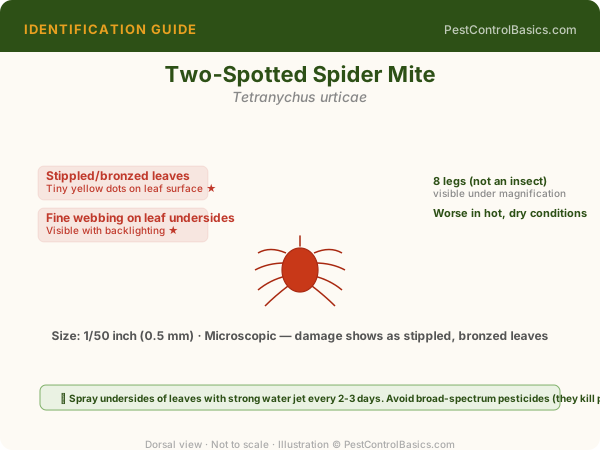
πŸ“ FIELD GUIDE ILLUSTRATION
Spider Mite (Tetranychidae) identification illustration with labeled anatomical features β€” PestControlBasics.com

Original illustration by PestControlBasics.com. Use anatomical labels above to confirm your identification.
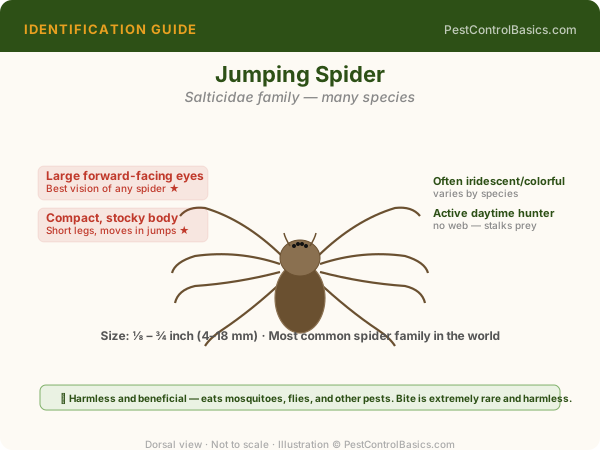
πŸ“ FIELD GUIDE ILLUSTRATION
Jumping Spider (Salticidae) identification illustration with labeled anatomical features β€” PestControlBasics.com

Original illustration by PestControlBasics.com. Use anatomical labels above to confirm your identification.
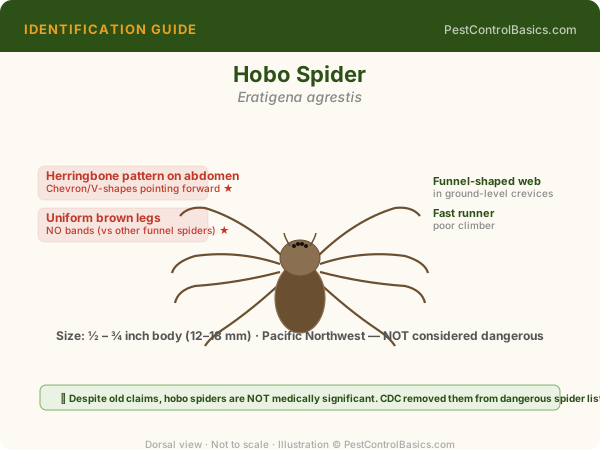
πŸ“ FIELD GUIDE ILLUSTRATION
Hobo Spider (Eudioptilus agrestis) identification illustration with labeled anatomical features β€” PestControlBasics.com

Original illustration by PestControlBasics.com. Use anatomical labels above to confirm your identification.
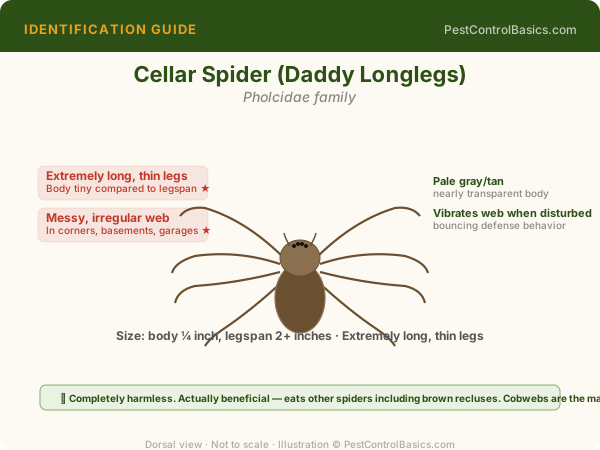
πŸ“ FIELD GUIDE ILLUSTRATION
Cellar Spider (Pholcidae) identification illustration with labeled anatomical features β€” PestControlBasics.com

Original illustration by PestControlBasics.com. Use anatomical labels above to confirm your identification.

πŸ”¬
PestControlBasics Editorial Team
Reviewed by Derek Giordano Β· Updated 2026

πŸ” Identification

Pale yellow to light green color; 5-10mm body; long, slender legs. Builds a flat silken retreat (sac) in corners, behind picture frames, and where walls meet ceilings. Unlike web-building spiders, sac spiders are active hunters that roam at night.

Distinguish from brown recluse: yellow sac spiders are pale (not brown), have 8 eyes in 2 rows of 4 (brown recluse has 6 eyes in 3 pairs), lack the violin marking, and are found throughout the US (brown recluse is primarily south-central US).

🧬 Biology & Behavior

Active hunters β€” they don't use webs to catch prey. They emerge at night and run rapidly along walls and ceilings hunting small insects. Bites typically occur when a person rolls onto a spider in bed or puts on clothing with a spider inside.

⚠️ Damage & Health Risk

Yellow sac spiders can bite defensively. The bite causes immediate sharp pain, followed by localized redness, swelling, and sometimes a small lesion. Symptoms resolve in 1-3 days in most cases. Severe systemic reactions are rare but documented.

πŸ”§ DIY Treatment

Vacuum silk sacs and egg sacs from corners regularly. Apply residual insecticide (bifenthrin, lambda-cyhalothrin) along baseboards and in ceiling corners. Sticky traps placed in corners catch active individuals. Reduce exterior lighting that attracts the insects that attract sac spiders.

πŸ‘· When to Call a Pro

Rarely necessary. For very large populations or if bites are occurring regularly, a professional treatment with microencapsulated pyrethroid provides better corner coverage than typical DIY spray applications.

❓ FAQ

Is the yellow sac spider bite dangerous?
Yellow sac spider bites cause local pain and swelling but are rarely medically significant. They're not medically significant in the way black widow or brown recluse bites can be. Most symptoms resolve within 1-3 days. Seek medical care if you develop signs of infection at the bite site.
How do I know if a spider is a yellow sac spider?
Pale yellow to light green color, 8 eyes in two equal rows, builds a flat silken sac retreat in corners and upper wall areas. Active at night, rarely seen in the open during the day. Found throughout the US β€” unlike brown recluse, which is primarily south-central US.
πŸ“š Sources: CDC Venomous Spiders Β· EPA Safe Pest Control
Published: Jan 1, 2025 Β· Updated: Apr 7, 2026

πŸ—ΊοΈ US Distribution β€” Yellow Sac Spider

image/svg+xml
Common Occasional Not Present
States Present
49
Occasional
2
Primary Region
Continental US
πŸ“Š Source: University extension services, USDA, CDC vector data, and published entomological surveys.