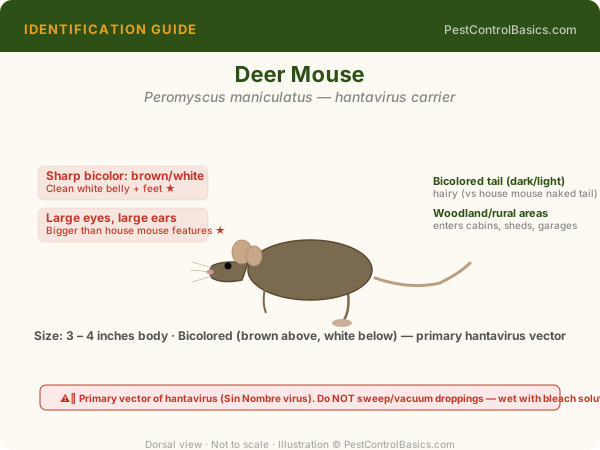
Original illustration by PestControlBasics.com. Use anatomical labels above to confirm your identification.
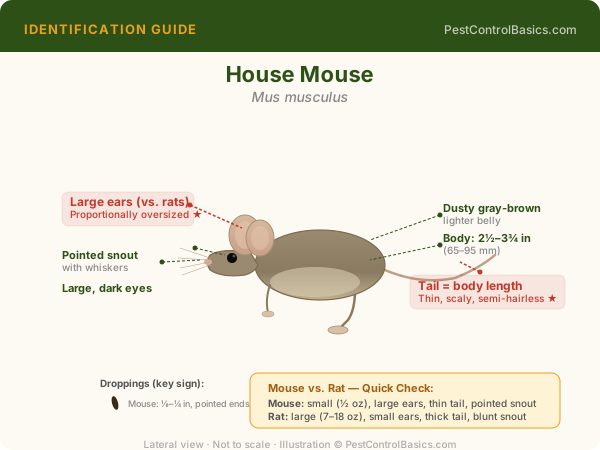
Original illustration by PestControlBasics.com. Use anatomical labels above to confirm your identification. For photo references, see the identification section below.
🔍 Identification
Deer mouse: bicolored — brown/grey on top, white underneath (belly and feet white); white underside of tail (tail is bicolored). House mouse: uniformly grey/brown; no distinct bicoloring. Deer mouse ears are larger proportionally. Range: deer mice are widespread throughout North America, especially rural and western areas; most common in wooded and rural settings.
🧬 Biology & Behavior
Deer mice are the primary reservoir for Sin Nombre virus — the hantavirus species responsible for Hantavirus Pulmonary Syndrome (HPS) in the US. They shed the virus in urine, droppings, and saliva throughout their lives without becoming ill. Transmission to humans occurs primarily through inhalation of aerosolized dried rodent droppings or urine.
⚠️ Damage & Health Risk
Hantavirus Pulmonary Syndrome (HPS): fever, muscle aches followed by rapid respiratory failure; 35-40% fatality rate; no specific treatment. Most cases occur in rural/suburban western US. Highest risk: cleaning seldom-used cabins, barns, or sheds where deer mice have nested.
🔧 DIY Treatment
Prevention: seal all rodent entry points. Snap traps in affected areas. CRITICAL CLEANUP PROTOCOL: Ventilate the space for 30 minutes before entering. Wear N95 mask and rubber gloves. Wet droppings with bleach solution (1 part bleach:9 parts water) before pickup — NEVER sweep or vacuum dry droppings. Double-bag all material. Wash hands thoroughly.
👷 When to Call a Pro
For heavily infested structures (cabins, barns, outbuildings) with significant droppings accumulation, professional wildlife cleanup is recommended — the cleanup process itself creates the highest exposure risk.