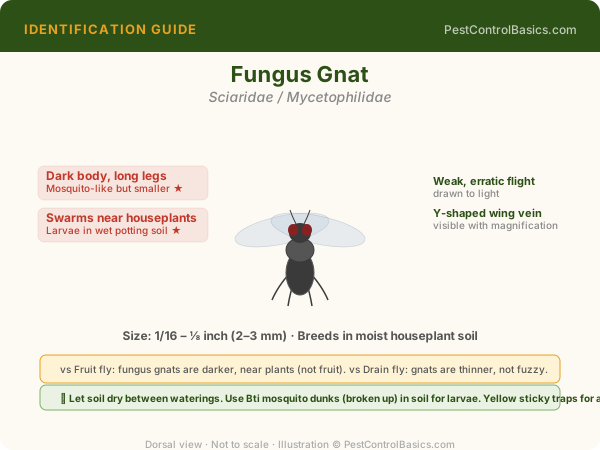
Original illustration by PestControlBasics.com. Use anatomical labels above to confirm your identification.
🔍 Identification Photo
Use this photo to confirm your identification. Click to enlarge. Correct ID is the essential first step to effective treatment.
Fungus gnat (Bradysia sp.) — long legs, antennae, Y-shaped wing vein; 2–3mm; looks like a tiny mosquito; does not bite; breeds in overwatered soil
📷 Wikipedia / Wikimedia Commons / CC BY-SA⚠️ Photo loaded live from Wikipedia/Wikimedia Commons (CC BY-SA). Appearance varies by region, age, and sex. When uncertain, contact a licensed pest professional.
Fungus gnat vs. fruit fly — easy to tell apart
Fungus gnats and fruit flies are both small and found in kitchens and living areas, but they're easy to distinguish and have completely different breeding sites:
Location: Fungus gnats hover specifically around houseplants and potting soil. Fruit flies hover near kitchen food areas. If it's hovering around your fiddle-leaf fig — fungus gnat. Near your fruit bowl — fruit fly.
Appearance: Fungus gnats look like tiny mosquitoes — dark gray/black, long legs, long antennae, wings held flat. Fruit flies are shorter and rounder with distinctive red eyes. Fruit flies are tan/yellow-brown; fungus gnats are dark gray to black.
Movement: Fungus gnats tend to walk and crawl on soil surface as well as fly. Fruit flies rarely land on soil. Seeing a tiny dark fly on the soil of a houseplant is a strong fungus gnat indicator.
Larvae first, then adults
The drying approach: Fungus gnat larvae need consistently moist soil in the top 2 inches to survive. Allow the top 2 inches of potting soil to dry completely between waterings. This kills larvae — they desiccate within 24–48 hours of the soil drying. This single change, if maintained consistently, breaks the fungus gnat cycle in 2–4 weeks.
Bti (Bacillus thuringiensis israelensis): The organic solution. Gnatrol WP or BTi-containing products watered into the soil kill fungus gnat larvae specifically — the bacteria produce toxins that are lethal to gnat larvae but harmless to plants, beneficial insects, pets, and humans. Water once weekly until populations drop.
Yellow sticky traps: Place yellow sticky cards horizontally at soil level — fungus gnats are attracted to yellow. Traps catch adults and provide a count of how many are present. Adult fungus gnats live only 1 week and cannot lay eggs without moist soil, so addressing the soil eliminates the next generation regardless of adults present.
Hydrogen peroxide drench: 1 part 3% hydrogen peroxide + 4 parts water watered into soil kills larvae on contact without harming plant roots. Soil foams briefly — this is normal. Effective for heavy infestations.