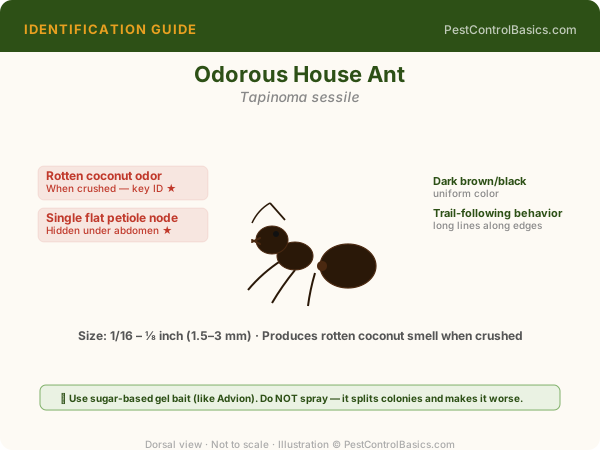
Original illustration by PestControlBasics.com. Use anatomical labels above to confirm your identification.
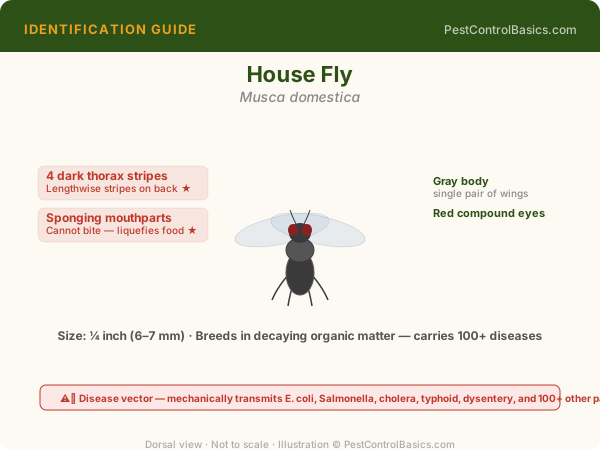
Original illustration by PestControlBasics.com. Use anatomical labels above to confirm your identification.
🔍 Identification
House Sparrow: 15cm; brown/grey; males have black bib; extremely abundant worldwide. Nests in vents, signs, equipment, eaves, and any cavity including dryer vents (fire hazard).
European Starling: 20-22cm; iridescent black with white speckles; very aggressive cavity nester; displaces native birds; flocks of thousands in winter (murmurations). Nests in HVAC equipment, wall voids, and any opening.
Important note: both are European introductions — neither is protected by MIGRATORY BIRD TREATY ACT. This makes management legally simpler than for protected native species.
🧬 Biology & Behavior
Both are extremely adaptable urban birds that evolved with European human settlement. Neither is native — house sparrows were introduced to the US in 1851; starlings in 1890 (100 were released in Central Park by someone who wanted to introduce all birds mentioned in Shakespeare). Both have become ecological problems by displacing native cavity-nesting birds.
⚠️ Damage & Health Risk
Dryer vent and HVAC blockages (fire and CO hazard); guano accumulation; noise; nest material creating moisture infiltration; mites and lice associated with nests entering occupied spaces; histoplasmosis risk from large starling roost accumulations.
🔧 DIY Treatment
Physical exclusion: heavy-duty vent covers for dryer vents, 1/2-inch hardware cloth over HVAC openings, netting over large areas. For active nests: remove nests repeatedly (both species are persistent re-nesters). Lethal control is legally permitted without federal permits for these two species — check state law.
👷 When to Call a Pro
For large commercial building exclusion systems (netting, electric track, structural modifications) or large roost dispersal programs, professional bird control companies provide systematic solutions.