Original illustration by PestControlBasics.com. Use anatomical labels above to confirm your identification.
Original illustration by PestControlBasics.com. Use anatomical labels above to confirm your identification.
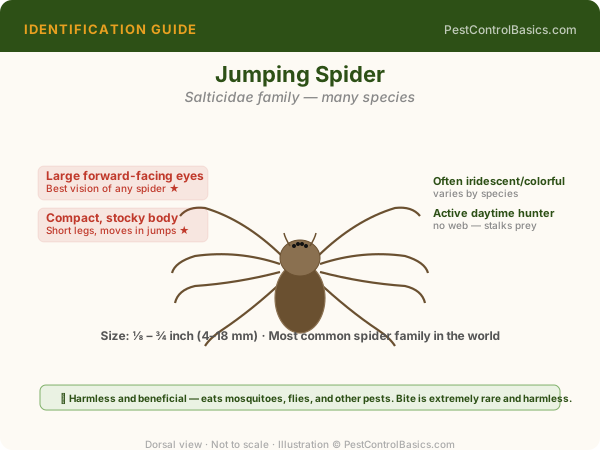
Original illustration by PestControlBasics.com. Use anatomical labels above to confirm your identification.
Original illustration by PestControlBasics.com. Use anatomical labels above to confirm your identification.
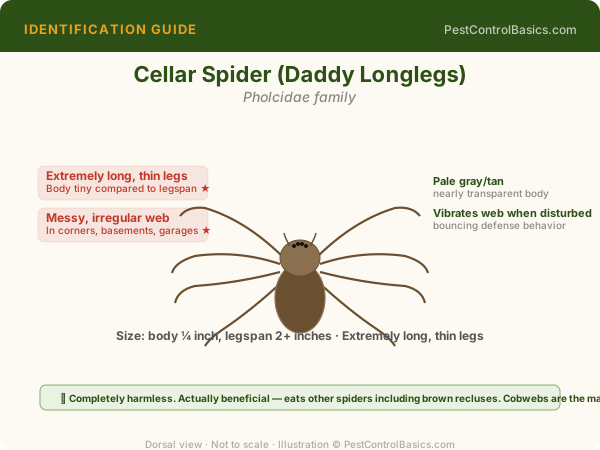
Original illustration by PestControlBasics.com. Use anatomical labels above to confirm your identification.
🔍 Identification
Bold Jumping Spider (Phidippus audax): 6-18mm; compact, stocky build; primarily black with white spots and iridescent green/blue chelicerae (fangs); distinctive large front pair of eyes giving a 'big-eyed' appearance. Other jumping spider species: extremely diverse, often brightly colored. Found hunting on walls, fences, vegetation, and window frames during daylight.
🧬 Biology & Behavior
Jumping spiders don't build capture webs — they're active hunters with the best vision of any spider family. Forward-facing main eyes provide stereoscopic depth perception for accurate pouncing. They can see in color, including UV wavelengths. Diurnal and curious — they actively investigate moving objects, including humans.
⚠️ Damage & Health Risk
Zero. Jumping spiders are entirely beneficial, consuming significant numbers of pest insects. They're the most species-rich spider family and occur on every continent except Antarctica.
🔧 DIY Treatment
No treatment warranted or appropriate. If found indoors, gently capture and release — they're helpful pest predators. Their jumping ability and tendency to run toward a perceived threat (out of curiosity, not aggression) sometimes startles people.
👷 When to Call a Pro
Never warranted.