Illustrated identification guide — PestControlBasics.com
🔍 Identification
Kudzu vine is the primary host plant for kudzu bugs (Megacopta cribraria) — without kudzu, kudzu bug populations would be dramatically lower. Kudzu's prolific growth also provides harborage for Japanese beetles, spotted lanternfly populations, and dense deer habitat that increases tick pressure. It's a pest ecosystem rather than simply an invasive weed.
🧬 Biology & Behavior
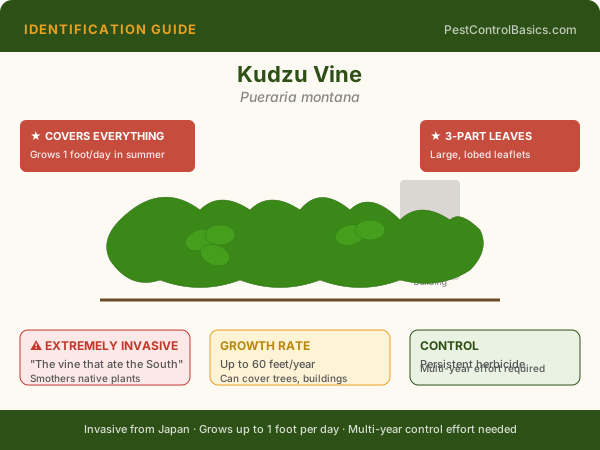
Kudzu grows up to 1 foot per day in summer and can cover entire trees, buildings, and utility poles. It's established from Florida to New England along the East Coast and spreading. Female kudzu plants host the highest kudzu bug populations. Kudzu's nitrogen fixation supports fertile conditions that favor pest species.
⚠️ Damage & Health Risk
Direct structural damage to buildings as vines infiltrate; destruction of native vegetation under kudzu canopy; amplification of kudzu bug, spotted lanternfly, and Japanese beetle populations near structures; dense harborage for deer increasing tick-borne disease risk nearby.
🔧 DIY Treatment
Control kudzu near property using: triclopyr (Garlon) herbicide applied to cut stems (most effective for established patches); mowing repeatedly in summer to exhaust root reserves; goats (rental grazing flocks are used commercially for kudzu removal). Reducing kudzu within 200 yards significantly reduces kudzu bug and some other pest populations.
👷 When to Call a Pro
USDA APHIS coordinates kudzu biological control programs using several host-specific insects from Asia that attack kudzu without harming other plants.