HomePest LibraryOrb Weaver Spiders
Completely Harmless — Highly Beneficial
🕸

Orb Weaver Spiders

Argiope aurantia, Larinioides & many others

The architects of the classic circular orb web. Orb weavers are among the most visually striking spiders in North America — large, boldly patterned, and building webs that catch morning dew. Completely harmless and they consume enormous numbers of flying insects every night.

Venom dangerNone — not medically significant
Web typeClassic circular orb — 2 feet diameter possible
Beneficial?Highly — catches flying insects
Common speciesBlack and yellow garden spider (Argiope)
Should you remove?Rarely — they help your garden
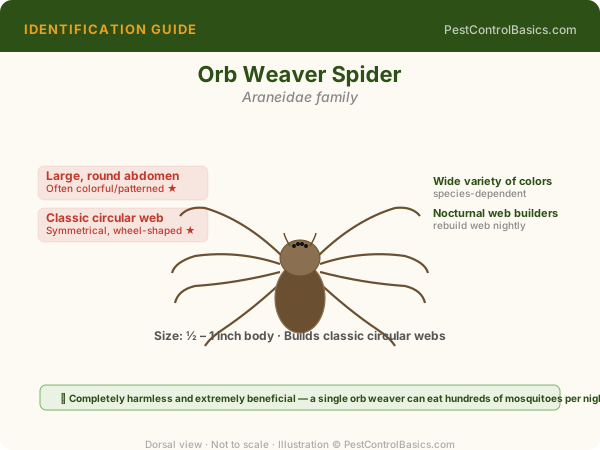
📐 FIELD GUIDE ILLUSTRATION
Orb Weaver (Araneidae) identification illustration with labeled anatomical features — PestControlBasics.com

Original illustration by PestControlBasics.com. Use anatomical labels above to confirm your identification.

🔍 Identification Photo

Use this photo to confirm your identification. Click to enlarge. Correct ID is the essential first step to effective treatment.

Orb-weaver spider (Araneidae) — builds classic spiral web; rebuilt nightly; the zigzag stabilimentum in Argiope webs is

Orb-weaver spider (Araneidae) — builds classic spiral web; rebuilt nightly; the zigzag stabilimentum in Argiope webs is unique to those species

📷 Wikipedia / Wikimedia Commons / CC BY-SA

⚠️ Photo loaded live from Wikipedia/Wikimedia Commons (CC BY-SA). Appearance varies by region, age, and sex. When uncertain, contact a licensed pest professional.

The Orb Web

How it's built and why

The classic circular spider web — the one in every Halloween decoration — is built by orb weavers. It is one of the most complex structures produced by any invertebrate. An adult female may build a new web every night, eating the old one and recycling the protein.

Construction sequence: The spider first creates a frame of non-sticky silk, then a hub at the center, then radial threads from hub to frame, and finally a spiral of sticky capture silk. The whole process takes 30–60 minutes. The web is precisely engineered — radial threads are stiffer for structure while capture spiral threads are elastic to absorb impact.

The stabilimentum: Many orb weavers add a zigzag or X-shaped band of thicker, white silk through the center of the web. Its function is debated — possibilities include making the web visible to large animals (preventing accidental damage), reflecting UV light to attract insects, or providing camouflage for the spider. The garden spider (Argiope) is famous for this feature.

Nightly catch: A single orb weaver can catch 2,000+ flying insects in a season — mosquitoes, gnats, flies, moths, and other crop pests. In gardens, they provide significant free pest control.

Common Species & Control

Identification and the case for leaving them

Black and yellow garden spider (Argiope aurantia): Large, striking yellow and black female, zigzag stabilimentum, found in gardens and meadows. Among the most visible garden spiders in the eastern U.S. Completely harmless.

Cross orb weaver (Larinioides sclopetarius): Gray-brown with pale cross pattern on abdomen. Common near porch lights (which attract their prey). Frequently builds webs on structures.

Should you remove garden orb weavers? In most cases, no. They are actively catching pest insects and their webs are only a seasonal presence — adults die with the first frost. The egg sac they leave behind hatches in spring, but the tiny spiderlings disperse immediately and don't create an indoor problem.

If placement is problematic: Gently move the web with a stick to a more convenient location in the same garden. The spider will rebuild nearby. To eliminate completely, break the web and the spider will relocate.

Quick Reference
Size0.5–1.5 inches body (female — much larger)
MaleTiny — 1/4 of female size
WebLarge circular orb, often with stabilimentum
StabilimentumZigzag or X of thicker silk — some species
DietFlying insects — mosquitoes, flies, moths
SeasonAdults visible July–November
Egg sacBrown papery — suspended in web or nearby
Bites?Virtually never — not defensive
Related Guides
🕷 All Spider Control →🕷 Jumping Spider →🌿 Garden Pest Control →
Not sure? AI Bug ID →Find a Pro →
📚 Sources: EPA Termite Guide · NPMA Termite Info
Published: Jan 1, 2025 · Updated: Apr 7, 2026
Orb Weaver Spiders
Orb Weaver Spiders

Frequently Asked Questions

How do I know if I have Orb Weaver Spiders?

Signs of Orb Weaver Spiders include physical sightings, droppings or frass, damage to food or materials, and unusual odors. Inspect hidden areas like wall voids, behind appliances, and in storage spaces. A flashlight inspection after dark is often most revealing.

Are Orb Weaver Spiders dangerous to humans or pets?

Orb Weaver Spiders can pose health risks including bites, allergic reactions, food contamination, and disease transmission. Children, elderly, and pets are especially vulnerable. Consult a pest management professional when an infestation is confirmed.

Can I eliminate Orb Weaver Spiders myself?

Light infestations may be manageable with DIY baits, traps, and targeted treatments. Established infestations typically require professional intervention. Misapplied products often scatter pests and worsen the problem long-term.

How long does Orb Weaver Spiders treatment take?

Timelines vary by infestation size and method. Baits may take 1–4 weeks to work through a colony. Chemical treatments often require 2–3 applications spaced 2–4 weeks apart. Monitor for 30–60 days after treatment to confirm elimination.

What attracts Orb Weaver Spiders to my home?

Orb Weaver Spiders are typically drawn by food sources, standing moisture, warmth, and shelter. Sealing entry points, reducing clutter, fixing leaks, and storing food in airtight containers are the most effective long-term prevention measures.

Related Resources

📚 Full Pest Library🧪 DIY vs. Pro Quiz💰 Cost Guide🌿 IPM Guide🔍 Find a Pro
🧪 Recommended Treatment Products
Bifenthrin Diatomaceous Earth Termiticide Comparison Fipronil (Termidor) Mosquito Control Guide
Full product guides with mixing rates and safety info. → Browse All 130 Pesticide Guides
🔮
Reviewed by Derek GiordanoContent on PestControlBasics.com is developed with input from certified pest management professionals and cross-referenced against EPA, CDC, and university extension guidance. Last reviewed: April 2026.

🗺️ US Distribution — Orb Weaver Spiders

image/svg+xml
Common Occasional Not Present
States Present
49
Occasional
2
Primary Region
Continental US
📊 Source: University extension services, USDA, CDC vector data, and published entomological surveys.