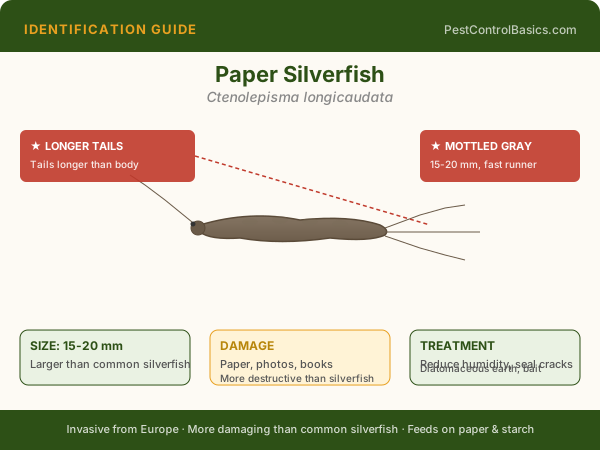
Illustrated identification guide — PestControlBasics.com
🔍 Identification
Common Silverfish (Lepisma saccharina): Silvery metallic scales; 10-12mm; three tail filaments of equal length; prefers cool, damp conditions (60-75°F, 75%+ humidity). Found in basements, bathrooms, laundry rooms.
Four-Lined Silverfish (Ctenolepisma lineata): Slightly larger (12-16mm); four dark dorsal lines visible; scales less shiny; tolerates drier conditions (60% RH); more common in attics, closets, and drier areas of homes. More common in the West and Southwest.
Both: wingless, carrot-shaped body, fast and agile, nocturnal.
🧬 Biology & Behavior
Both species reproduce slowly compared to most pest insects — females lay 1-3 eggs per day, and eggs take 3-6 weeks to hatch. Development to adult takes 3-24 months depending on temperature and humidity. Adults live 2-8 years — among the longest-lived insects. They molt throughout their lives (no fixed adult stage).
⚠️ Damage & Health Risk
Feed on starches and polysaccharides: paper, book bindings, wallpaper, sizing in fabrics, certain paints, and food containing starch. Characteristic feeding damage: irregular surface grazing and yellow staining. Most destructive in archives, libraries, and paper-stored closets.
🔧 DIY Treatment
Reduce humidity (most important): Dehumidifiers target below 50% RH. This alone can eliminate common silverfish populations.
CimeXa dust: Apply in wall voids, behind baseboards, and in attic insulation. Long-lasting and highly effective.
Dekko silverfish paks: Boric acid in paper pouches placed in bookshelves, closets, and attic spaces. Effective and extremely low-risk.
Seal entry points: Silverfish enter from attics and crawl spaces through gaps in baseboards and plumbing penetrations.
👷 When to Call a Pro
For four-lined silverfish infestations in attic insulation — a significant and hard-to-access infestation — professional dust application with power dusting equipment is worthwhile.