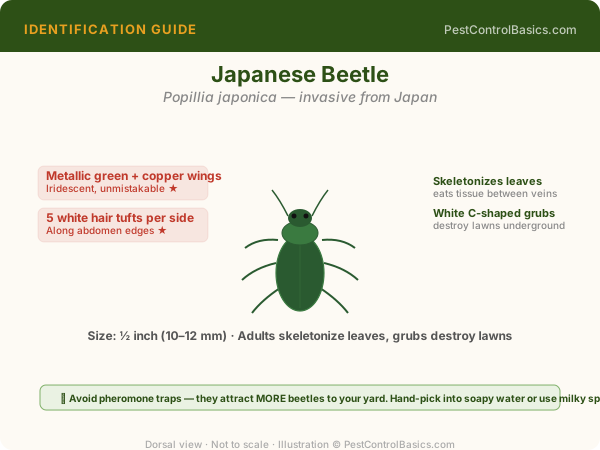
Original illustration by PestControlBasics.com. Use anatomical labels above to confirm your identification.
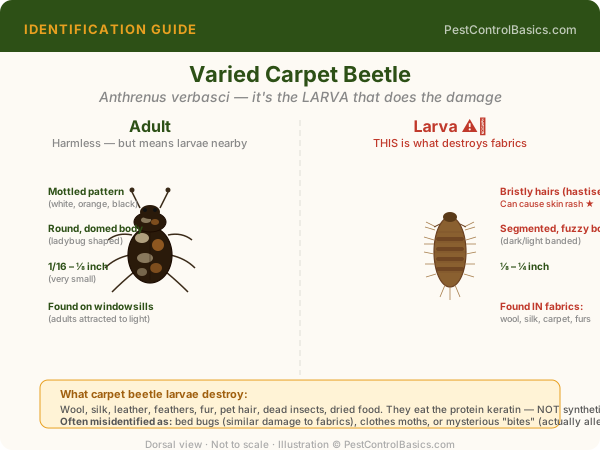
Original illustration by PestControlBasics.com. Use anatomical labels above to confirm your identification.
🔍 Identification
There are three main carpet beetle species:
- Varied Carpet Beetle (Anthrenus verbasci): Tiny (2-3mm), rounded, with multicolored scales of white, brown, and yellow in an irregular pattern. Adults found on flowers outdoors.
- Black Carpet Beetle (Attagenus unicolor): Slightly larger (3-5mm), uniformly black/dark brown, elongated oval shape.
- Furniture Carpet Beetle (Anthrenus flavipes): Similar to varied carpet beetle; white and yellow-orange scales.
Larvae (the damaging stage): Brown, hairy 'woolly bear' caterpillars, 4-8mm long. Look for them in the dark — under furniture, in closets, behind baseboards.
🧬 Biology & Behavior
Adults feed on pollen and nectar outdoors — they enter structures through open windows, cut flowers, and cracks. Larvae hatch from eggs laid in dark, undisturbed areas near food sources.
Larvae feed slowly over weeks to months on animal-derived natural fibers: wool, silk, fur, leather, feathers, and museum specimens. They can also feed on stored seeds and grain. Larvae cast shed skins (exuviae) as they grow — finding these is often the first sign of an infestation.
⚠️ Damage & Health Risk
Carpet beetle larvae cause irregular holes in natural fiber fabrics — distinguishable from moth damage by the absence of webbing (clothes moths spin silk tubes; carpet beetles do not). Damage patterns follow the beetle's movement path through fabric.
Annual losses to carpet beetles in US homes and museums runs into millions of dollars. Museum collections, vintage clothing, and taxidermy are particularly vulnerable.
🔧 DIY Treatment
Step 1 — Find the source: Inspect all wool, silk, fur, and feathers — especially items stored long-term. Check under furniture, in closets, behind baseboards, in bird/animal nests in the attic.
Step 2 — Remove and treat infested items: Dry clean affected items or freeze (0°F for 2 weeks) to kill all stages. Discard heavily infested items.
Step 3 — Vacuum thoroughly: Vacuum under furniture, along baseboards, in closet corners. Dispose of vacuum bag immediately.
Step 4 — Apply residual insecticide: Apply bifenthrin or permethrin spray along baseboards, under furniture, and in closet corners. CimeXa dust in wall voids and under baseboards provides long-term control.
Prevention: Store natural fiber items in sealed bags. Cedar blocks repel but don't kill larvae. Dry cleaning kills all stages before long-term storage.
👷 When to Call a Pro
Call a pro if the infestation is widespread, if you have valuable textiles or museum collections at risk, or if 4-6 weeks of DIY treatment hasn't eliminated the problem.