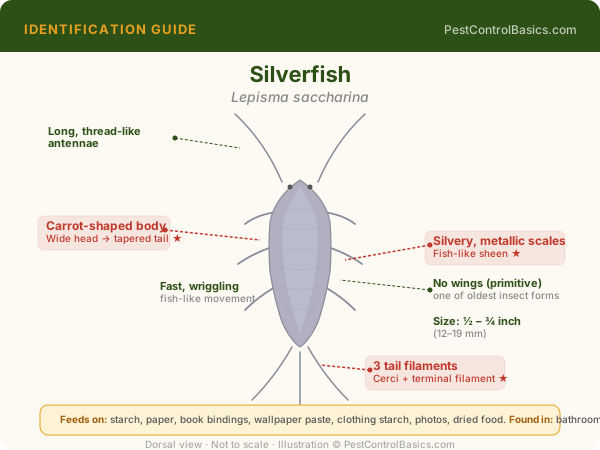
Original illustration by PestControlBasics.com. Use anatomical labels above to confirm your identification.
🔍 Identification Photo
Use this photo to confirm your identification. Click to enlarge.
Silverfish (Lepisma saccharina) — metallic silver scales, 3 tail filaments; fish-like wiggling motion; eats starches in paper, fabric, and wallpaper
📷 Wikipedia / Wikimedia Commons / CC BY-SA⚠️ Photo loaded live from Wikipedia/Wikimedia Commons (CC BY-SA).
⚠️ Photos loaded from Wikipedia/Wikimedia Commons. Appearance varies by region, age, and sex.
Silverfish are a humidity alarm
Silverfish have survived unchanged for 400 million years — predating dinosaurs — because they are extraordinarily efficient at finding moisture and food. They require high humidity (above 75% relative humidity) to reproduce and thrive. Finding silverfish in your home is an immediate signal that humidity in that area is too high.
Common high-humidity areas: bathrooms, basements, crawlspaces, kitchen under-sink areas, attics with inadequate ventilation, and areas around water heaters. If you're seeing silverfish regularly, a moisture meter inspection of those areas is warranted.
You can trap and poison silverfish indefinitely, but if the underlying humidity problem isn't addressed, they will continue to thrive and reproduce. A dehumidifier maintaining relative humidity below 50% makes the environment inhospitable for silverfish and dramatically accelerates any chemical treatment. This is the single most impactful silverfish control action you can take.
What They Eat — Why They're Damaging
Silverfish eat anything containing polysaccharides (starch, cellulose, dextrin) and proteins. They cause significant damage to paper goods, books, and natural fabrics. They prefer items with adhesive containing starch — old book bindings, envelope glue, wallpaper paste, and photo emulsions.
Desiccant + dehumidifier = permanent control
Silverfish control has two components: reduce humidity to make the environment hostile, and apply desiccant dust in harborage areas to kill existing populations. Sprays and baits work but are secondary to these two core approaches.
Protect what silverfish destroy
Store Valuables Properly
Books, photos, documents, and natural fiber clothing stored in areas with humidity fluctuations are at greatest risk. Store irreplaceable items in sealed hard plastic containers — silverfish cannot penetrate hard plastic. Use acid-free archival boxes for photos and documents. Cedar blocks in closets repel silverfish from fabric storage areas (cedar oil is a natural deterrent).
Reduce Entry Points
Silverfish enter through gaps around pipes, under doors, and through vents. Seal baseboards in high-humidity rooms. Install tight-fitting door sweeps. Screen attic vents. Caulk around all plumbing penetrations in bathrooms and kitchens.
Reduce Food Sources
Remove old cardboard boxes, newspaper stacks, and unused paper goods from basements, attics, and closets. Silverfish populations are limited by their food supply — reducing accessible starch and cellulose forces them to spread out or relocate. Use plastic bins for storage instead of cardboard boxes throughout the home.
Firebrats look nearly identical to silverfish but prefer hot, dry conditions rather than humid ones — they're often found near furnaces, hot water pipes, and attics in summer. Firebrats are brownish-mottled rather than solid silver. Treatment is the same (desiccant dust) but the humidity solution differs — firebrats don't require a dehumidifier, they require finding and reducing heat sources in affected areas.