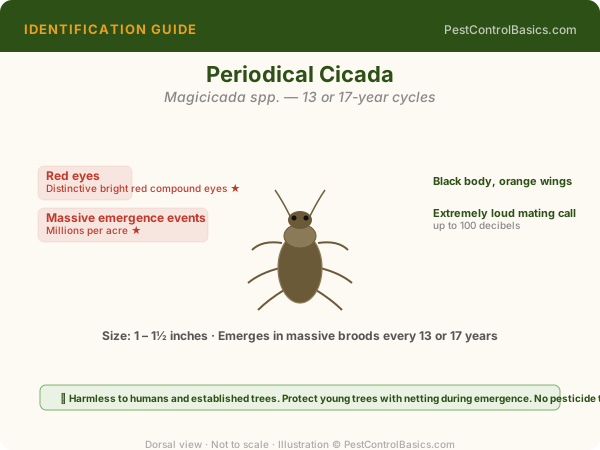
Original illustration by PestControlBasics.com. Use the labeled features above to confirm your identification.
🔍 Identification
Adults: 25-30mm; black body; bright red eyes; orange wing veins — strikingly colored. Found in enormous numbers during emergence years; completely absent other years. Nymphs: underground for exactly 13 or 17 years depending on brood. Exit holes: 1/2-inch round holes in soil under deciduous trees.
🧬 Biology & Behavior
Multiple geographically distinct 'broods' with staggered emergence years. Some years see multiple broods emerging simultaneously — the 2024 emergence was a rare dual-brood event. Adults: mate, lay eggs in tree branches (causing 'flagging' — branch tip death), then die within 4-6 weeks. Nymphs hatch and immediately burrow underground to begin their multi-year development.
⚠️ Damage & Health Risk
Noise (males can reach 100 dB in aggregations); egg-laying damage to small tree branches (flagging); no damage to established trees; short-lived overwhelming presence. Zero damage to humans, pets, or structures.
🔧 DIY Treatment
Protect young trees (under 5 years) with fine mesh netting during oviposition period. No pesticide treatment warranted or appropriate — the emergence lasts only 4-6 weeks and the insects are harmless.
👷 When to Call a Pro
Never warranted.