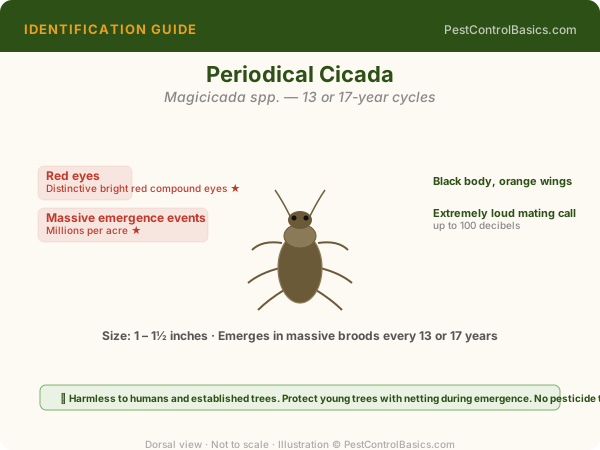
Original illustration by PestControlBasics.com. Use the labeled features above to confirm your identification.
🔍 Identification
Adults: 25-35mm; black body; red eyes; orange wing veins. Nymphs: brown; emerge from soil through small holes when soil temperature reaches 64°F. Distinctive loud chorus from males (up to 100 decibels). Found only in eastern North America. Multiple named broods with different emergence years. 2024 saw simultaneous emergence of Brood XIII (17-year) and Brood XIX (13-year) — a coincidence not occurring again until 2245.
🧬 Biology & Behavior
Periodical cicadas spend 13 or 17 years as nymphs feeding on tree root xylem underground. Mass emergence (up to 1.5 million per acre) occurs when soil warms in late May. Adults live 4-6 weeks — mating, egg laying, and dying. Eggs are laid in slits cut into small branches — this can cause 'flagging' (branch dieback) in young trees. Large established trees are unharmed. Annual cicadas (different, smaller species) appear every summer — not the same as periodical cicadas.
⚠️ Damage & Health Risk
Branch flagging in young trees from egg laying (minor, rarely fatal to established trees); noise nuisance during emergence period; pile of dead cicadas and shells (decompose naturally); psychological alarm from sheer numbers.
🔧 DIY Treatment
Protect young trees (less than 4 years old) with fine mesh netting during emergence — this prevents egg laying. No other treatment is needed or effective. Do not spray pesticides — the emergence is temporary, pesticides won't prevent the emergence, and treating millions of cicadas per acre is futile.
👷 When to Call a Pro
Never warranted for periodical cicadas — their emergence is a fascinating natural phenomenon.