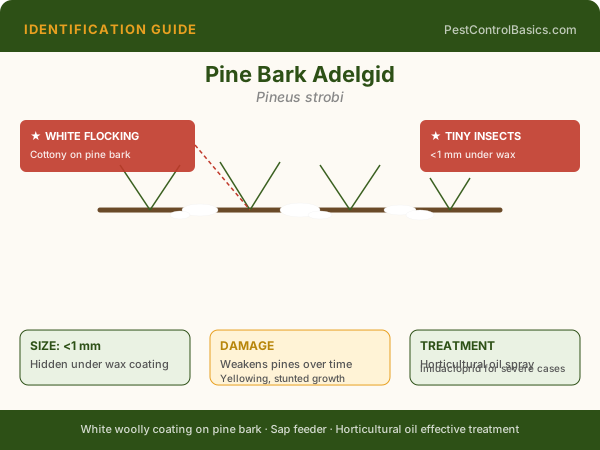
Illustrated identification guide — PestControlBasics.com
🔍 Identification
Similar to hemlock woolly adelgid: tiny insects (0.5-1mm) covered in white woolly wax. Found on bark of true firs (Abies species) — NOT on hemlock. Signs: white woolly patches on bark; smooth round galls (gouting) at twig nodes; abnormal swelling of the main trunk; reddish discoloration of bark. Infestations visible on main trunk — distinguishes from HWA which is on needle bases.
🧬 Biology & Behavior
Invasive from Europe; arrived in North America in 1900s. Attacks balsam fir, Fraser fir, subalpine fir — all true fir (Abies) species. Cannot survive on hemlock, spruce, or pine. Kills trees by injecting growth-regulating chemicals that cause abnormal woody tissue growth, blocking water and nutrient flow.
⚠️ Damage & Health Risk
Gouting (abnormal swelling) at twig nodes; trunk swelling; crown dieback from top down; tree death in 2-7 years; significant losses in Christmas tree production (Fraser fir) and balsam fir forests in Appalachians.
🔧 DIY Treatment
Insecticidal soap or horticultural oil applied to bark reduces populations. Systemic imidacloprid has limited efficacy for balsam woolly adelgid compared to hemlock woolly adelgid. For Christmas tree farms: dormant oil application in early spring before egg hatch.
👷 When to Call a Pro
For Christmas tree production, consult your state extension specialist for current treatment recommendations.