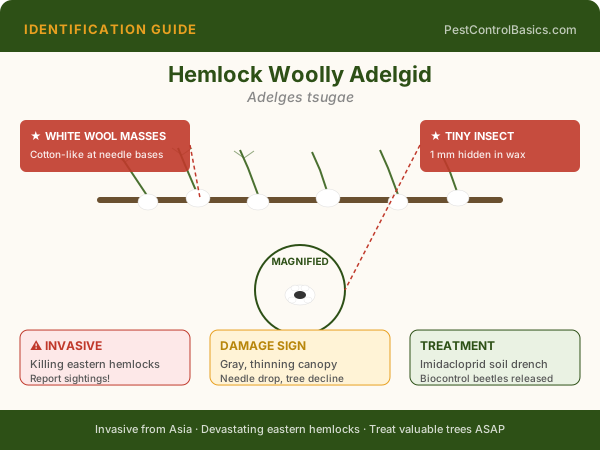
Illustrated identification guide — PestControlBasics.com
🔍 Identification
The insect itself is tiny (0.8mm) and rarely seen directly. ID is by the distinctive white woolly egg sacs — small cottony white tufts found at the base of hemlock needles on the underside of branches. These look like tiny styrofoam beads attached to the needle base, visible from late fall through spring. Active infestation turns needles gray-green then causes them to drop.
🧬 Biology & Behavior
Invasive from Asia; established in eastern US from Maine to Georgia; killing eastern hemlocks along stream corridors and in forest understories. Two generations per year: sistens generation (overwinters as adult on tree) and progrediens generation (spring). Trees can die within 4-10 years of first infestation without treatment.
⚠️ Damage & Health Risk
Needle drop and branch dieback; tree death within 4-10 years; loss of hemlock-dominated riparian corridors and forest understory; loss of hemlock's ecological role (stream cooling, winter deer habitat, specialized bird and insect associations).
🔧 DIY Treatment
Systemic imidacloprid soil drench (most common) or trunk injection by certified arborist. Dinotefuran bark spray (faster uptake than soil drench — useful for rapidly declining trees). Horticultural oil or insecticidal soap for light infestations as a temporary measure. Treatment must be annual or biennial — it controls but does not eradicate.
👷 When to Call a Pro
Certified arborist trunk injection of imidacloprid (Mauget capsule system) provides 5-7 year protection and is preferred for streamside trees where soil drench might affect waterways.