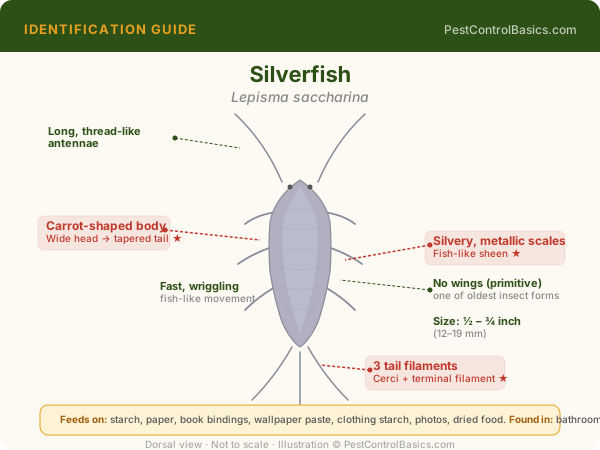
Illustrated identification guide — PestControlBasics.com
🔍 Identification
15-20mm; uniform silver-grey with scales; 3-pronged tail; faster and more active than common silverfish. Key difference from common silverfish: Paper silverfish can survive and reproduce at 20-30% relative humidity — far lower than common silverfish's minimum of 70% RH. Found in attics, dry walls, warm interior spaces, libraries, and historic buildings where common silverfish couldn't survive.
🧬 Biology & Behavior
Introduced from Africa in the mid-20th century and now established throughout much of North America. A significant pest of libraries and archives because it survives in the low humidity required for archival storage. More heat tolerant than common silverfish. Feeds on the same materials: paper, book bindings, starch, and natural fibers — but in environments that defeat common silverfish management strategies.
⚠️ Damage & Health Risk
Damage to books, documents, paper, and wallpaper in dry, warm environments; historic archive damage; difficult to control because humidity reduction doesn't work at the low levels already present.
🔧 DIY Treatment
CimeXa dust applied in attic insulation and wall voids. Bifenthrin spray along baseboards. Sticky traps for population monitoring. Unlike common silverfish, humidity reduction is NOT effective — paper silverfish already thrive at low humidity. Focus entirely on chemical and physical control.
👷 When to Call a Pro
For archives and libraries: professional treatment with residual spray plus delta dust in void areas is the professional standard.