Moisture Indicator Paper & Fabric Destroyer DIY Very Effective

Silverfish

Lepisma saccharinum

One of the oldest insects on Earth — they've existed for 400 million years. They're harmless to humans, but they'll destroy books, paper, clothing, wallpaper, and anything containing starch or cellulose. And their presence always signals high humidity.

Size1/2 – 3/4 inch, tapered
ColorSilvery-gray, metallic sheen
HumidityThrives above 75% RH
LifespanUp to 8 years
🫞
Quick Reference Card
Silverfish — Lepisma saccharinum
ShapeCarrot-shaped, tapers to 3 tail filaments
MovementWriggling fish-like motion — very fast
Active WhenNighttime — scatter when lights go on
Humidity NeedAbove 75% RH for reproduction
DamageBooks, photos, wallpaper, starched fabrics
Root CauseHigh humidity — fix first
Best TreatmentDesiccant dust + dehumidifier
Health RiskNone — not venomous or disease-carrying
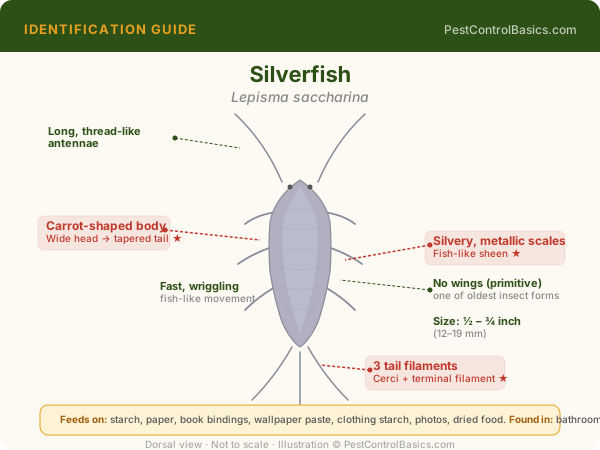
📐 FIELD GUIDE ILLUSTRATION
Silverfish (Lepisma saccharina) identification illustration with labeled anatomical features — PestControlBasics.com

Original illustration by PestControlBasics.com. Use anatomical labels above to confirm your identification.

🔍 Identification Photo

Use this photo to confirm your identification. Click to enlarge.

Silverfish (Lepisma saccharina) — metallic silver scales, 3 tail filaments; fish-like wiggling motion; eats starches in

Silverfish (Lepisma saccharina) — metallic silver scales, 3 tail filaments; fish-like wiggling motion; eats starches in paper, fabric, and wallpaper

📷 Wikipedia / Wikimedia Commons / CC BY-SA

⚠️ Photo loaded live from Wikipedia/Wikimedia Commons (CC BY-SA).

⚠️ Photos loaded from Wikipedia/Wikimedia Commons. Appearance varies by region, age, and sex.

Biology & Why They're In Your Home

Silverfish are a humidity alarm

Silverfish have survived unchanged for 400 million years — predating dinosaurs — because they are extraordinarily efficient at finding moisture and food. They require high humidity (above 75% relative humidity) to reproduce and thrive. Finding silverfish in your home is an immediate signal that humidity in that area is too high.

Common high-humidity areas: bathrooms, basements, crawlspaces, kitchen under-sink areas, attics with inadequate ventilation, and areas around water heaters. If you're seeing silverfish regularly, a moisture meter inspection of those areas is warranted.

💡 Fix Humidity First — Everything Else is Temporary

You can trap and poison silverfish indefinitely, but if the underlying humidity problem isn't addressed, they will continue to thrive and reproduce. A dehumidifier maintaining relative humidity below 50% makes the environment inhospitable for silverfish and dramatically accelerates any chemical treatment. This is the single most impactful silverfish control action you can take.

What They Eat — Why They're Damaging

Silverfish eat anything containing polysaccharides (starch, cellulose, dextrin) and proteins. They cause significant damage to paper goods, books, and natural fabrics. They prefer items with adhesive containing starch — old book bindings, envelope glue, wallpaper paste, and photo emulsions.

📚
Books & Paper
Eat cellulose — leave irregular holes and yellow stains on pages
🛍
Photos & Art
Eat photo emulsion and print adhesives — irreplaceable damage
👖
Natural Fabrics
Cotton, linen, silk — especially starched clothing and bedding
🪟
Wallpaper & Glue
The adhesive paste behind wallpaper is prime silverfish food
Treatment Guide

Desiccant + dehumidifier = permanent control

Silverfish control has two components: reduce humidity to make the environment hostile, and apply desiccant dust in harborage areas to kill existing populations. Sprays and baits work but are secondary to these two core approaches.

🪟
Desiccant Dust — Best Treatment
CimeXa Dust (Amorphous Silica Gel) in Wall Voids & Cracks
How it works: Physically destroys the silverfish's waxy cuticle through direct contact, causing death by dehydration. Apply a thin layer with a bulb duster in cracks, along baseboards, inside wall voids around pipes, behind bookcases, and in attic spaces. Lasts years undisturbed. Because silverfish travel along surfaces at night, any movement through treated areas is lethal. Also kills other moisture-loving insects in the same areas.
★★★★★
Best Method
💦
Environmental Control — Most Important Step
Dehumidifier (Target: Below 50% RH)
How it works: Silverfish cannot reproduce when relative humidity drops below 50%. A dehumidifier running in a basement, bathroom, or crawlspace will make the environment genuinely inhospitable. Pair with adequate ventilation — exhaust fans in bathrooms and kitchens, crawlspace vapor barriers, and HVAC maintenance. This single step, maintained consistently, resolves most silverfish problems without any chemical treatment at all.
★★★★★
Root Cause Fix
🫞
Trap — Monitoring & Population Reduction
Dekko Silverfish Paks (Boric Acid Bait Traps)
How it works: Small paper packets containing boric acid bait that silverfish consume. Place in bookcases, closets, file cabinets, dresser drawers — anywhere silverfish forage. Silverfish eat the bait and die from boric acid toxicity. Excellent for protecting stored items in enclosed spaces where desiccant dust isn't practical. Replace every 3 months. Non-staining, odorless, effective in enclosed spaces.
★★★★Ⓒ
Good Supplement
Prevention & Protection

Protect what silverfish destroy

Store Valuables Properly

Books, photos, documents, and natural fiber clothing stored in areas with humidity fluctuations are at greatest risk. Store irreplaceable items in sealed hard plastic containers — silverfish cannot penetrate hard plastic. Use acid-free archival boxes for photos and documents. Cedar blocks in closets repel silverfish from fabric storage areas (cedar oil is a natural deterrent).

Reduce Entry Points

Silverfish enter through gaps around pipes, under doors, and through vents. Seal baseboards in high-humidity rooms. Install tight-fitting door sweeps. Screen attic vents. Caulk around all plumbing penetrations in bathrooms and kitchens.

Reduce Food Sources

Remove old cardboard boxes, newspaper stacks, and unused paper goods from basements, attics, and closets. Silverfish populations are limited by their food supply — reducing accessible starch and cellulose forces them to spread out or relocate. Use plastic bins for storage instead of cardboard boxes throughout the home.

🫞 Silverfish vs. Firebrats

Firebrats look nearly identical to silverfish but prefer hot, dry conditions rather than humid ones — they're often found near furnaces, hot water pipes, and attics in summer. Firebrats are brownish-mottled rather than solid silver. Treatment is the same (desiccant dust) but the humidity solution differs — firebrats don't require a dehumidifier, they require finding and reducing heat sources in affected areas.

Silverfish
Silverfish

Frequently Asked Questions

How do I know if I have Silverfish?

Signs of Silverfish include physical sightings, droppings or frass, damage to food or materials, and unusual odors. Inspect hidden areas like wall voids, behind appliances, and in storage spaces. A flashlight inspection after dark is often most revealing.

Are Silverfish dangerous to humans or pets?

Silverfish can pose health risks including bites, allergic reactions, food contamination, and disease transmission. Children, elderly, and pets are especially vulnerable. Consult a pest management professional when an infestation is confirmed.

Can I eliminate Silverfish myself?

Light infestations may be manageable with DIY baits, traps, and targeted treatments. Established infestations typically require professional intervention. Misapplied products often scatter pests and worsen the problem long-term.

How long does Silverfish treatment take?

Timelines vary by infestation size and method. Baits may take 1–4 weeks to work through a colony. Chemical treatments often require 2–3 applications spaced 2–4 weeks apart. Monitor for 30–60 days after treatment to confirm elimination.

What attracts Silverfish to my home?

Silverfish are typically drawn by food sources, standing moisture, warmth, and shelter. Sealing entry points, reducing clutter, fixing leaks, and storing food in airtight containers are the most effective long-term prevention measures.

🧪 Recommended Treatment Products
Boric Acid Diatomaceous Earth Pyrethrin Spray
Full product guides with mixing rates, safety info, and brand comparisons. → Browse All 121 Pesticide Guides

Related Resources

📚 Full Pest Library🧪 DIY vs. Pro Quiz💰 Cost Guide🌿 IPM Guide🔍 Find a Pro
🔗 Related Pests
Paper Silverfish Bed Bugs Carpet Beetle
Compare similar pests to confirm your identification. → Use our ID Flowchart
🔮
Reviewed by Derek GiordanoContent on PestControlBasics.com is developed with input from certified pest management professionals and cross-referenced against EPA, CDC, and university extension guidance. Last reviewed: April 2026.
📚 Sources: EPA Termite Guide · NPMA Termite Info
Published: Jan 1, 2025 · Updated: Apr 7, 2026

🗺️ US Distribution — Silverfish

image/svg+xml
Common Occasional Not Present
States Present
51
Occasional
0
Primary Region
All 50 states (indoor pest)
📊 Source: University extension services, USDA, CDC vector data, and published entomological surveys.