HomePest LibrarySmoky Brown Cockroach
Southeast & Gulf Coast
🪳

Smoky Brown Cockroach

Periplaneta fuliginosa

Uniform dark mahogany-brown with a full set of wings — smoky browns are excellent fliers drawn to lights at night. Common in the Southeast and Gulf Coast, they live outdoors in gutters, tree holes, and mulch. Understanding their outdoor origin is key to control.

ColorUniform dark mahogany — no markings
Flies?Yes — strongly attracted to light
RangeSoutheast, Gulf Coast, Texas
HabitatOutdoor — mulch, gutters, tree holes
ControlPerimeter spray + lighting change
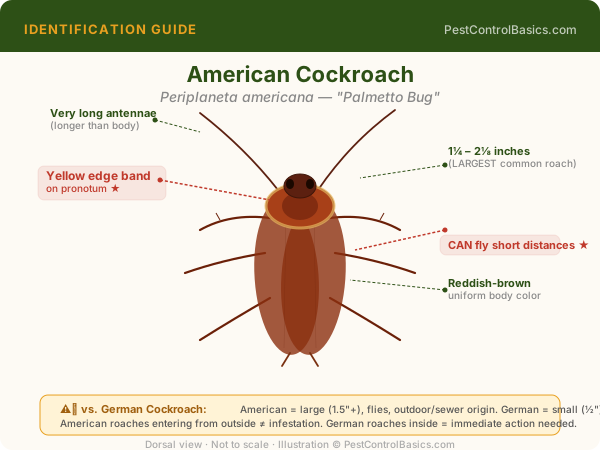
📐 FIELD GUIDE ILLUSTRATION
American cockroach (Periplaneta americana) identification illustration with labeled anatomical features — PestControlBasics.com

Original illustration by PestControlBasics.com. Use anatomical labels above to confirm your identification.
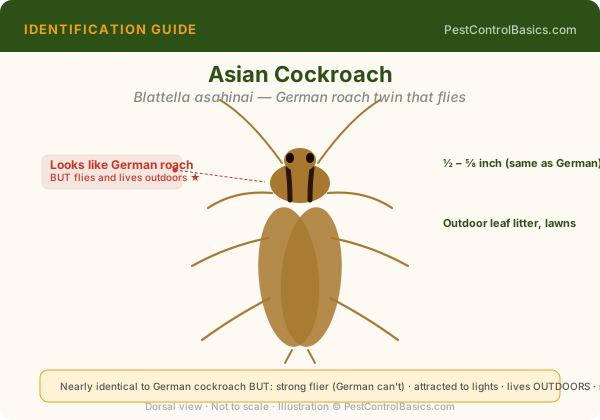
📐 FIELD GUIDE ILLUSTRATION
Asian Cockroach (Blattella asahinai) identification illustration with labeled anatomical features — PestControlBasics.com

Original illustration by PestControlBasics.com. Use anatomical labels above to confirm your identification.
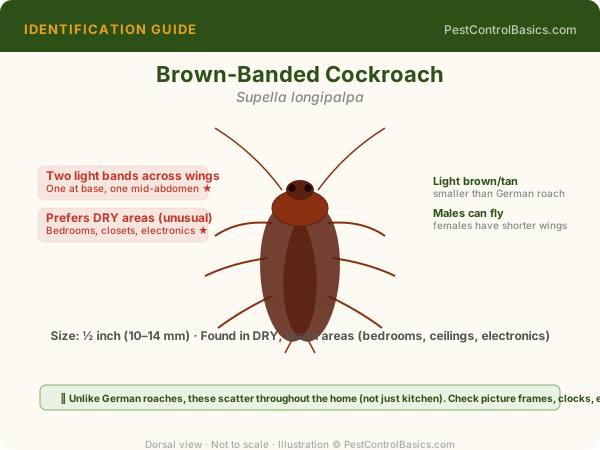
📐 FIELD GUIDE ILLUSTRATION
Brown Banded Cockroach (Supella longipalpa) identification illustration with labeled anatomical features — PestControlBasics.com

Original illustration by PestControlBasics.com. Use anatomical labels above to confirm your identification.
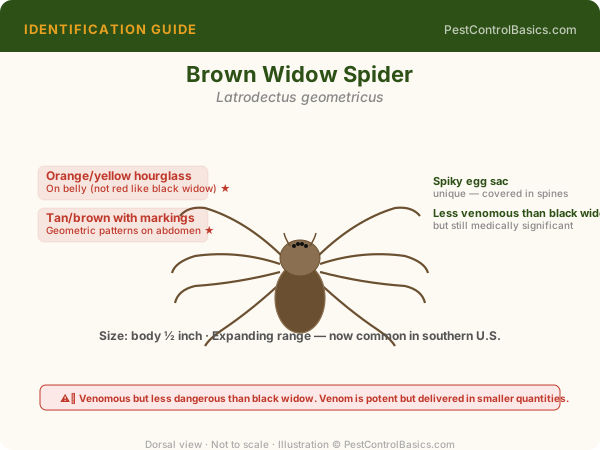
📐 FIELD GUIDE ILLUSTRATION
Brown Widow (Latrodectus geometricus) identification illustration with labeled anatomical features — PestControlBasics.com

Original illustration by PestControlBasics.com. Use anatomical labels above to confirm your identification.
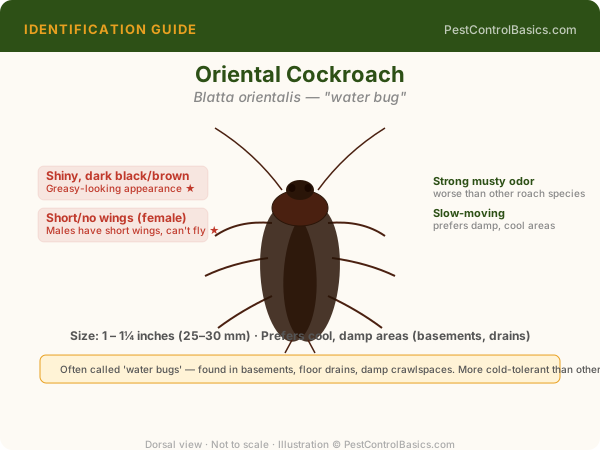
📐 FIELD GUIDE ILLUSTRATION
Oriental Cockroach (Blatta orientalis) identification illustration with labeled anatomical features — PestControlBasics.com

Original illustration by PestControlBasics.com. Use anatomical labels above to confirm your identification.
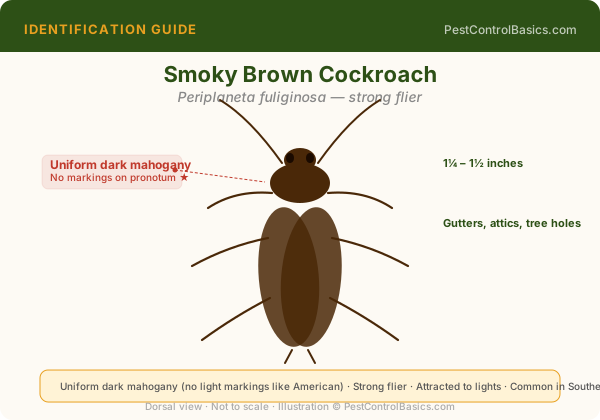
📐 FIELD GUIDE ILLUSTRATION
Smoky Brown Cockroach (Periplaneta fuliginosa) identification illustration with labeled anatomical features — PestControlBasics.com

Original illustration by PestControlBasics.com. Use anatomical labels above to confirm your identification.
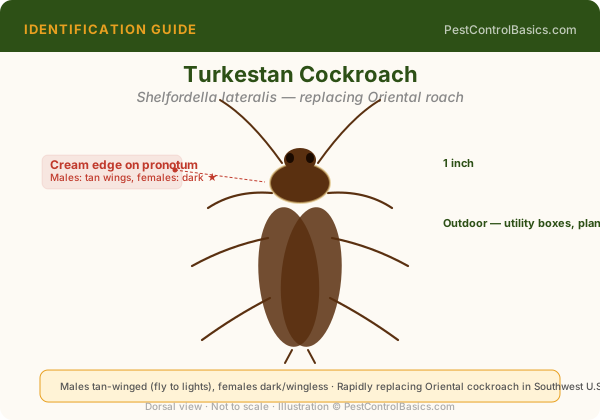
📐 FIELD GUIDE ILLUSTRATION
Turkestan Cockroach (Shelfordella lateralis) identification illustration with labeled anatomical features — PestControlBasics.com

Original illustration by PestControlBasics.com. Use anatomical labels above to confirm your identification.

🔍 Identification Photo

Use this photo to confirm your identification. Click to enlarge. Correct ID is the essential first step to effective treatment.

Smoky brown cockroach (Periplaneta fuliginosa) — uniformly dark mahogany-brown with NO markings; wings extend past abdom

Smoky brown cockroach (Periplaneta fuliginosa) — uniformly dark mahogany-brown with NO markings; wings extend past abdomen; primarily outdoor species

📷 Wikipedia / Wikimedia Commons / CC BY-SA

⚠️ Photo loaded live from Wikipedia/Wikimedia Commons (CC BY-SA). Appearance varies by region, age, and sex. When uncertain, contact a licensed pest professional.

Identification

Smoky brown vs. American cockroach

Smoky brown cockroaches are frequently confused with American cockroaches (palmetto bugs). The key difference: smoky browns are uniform dark mahogany with no markings. American cockroaches have a distinctive pale yellow figure-8 pattern on the pronotum (the shield behind the head). If you see a marking — American cockroach. Uniform dark brown — smoky brown.

Both are large outdoor roaches that wander inside, but smoky browns are strongly phototaxic — they fly directly toward light sources at night. If roaches are showing up near lit doorways, windows, or around light fixtures at night, suspect smoky brown cockroaches.

They also require more moisture than American cockroaches — they dry out and die quickly in low-humidity indoor environments. Dehumidification reduces their ability to survive inside.

Control

Outdoor-focused treatment is most effective

Replace exterior white lights with yellow LEDs: This single change dramatically reduces smoky brown attraction to your structure. They fly toward white/blue spectrum light; yellow 2700K LEDs are nearly invisible to them.

Bifenthrin perimeter spray: Apply to the full foundation perimeter, around all windows and doors, and to any mulched areas adjacent to the structure. Reapply every 4–6 weeks during active season (spring through fall).

Tree and gutter maintenance: Smoky browns nest in clogged gutters, hollow trees, and dense ivy. Cleaning gutters in spring, trimming trees away from the roofline, and removing dense ground cover near the structure eliminates primary harborage.

Bait in outdoor areas: Cockroach bait stations placed in garden beds, under AC units, and around outdoor utility areas reduce the population pressure approaching the structure.

Quick Reference
Size1.25–1.5 inches
ColorUniform dark mahogany-brown
WingsFull — both sexes fly
AntennaeLonger than body
HabitatOutdoor — enters at night via lights
DroppingsSimilar to American cockroach — large
SeasonYear-round in South; summer in border states
Best controlBifenthrin perimeter + yellow lights
Related Guides
🪳 German Cockroach Guide →🪳 American Cockroach →🪳 Nuisance Pest Guide →
Not sure? AI Bug ID →Find a Pro →
📚 Sources: EPA Cockroach Control · CDC Cockroach Allergens
Published: Jan 1, 2025 · Updated: Apr 7, 2026
Smoky Brown Cockroach

Frequently Asked Questions

How do I know if I have Smoky Brown Cockroach?

Signs of Smoky Brown Cockroach include physical sightings, droppings or frass, damage to food or materials, and unusual odors. Inspect hidden areas like wall voids, behind appliances, and in storage spaces. A flashlight inspection after dark is often most revealing.

Are Smoky Brown Cockroach dangerous to humans or pets?

Smoky Brown Cockroach can pose health risks including bites, allergic reactions, food contamination, and disease transmission. Children, elderly, and pets are especially vulnerable. Consult a pest management professional when an infestation is confirmed.

Can I eliminate Smoky Brown Cockroach myself?

Light infestations may be manageable with DIY baits, traps, and targeted treatments. Established infestations typically require professional intervention. Misapplied products often scatter pests and worsen the problem long-term.

How long does Smoky Brown Cockroach treatment take?

Timelines vary by infestation size and method. Baits may take 1–4 weeks to work through a colony. Chemical treatments often require 2–3 applications spaced 2–4 weeks apart. Monitor for 30–60 days after treatment to confirm elimination.

What attracts Smoky Brown Cockroach to my home?

Smoky Brown Cockroach are typically drawn by food sources, standing moisture, warmth, and shelter. Sealing entry points, reducing clutter, fixing leaks, and storing food in airtight containers are the most effective long-term prevention measures.

Related Resources

📚 Full Pest Library🧪 DIY vs. Pro Quiz💰 Cost Guide🌿 IPM Guide🔍 Find a Pro
🧪 Recommended Treatment Products
Cockroach Bait Guide Boric Acid Gentrol IGR Indoxacarb (Advion) Fipronil
Full product guides with mixing rates and safety info. → Browse All 130 Pesticide Guides
🔗 Related Pests
Brown Banded Cockroach Oriental Cockroach American Cockroach Wood Roach German Cockroach
Compare similar pests to confirm your identification. → Use our ID Flowchart
🔮
Reviewed by Derek GiordanoContent on PestControlBasics.com is developed with input from certified pest management professionals and cross-referenced against EPA, CDC, and university extension guidance. Last reviewed: April 2026.

🗺️ US Distribution — Smoky Brown Cockroach

image/svg+xml
Common Occasional Not Present
States Present
10
Occasional
7
Primary Region
Gulf Coast & Deep South
📊 Source: University extension services, USDA, CDC vector data, and published entomological surveys.