❄️ Snow Flea

Hypogastrura nivicola · Collembola

'Snow fleas' bouncing on snow in February alarm some homeowners — but they're springtails (not fleas) that feed on algae and are completely harmless.

SpringtailSnow FleaWinterHarmlessCollembolaCold Adapted
❄️
Risk Level
Winter Curiosity
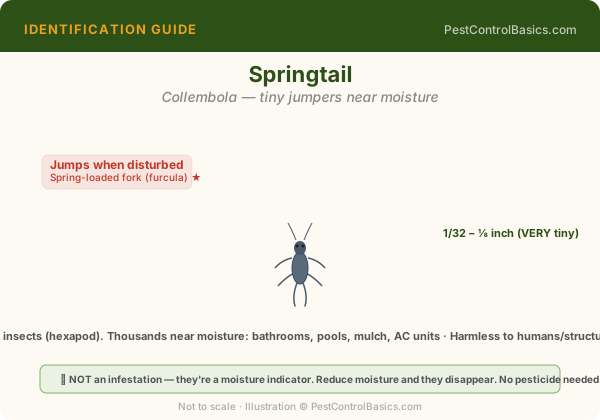
📐 FIELD GUIDE ILLUSTRATION
Springtail (Collembola) identification illustration with labeled anatomical features — PestControlBasics.com

Original illustration by PestControlBasics.com. Use anatomical labels above to confirm your identification.

🔬
PestControlBasics Editorial Team
Reviewed by Derek Giordano · Updated 2026

🔍 Identification

1-2mm; dark blue-black; round body; jump using forked tail structure. Found on snow surfaces in late winter and early spring (January-March) when temperatures are just above freezing. They appear in large numbers on sunny days — dark coloring absorbs solar warmth above the snow's cold surface. Cannot survive warm temperatures — strictly cold-adapted.

🧬 Biology & Behavior

Snow fleas (Hypogastrura nivicola) are specially adapted springtails with antifreeze proteins that allow activity at temperatures well below freezing. They feed on algae, bacteria, and decaying organic matter on snow surfaces. Their appearance in large numbers on snow indicates a healthy underlying soil ecosystem. They cannot survive indoors or in warm conditions — completely unable to infest structures.

⚠️ Damage & Health Risk

Zero negative impact. Entirely harmless, ecologically beneficial decomposers. Their appearance on snow is a fascinating natural phenomenon worth observing.

🔧 DIY Treatment

No treatment warranted — ever. Snow fleas are harmless and beneficial. Explain to concerned neighbors that they're springtails, not fleas, and cannot infest homes or bite.

👷 When to Call a Pro

Never warranted for snow fleas.

❓ FAQ

Are snow fleas dangerous?
Completely harmless — they don't bite, sting, infest structures, parasitize animals, or transmit disease. They're one of the most inoffensive organisms you'll encounter. Their name is a misnomer — they're springtails, not fleas, and the jump is from their forked tail structure rather than powerful hind legs.
Why are there thousands of dark specks on my snow?
Snow fleas (Hypogastrura nivicola) emerge from the soil and leaf litter below the snow on sunny days above freezing — they're attracted to the warmer microclimate near the snow surface. Large numbers indicate a healthy and abundant soil springtail population underneath, which is a sign of good soil biology. No action needed.

🗺️ Geographic Range & Distribution

FactorDetails
U.S. RangeAll 50 states
Regional DetailPeak pressure in Southeast and Gulf Coast. Active April–October in most regions. Year-round problem in warm coastal climates.

📅 Treatment Timing Guide

Treating at the right time dramatically improves results. Pest control timed to the life cycle uses less product and achieves better long-term control.

PeriodAction
March–AprilBegin monthly yard treatments before flea season starts.
May–SeptemberPeak season — maintain pet treatments and indoor IGR.
OctoberFinal indoor and yard treatment to kill remaining populations.

💰 Professional Treatment Costs

Service TypeDIY CostProfessional Cost
Initial inspectionFree (self-inspect)$75–$150 (often credited to treatment)
One-time treatment$30–$100 in materials$150–$500
Annual service contractN/A$400–$900/year
Severe infestationOften ineffective alone$500–$2,500+

Prices vary by region, property size, and infestation severity.

📚 More on This Topic

Related guides and profiles:

🔗 Fleas🔗 Flea Life Cycle — The 95% Problem You're Missing🔗 🦗 Cat Flea🔗 How to Eliminate Fleas From Your Home Permanently

❓ Common Questions About ❄️ Snow Flea

How do I confirm I actually have this pest (not something similar)?
The most reliable confirmation is a physical specimen — capture one and compare to reference images on this page. For cryptic pests (bed bugs, termites), look for secondary signs: frass, shed skins, mud tubes, or bites with a specific pattern. When uncertain, a professional inspection is faster than months of misidentification.
Can I treat this myself or do I need a professional?
DIY is effective for small, accessible infestations caught early. Professionals are worth the cost when: the infestation is inside wall voids or structural elements, multiple rooms are affected, you have health-risk pests (hantavirus, venomous species), or DIY has already failed twice.
How long until the infestation is completely gone?
Expect 3–8 weeks for most infestations with proper treatment. Insects with dormant life stages (pupae, eggs) extend the timeline because those stages are impervious to most insecticides. Follow-up treatments at 2 and 4 weeks catch each new cohort as they emerge.
What's the most common mistake people make treating this pest?
Treating only the visible pest population while ignoring the harborage site, entry point, or breeding location. Killing adults provides temporary relief but the population rebuilds from hidden egg cases, pupae, or new arrivals through unaddressed entry points.
🧪 Recommended Treatment Products
Flea Treatment Guide Methoprene IGR Beneficial Nematodes Permethrin Bifenthrin
Full product guides with mixing rates and safety info. → Browse All 130 Pesticide Guides
📚 Sources: EPA Flea Control · CDC Flea-Borne Diseases
Published: Jan 1, 2025 · Updated: Apr 7, 2026

🗺️ US Distribution — Snow Flea

image/svg+xml
Common Occasional Not Present
States Present
51
Occasional
0
Primary Region
All 50 states
📊 Source: University extension services, USDA, CDC vector data, and published entomological surveys.