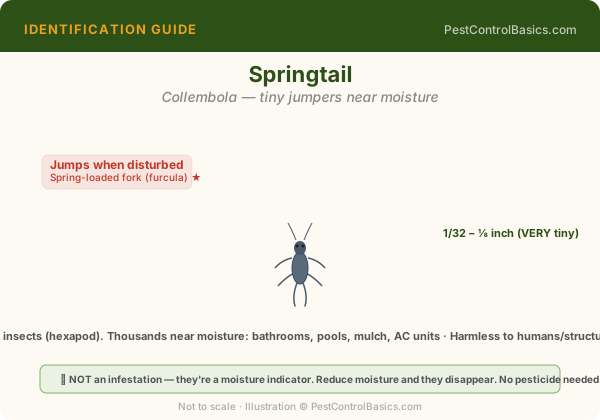
Original illustration by PestControlBasics.com. Use anatomical labels above to confirm your identification.
🔍 Identification
0.5-2mm; elongated or round; grey, white, or black; jump using a forked structure (furcula) folded under the body — released like a spring for the characteristic leap. Found in soil, leaf litter, mulch, and moist surfaces. In pools: appear as thousands of tiny specks covering the water surface. Cannot swim but survive briefly on water surface tension.
🧬 Biology & Behavior
Springtails are decomposers — they feed on decaying organic matter, fungi, and algae. They're among the most abundant arthropods on Earth (up to 100,000 per square meter in healthy soil). Pool infestations typically occur after heavy rains that flood soil populations into the pool. Indoor infestations indicate excessive moisture — leaking pipes, high humidity, wet soil near the foundation.
⚠️ Damage & Health Risk
Zero negative impact — no biting, no disease, no structural damage, no plant damage. Purely cosmetic and psychological concern. Pool springtails are a temporary nuisance that resolves with weather change.
🔧 DIY Treatment
Fix the moisture source. Reduce mulch depth. Improve drainage. Run pool circulation to keep water moving. Indoor springtails: find and address moisture (use a dehumidifier, fix leaks). Perimeter bifenthrin spray suppresses populations but moisture control is the lasting solution.
👷 When to Call a Pro
Never warranted for springtails alone.