πŸͺ° Stable Fly

Stomoxys calcitrans Β· Diptera: Muscidae

The stable fly looks almost identical to a house fly but bites painfully. If flies are biting your ankles repeatedly at the beach or near livestock, it's almost certainly stable flies, not house flies.

FlyBitingDipteraStable FlyBeachMuscidae
πŸͺ°
Risk Level
Biting Fly / Livestock Pest
πŸ”¬
PestControlBasics Editorial Team
Reviewed by Derek Giordano Β· Updated 2026
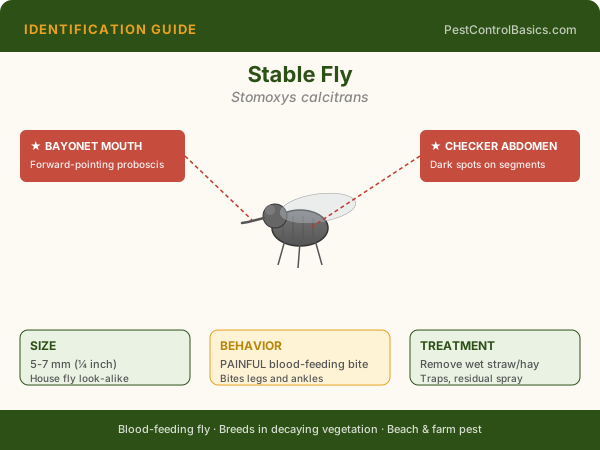
Stable Fly Expanded identification guide illustration

Illustrated identification guide β€” PestControlBasics.com

πŸ” Identification

5-8mm; grey with four dark stripes on thorax; forward-pointing proboscis (visible under magnification or in good photos) β€” the diagnostic feature. House flies have a sponging mouthpart; stable flies have a piercing proboscis. Both sexes bite (unlike mosquitoes where only females bite). Persistent biters β€” they will pursue hosts for extended periods.

🧬 Biology & Behavior

Breeds in decomposing wet organic material: wet hay, manure/soil mixtures, decomposing seaweed at beach margins, grass clippings, and food waste. Both sexes take blood meals β€” primarily from livestock legs (hence 'stable' fly) but readily attack humans at ankle and lower leg level. Beach populations breed in wrack line (seaweed) β€” explains unexplained ankle biting at beaches.

⚠️ Damage & Health Risk

Painful bites causing welts at ankle and lower leg level; livestock stress reducing milk production and weight gain; economic impact on cattle operations; beach and waterfront nuisance.

πŸ”§ DIY Treatment

Remove or manage breeding material: compost or spread manure, remove wet hay accumulations, clear beach wrack if possible. Permethrin-treated ankles and lower legs. Livestock: permethrin sprays or pour-ons. Bag-based stable fly traps (Captivator, Globe traps) for localized control.

πŸ‘· When to Call a Pro

Aerial ULV spraying in extreme livestock or coastal situations β€” requires licensed PCO.

❓ FAQ

Why are flies biting my ankles at the beach?
Stable flies breed in decomposing seaweed (wrack) along the high-tide line. Beach infestations are common after storms that deposit large seaweed piles. The flies target ankles and lower legs β€” this ankle-biting behavior combined with the beach location almost certainly means stable flies, not horse flies or sand fleas.
Do stable flies carry disease?
Stable flies are mechanical vectors of several animal diseases and can transmit anthrax and other pathogens between livestock. Human disease transmission is not well documented but stable flies have been implicated in mechanical transmission of some pathogens. The primary concern is the painful bite and livestock economic impact.

πŸ—ΊοΈ Geographic Range & Distribution

FactorDetails
U.S. RangeAll or most U.S. states
Regional DetailDistribution varies β€” consult your local extension service for regional prevalence data.

πŸ“… Treatment Timing Guide

Treating at the right time dramatically improves results. Pest control timed to the life cycle uses less product and achieves better long-term control.

PeriodAction
SpringInspection and perimeter treatment before pest season starts.
SummerActive monitoring and targeted treatments as needed.
FallPreventive treatment before overwintering pests seek entry.

πŸ’° Professional Treatment Costs

Service TypeDIY CostProfessional Cost
Initial inspectionFree (self-inspect)$75–$150 (often credited to treatment)
One-time treatment$30–$100 in materials$150–$500
Annual service contractN/A$400–$900/year
Severe infestationOften ineffective alone$500–$2,500+

Prices vary by region, property size, and infestation severity.

🧪 Recommended Treatment Products
Pyrethrin Aerosol Bti (Drain/Fungus Gnats) IPM Guide
Full product guides with mixing rates and safety info. → Browse All 130 Pesticide Guides

❓ Common Questions About Stable Fly

How do I confirm I actually have this pest (not something similar)?
The most reliable confirmation is a physical specimen β€” capture one and compare to reference images on this page. For cryptic pests (bed bugs, termites), look for secondary signs: frass, shed skins, mud tubes, or bites with a specific pattern. When uncertain, a professional inspection is faster than months of misidentification.
Can I treat this myself or do I need a professional?
DIY is effective for small, accessible infestations caught early. Professionals are worth the cost when: the infestation is inside wall voids or structural elements, multiple rooms are affected, you have health-risk pests (hantavirus, venomous species), or DIY has already failed twice.
How long until the infestation is completely gone?
Expect 3–8 weeks for most infestations with proper treatment. Insects with dormant life stages (pupae, eggs) extend the timeline because those stages are impervious to most insecticides. Follow-up treatments at 2 and 4 weeks catch each new cohort as they emerge.
What's the most common mistake people make treating this pest?
Treating only the visible pest population while ignoring the harborage site, entry point, or breeding location. Killing adults provides temporary relief but the population rebuilds from hidden egg cases, pupae, or new arrivals through unaddressed entry points.
πŸ“š Sources: EPA Termite Guide Β· NPMA Termite Info
Published: Jan 1, 2025 Β· Updated: Apr 7, 2026

πŸ—ΊοΈ US Distribution β€” Stable Fly

image/svg+xml
Common Occasional Not Present
States Present
49
Occasional
2
Primary Region
Continental US
πŸ“Š Source: University extension services, USDA, CDC vector data, and published entomological surveys.