πŸͺ° Face Fly

Musca autumnalis Β· Diptera: Muscidae

Face flies spend summer tormenting livestock on farms, then invade rural homes and barns in enormous numbers in fall to overwinter. If you're in a rural area and have cluster-fly-like invasions, face flies may be involved.

FlyLivestock PestOverwinteringRuralDipteraFace Fly
πŸͺ°
Risk Level
Livestock / Overwintering Pest
πŸ”¬
PestControlBasics Editorial Team
Reviewed by Derek Giordano Β· Updated 2026
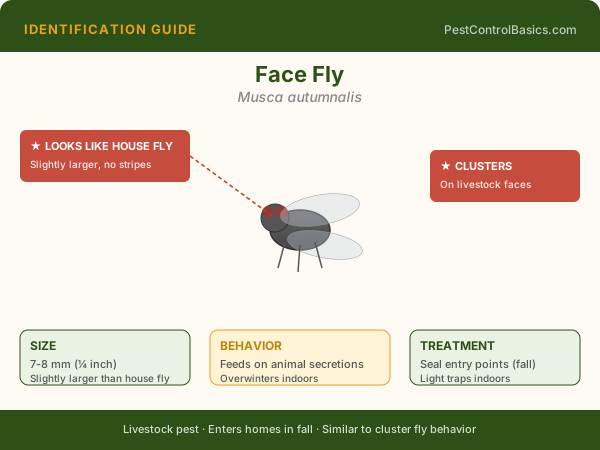
Face Fly identification guide illustration

Illustrated identification guide β€” PestControlBasics.com

πŸ” Identification

Nearly identical to house fly β€” 6-8mm; grey with dark stripes. Distinguished by: orange-yellow abdomen underside; eye color (male eyes nearly touching; female eyes widely spaced); behavior β€” aggregate in large numbers on exterior walls in fall, and cluster in wall voids and attics through winter.

🧬 Biology & Behavior

Adult face flies spend summer near livestock, feeding on ocular and nasal secretions (non-biting). Females need a blood meal (from horse flies, actually β€” they steal it) for egg development. Eggs laid in fresh cattle manure only. In fall, adults aggregate on building exteriors and enter attics and wall voids for winter dormancy β€” same behavior as cluster flies.

⚠️ Damage & Health Risk

Livestock: vector of bovine pinkeye (Moraxella bovis); welfare impact from face clustering; reduced feed conversion. Structures: identical to cluster fly problem β€” large numbers of sluggish flies in winter and spring.

πŸ”§ DIY Treatment

Prevention (September spray): Apply bifenthrin or lambda-cyhalothrin to south and west exterior walls before fly entry. Exclusion: seal attic vents and building gaps. For livestock: face fly ear tags with insecticide; insecticide strips in barns; back rubbers with insecticide near water sources.

πŸ‘· When to Call a Pro

For large dairy or beef operations, professional integrated pest management for face flies is economically justified given the livestock welfare and production impacts.

❓ FAQ

Are face flies the same as cluster flies?
No β€” both overwinter in structures in similar ways, but face flies (Musca autumnalis) breed in cattle manure and spend summer on livestock. Cluster flies (Pollenia rudis) breed as parasites of earthworms. Both invade rural structures in fall. If you have livestock nearby, face flies are likely involved.
Can face flies spread from livestock to humans?
Face flies don't bite humans. However, they move freely between animal faces and human food/surfaces, making them a potential mechanical pathogen carrier β€” similar to house flies.

πŸ—ΊοΈ Geographic Range & Distribution

FactorDetails
U.S. RangeAll or most U.S. states
Regional DetailDistribution varies β€” consult your local extension service for regional prevalence data.

πŸ“… Treatment Timing Guide

Treating at the right time dramatically improves results. Pest control timed to the life cycle uses less product and achieves better long-term control.

PeriodAction
SpringInspection and perimeter treatment before pest season starts.
SummerActive monitoring and targeted treatments as needed.
FallPreventive treatment before overwintering pests seek entry.

πŸ’° Professional Treatment Costs

Service TypeDIY CostProfessional Cost
Initial inspectionFree (self-inspect)$75–$150 (often credited to treatment)
One-time treatment$30–$100 in materials$150–$500
Annual service contractN/A$400–$900/year
Severe infestationOften ineffective alone$500–$2,500+

Prices vary by region, property size, and infestation severity.

❓ Common Questions About Face Fly

How do I confirm I actually have this pest (not something similar)?
The most reliable confirmation is a physical specimen β€” capture one and compare to reference images on this page. For cryptic pests (bed bugs, termites), look for secondary signs: frass, shed skins, mud tubes, or bites with a specific pattern. When uncertain, a professional inspection is faster than months of misidentification.
Can I treat this myself or do I need a professional?
DIY is effective for small, accessible infestations caught early. Professionals are worth the cost when: the infestation is inside wall voids or structural elements, multiple rooms are affected, you have health-risk pests (hantavirus, venomous species), or DIY has already failed twice.
How long until the infestation is completely gone?
Expect 3–8 weeks for most infestations with proper treatment. Insects with dormant life stages (pupae, eggs) extend the timeline because those stages are impervious to most insecticides. Follow-up treatments at 2 and 4 weeks catch each new cohort as they emerge.
What's the most common mistake people make treating this pest?
Treating only the visible pest population while ignoring the harborage site, entry point, or breeding location. Killing adults provides temporary relief but the population rebuilds from hidden egg cases, pupae, or new arrivals through unaddressed entry points.
πŸ“š Sources: EPA Termite Guide Β· NPMA Termite Info
Published: Jan 1, 2025 Β· Updated: Apr 7, 2026

πŸ—ΊοΈ US Distribution β€” Face Fly

image/svg+xml
Common Occasional Not Present
States Present
49
Occasional
2
Primary Region
Continental US
πŸ“Š Source: University extension services, USDA, CDC vector data, and published entomological surveys.