Home Pest Library Tawny Crazy Ant
⚠ Extreme — Professional Treatment
🐜

Tawny Crazy Ant

Nylanderia fulva — Raspberry Crazy Ant

The ant that moves like a spilled liquid — billions of individuals covering everything in sight. They invade and short-circuit electronics, displace fire ants, and cannot be reliably controlled without professional perimeter treatment. Gulf Coast and Texas, expanding.

Colony densityBillions per acre in infested areas
Electronics riskHigh — fills voids in equipment
RangeTexas, Gulf Coast — expanding
Fire antsDisplaces and kills fire ant colonies
DIY controlVery limited — professional recommended
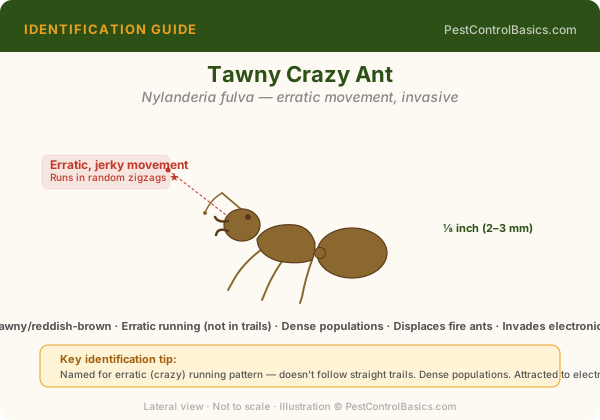
📐 FIELD GUIDE ILLUSTRATION
Tawny Crazy Ant (Nylanderia fulva) identification illustration with labeled anatomical features — PestControlBasics.com

Original illustration by PestControlBasics.com. Use anatomical labels above to confirm your identification.

🔍 Identification Photo

Use this photo to confirm your identification. Click to enlarge. Correct ID is the essential first step to effective treatment.

Tawny crazy ant (Nylanderia fulva) — reddish-brown with very long legs and antennae; erratic non-trailing movement; Gulf

Tawny crazy ant (Nylanderia fulva) — reddish-brown with very long legs and antennae; erratic non-trailing movement; Gulf Coast invasive pest

📷 Wikipedia / Wikimedia Commons / CC BY-SA

⚠️ Photo loaded live from Wikipedia/Wikimedia Commons (CC BY-SA). Appearance varies by region, age, and sex. When uncertain, contact a licensed pest professional.

Why They're Different

The mass invasion nobody expects

Most ant infestations involve trails and identifiable colonies. Tawny crazy ants are different — when populations boom (which happens rapidly under good conditions), they move in such enormous numbers that surfaces appear to be rippling. Structures in heavily infested Texas areas have been documented with hundreds of thousands of ants per square foot on exterior walls.

Electronics damage: Tawny crazy ants are attracted to electrical equipment and seek out void spaces inside electronics — junction boxes, AC units, computers, vehicles, and appliances. They accumulate until equipment fails, and their dead bodies attract more ants. In Texas, millions of dollars in electrical equipment have been destroyed by tawny crazy ant infestations.

Displacing fire ants: Tawny crazy ants chemically neutralize fire ant venom and aggressively outcompete fire ants for territory. Areas with severe tawny crazy ant infestations have fewer fire ant mounds — which sounds good but means a different, often harder-to-manage ant problem replaces a familiar one.

Control

What works — and the realistic expectation

Tawny crazy ant control is challenging and population suppression rather than elimination is the realistic goal. Even professional treatment provides temporary reduction rather than permanent control in heavily infested areas.

Bifenthrin perimeter treatment: The most effective approach is repeated, high-rate bifenthrin applications around the full building perimeter. Applications must be repeated every 2–4 weeks during active season. This keeps ants from entering structures but doesn't eliminate the surrounding population.

Fipronil broadcast: Broadcast fipronil applications to the property can reduce overall population density over multiple treatment cycles. This requires a licensed pest control professional.

Electronics protection: Seal all electrical penetrations entering the structure. Wrap utility lines with slippery tape. Consider enclosing critical equipment in sealed containers during peak invasion periods.

💡 Call a Pro First

Tawny crazy ant infestations at the scale seen in Texas require professional assessment. The scope of treatment needed exceeds what standard DIY products can achieve. Contact a licensed pest control company with specific tawny crazy ant experience.

Quick Reference
Size1/8 inch
ColorReddish-brown, tan — not shiny
MovementErratic, rapid — no clear trails
AntennaeExceptionally long
Stinger?No — bites only
QueensMultiple per colony
BehaviorMass invasion — no territorial limits
Best controlBifenthrin perimeter — professional application
Related Guides
🐜 Fire Ant Guide →🐜 Carpenter Ants →👤 Find a Licensed Pro →
Not sure? AI Bug ID → Find a Pro →
📚 Sources: Texas A&M Fire Ant Project · EPA Safe Pest Control
Published: Jan 1, 2025 · Updated: Apr 7, 2026
Tawny Crazy Ant
Tawny Crazy Ant

Frequently Asked Questions

How do I know if I have Tawny Crazy Ant?

Signs of Tawny Crazy Ant include physical sightings, droppings or frass, damage to food or materials, and unusual odors. Inspect hidden areas like wall voids, behind appliances, and in storage spaces. A flashlight inspection after dark is often most revealing.

Are Tawny Crazy Ant dangerous to humans or pets?

Tawny Crazy Ant can pose health risks including bites, allergic reactions, food contamination, and disease transmission. Children, elderly, and pets are especially vulnerable. Consult a pest management professional when an infestation is confirmed.

Can I eliminate Tawny Crazy Ant myself?

Light infestations may be manageable with DIY baits, traps, and targeted treatments. Established infestations typically require professional intervention. Misapplied products often scatter pests and worsen the problem long-term.

How long does Tawny Crazy Ant treatment take?

Timelines vary by infestation size and method. Baits may take 1–4 weeks to work through a colony. Chemical treatments often require 2–3 applications spaced 2–4 weeks apart. Monitor for 30–60 days after treatment to confirm elimination.

What attracts Tawny Crazy Ant to my home?

Tawny Crazy Ant are typically drawn by food sources, standing moisture, warmth, and shelter. Sealing entry points, reducing clutter, fixing leaks, and storing food in airtight containers are the most effective long-term prevention measures.

Related Resources

📚 Full Pest Library🧪 DIY vs. Pro Quiz💰 Cost Guide🌿 IPM Guide🔍 Find a Pro
🧪 Recommended Treatment Products
Ant Bait Guide Fipronil (Termidor) Borax vs Boric Acid Indoxacarb (Advion)
Full product guides with mixing rates and safety info. → Browse All 130 Pesticide Guides
🔮
Reviewed by Derek GiordanoContent on PestControlBasics.com is developed with input from certified pest management professionals and cross-referenced against EPA, CDC, and university extension guidance. Last reviewed: April 2026.

🗺️ US Distribution — Tawny Crazy Ant

image/svg+xml
Common Occasional Not Present
States Present
14
Occasional
11
Primary Region
Southeast US
📊 Source: University extension services, USDA, CDC vector data, and published entomological surveys.