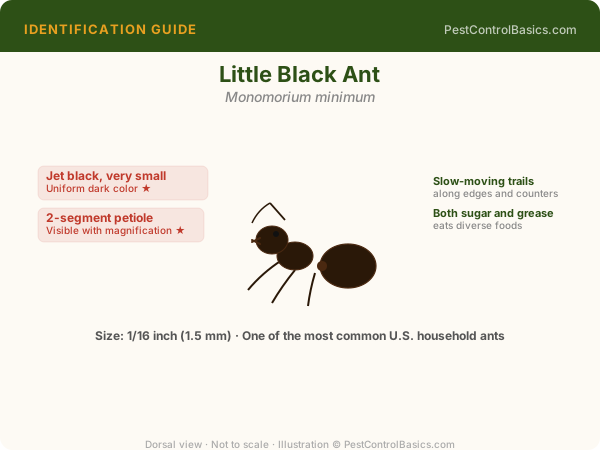
Original illustration by PestControlBasics.com. Use anatomical labels above to confirm your identification.
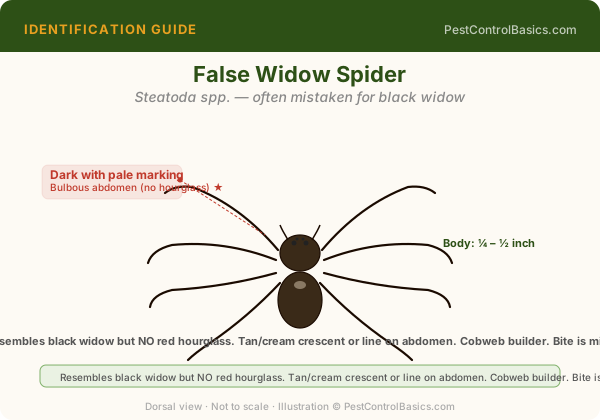
Original illustration by PestControlBasics.com. Use anatomical labels above to confirm your identification.
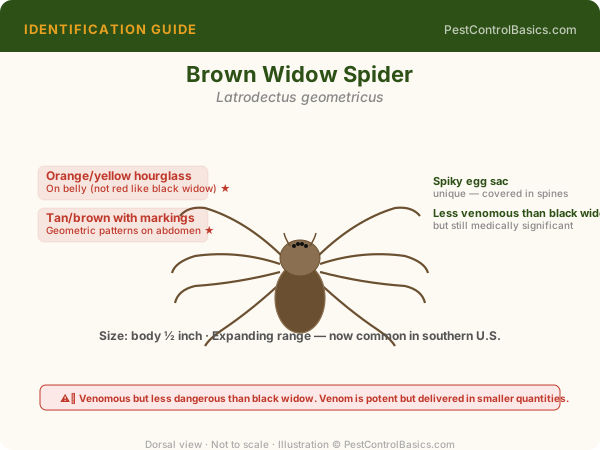
Original illustration by PestControlBasics.com. Use anatomical labels above to confirm your identification.
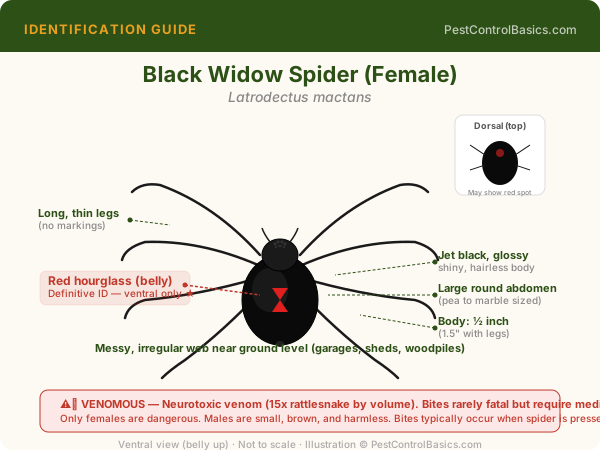
Original illustration by PestControlBasics.com. Use anatomical labels above to confirm your identification.
🔍 Identification
Very similar to Eastern black widow (L. mactans): shiny jet-black; round abdomen; 8-10mm body; red hourglass on the underside of the abdomen. The western species typically has a well-defined hourglass that is more complete than the eastern species.
Range: Western states — California, Arizona, Nevada, Oregon, Washington, Idaho, Montana, and as far east as Kansas and Oklahoma. Overlaps with L. mactans in Kansas, Oklahoma, and Texas.
Found in sheltered, dark locations: under outdoor furniture, in mailboxes, in wood piles, under low garden structures, in garages, and in crawl spaces.
🧬 Biology & Behavior
Western black widows are docile and hide when disturbed. Most bites occur when a spider is accidentally trapped against the skin — putting on gloves or shoes, reaching under outdoor furniture, or picking up firewood. Females are much more venomous than males.
⚠️ Damage & Health Risk
Venom contains alpha-latrotoxin, causing latrodectism: muscle cramping, abdominal rigidity, sweating, nausea, and hypertension. Symptoms peak at 1-8 hours post-bite. Deaths are rare with modern medical care — primarily risk to young children, elderly, and people with cardiovascular conditions. Antivenom (antivenin) is available.
🔧 DIY Treatment
Wear gloves when reaching into sheltered areas. Shake out shoes and gloves left outdoors. Apply residual bifenthrin or lambda-cyhalothrin to exterior surfaces (garage walls, under decks, in crawl spaces). Place glue board monitors in garages and crawl spaces to catch and confirm presence.
👷 When to Call a Pro
For widespread infestations or if widows are consistently found in living areas, professional treatment is warranted. Consistent exclusion and perimeter treatment reduces populations effectively.