πŸ•·οΈ Western Black Widow

Latrodectus hesperus Β· Araneae: Theridiidae

The western black widow's venom is 15x more potent than rattlesnake venom by volume β€” but bites inject tiny amounts and are rarely life-threatening to healthy adults. Here's the complete picture.

SpiderBlack WidowVenomousTheridiidaeWestLatrodectus
πŸ•·οΈ
Risk Level
Venomous Spider
πŸ“ FIELD GUIDE ILLUSTRATION
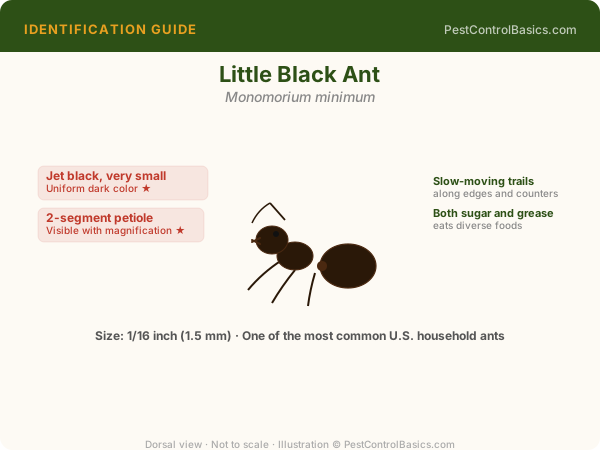
Little Black Ant (Monomorium minimum) identification illustration with labeled anatomical features β€” PestControlBasics.com

Original illustration by PestControlBasics.com. Use anatomical labels above to confirm your identification.
πŸ“ FIELD GUIDE ILLUSTRATION
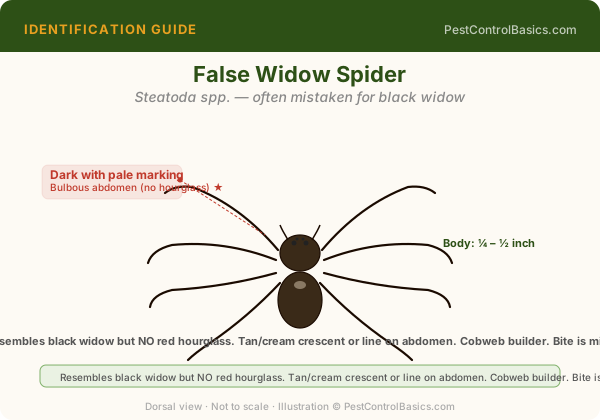
False Widow (Steatoda spp.) identification illustration with labeled anatomical features β€” PestControlBasics.com

Original illustration by PestControlBasics.com. Use anatomical labels above to confirm your identification.
πŸ“ FIELD GUIDE ILLUSTRATION
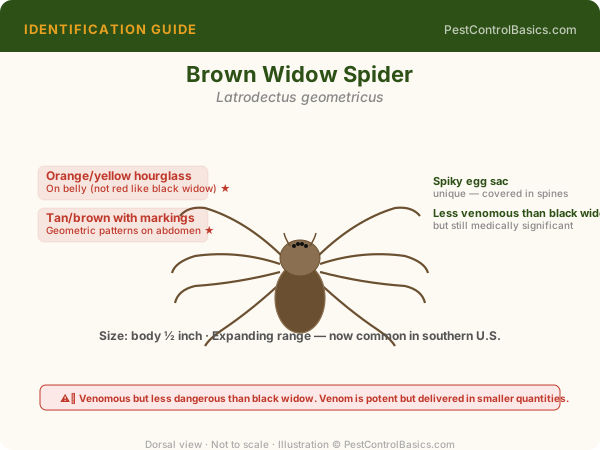
Brown Widow (Latrodectus geometricus) identification illustration with labeled anatomical features β€” PestControlBasics.com

Original illustration by PestControlBasics.com. Use anatomical labels above to confirm your identification.

πŸ”¬
PestControlBasics Editorial Team
Reviewed by Derek Giordano Β· Updated 2026

πŸ” Identification

Female: 8-15mm body; jet black (mature) with red-orange hourglass on underside of abdomen β€” the classic feature. Immature females may be brown with pattern. Male: much smaller; brown with pale stripes; rarely bites. Web: irregular, strong cobweb-type in low positions; thick, tangled structure that crackles when touched. Found in dark, undisturbed areas: wood piles, garages, under furniture, meter boxes, rock crevices.

🧬 Biology & Behavior

Western black widow range: western US and Canada. Southern black widow (L. mactans) overlaps in the Southwest. Females are sedentary β€” they stay in their web. Bite occurs when the spider is accidentally pressed against skin (putting on shoes, gloves, reaching into boxes). Venom: alpha-latrotoxin causes massive neurotransmitter release β€” the systemic syndrome is latrodectism.

⚠️ Damage & Health Risk

Latrodectism: severe muscle pain (abdomen, chest, back), muscle rigidity, nausea, sweating, hypertension. Symptoms peak 1-12 hours after bite. Death is rare in healthy adults but significant risk for children, elderly, and those with cardiovascular conditions.

πŸ”§ DIY Treatment

Bifenthrin perimeter spray monthly during warm months. Sticky traps in garage and storage areas for monitoring. Reduce harborage (woodpiles, debris). Shake out shoes, gloves, and clothing stored in infested areas.

πŸ‘· When to Call a Pro

For heavy infestations in garages or storage areas, professional void treatment with residual spray and Delta Dust provides thorough coverage of harborage areas.

❓ FAQ

Are western black widow bites fatal?
Fatalities are extremely rare in healthy adults with access to medical care. Children, elderly, and those with cardiovascular conditions are higher risk. All confirmed or suspected black widow bites should be evaluated by a physician. Antivenin is available and highly effective when given appropriately.
How do I tell a western black widow from the southern black widow?
In the Southwest where both occur: western black widow (L. hesperus) typically has an unbroken hourglass and tends toward a fuller, more rounded abdomen. Southern black widow (L. mactans) may have a broken hourglass or additional dorsal spots. The distinction is subtle and often requires microscopic examination. Treat all mature black females with a red/orange hourglass as black widows regardless of species.
πŸ“š Sources: EPA Safe Pest Control Β· NPMA Pest Guide
Published: Jan 1, 2025 Β· Updated: Apr 7, 2026

πŸ—ΊοΈ US Distribution β€” Western Black Widow

image/svg+xml
Common Occasional Not Present
States Present
19
Occasional
11
Primary Region
Southern & Western US
πŸ“Š Source: University extension services, USDA, CDC vector data, and published entomological surveys.