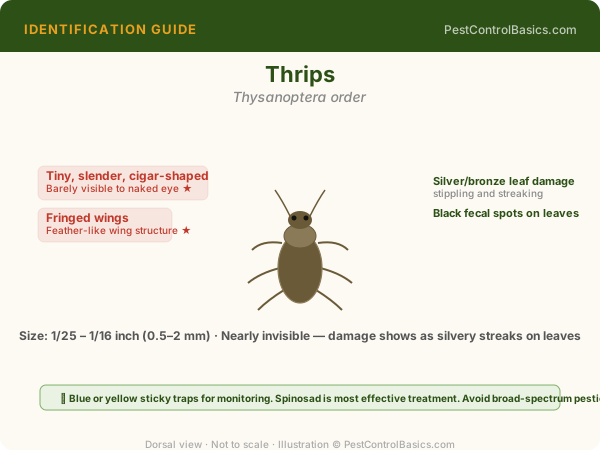
Original illustration by PestControlBasics.com. Use the labeled features above to confirm your identification.
🔍 Identification
1-1.6mm; females yellow-orange to brown; males paler; feeds in flowers and on young leaf tissue. Highly mobile — moves rapidly when plant is disturbed. Vectors tomato spotted wilt virus and impatiens necrotic spot virus — both cause incurable plant disease. Found on hundreds of ornamental and vegetable plants worldwide.
🧬 Biology & Behavior
WFT has developed resistance to organophosphates, carbamates, pyrethroids, neonicotinoids, spinosad, and abamectin in greenhouse populations worldwide — often within a single growing season of repeated use. This resistance evolution has made WFT management one of the most challenging problems in commercial horticulture. New chemistry is developed and resistance follows within 5-10 years.
⚠️ Damage & Health Risk
Petal discoloration and distortion; stippling and silvering on leaves; virus transmission (TSWV, INSV) causes incurable plant death; flower and fruit damage; significant economic losses in floriculture, nursery, and greenhouse vegetable production.
🔧 DIY Treatment
Biological control first: Amblyseius cucumeris predatory mites; Orius pirate bugs. Blue sticky trap monitoring weekly. Chemical only when biological control fails and above threshold: rotate EVERY application between classes — spinosad → abamectin → spirotetramat → cyantraniliprole. Never use the same class twice in sequence.
👷 When to Call a Pro
Commercial greenhouse operations require an IPM specialist to design and implement a rotation program. Using the same products repeatedly will produce resistant populations within one season.