🔧 HOW-TO

How to Eliminate Spider Mites on Houseplants and Garden

Spider mite populations double every 5 days in hot, dry conditions. The treatment sequence matters — starting wrong makes infestations worse.

📐 FIELD GUIDE ILLUSTRATION
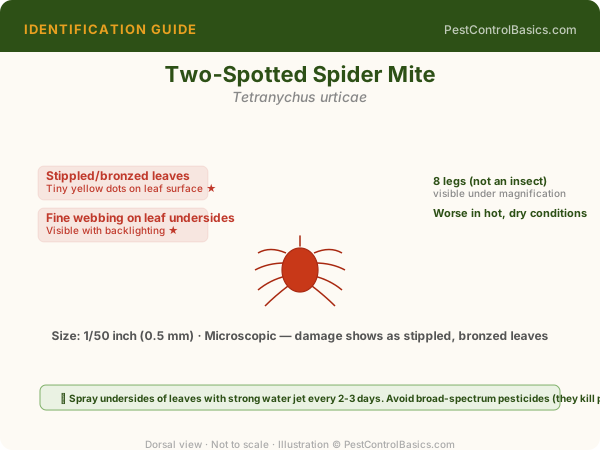
Spider Mite (Tetranychidae) identification illustration with labeled anatomical features — PestControlBasics.com

Original illustration by PestControlBasics.com. Use anatomical labels above to confirm your identification.

📋 Steps

1
Confirm spider mites with the paper test
Hold a piece of white paper under suspect leaves and tap sharply. Tiny specks that move on the paper = spider mites. Inspect the paper with magnification — oval, 8-legged creatures. Also look for fine webbing on leaf undersides and bronzed, stippled leaf coloring.
2
Start with a forceful water spray
High-pressure water spray on leaf undersides removes 80% of spider mites mechanically. Use the strongest spray your plant can tolerate. Do this every 2 days for 2 weeks for moderate infestations. This is more effective as an initial step than immediately applying chemicals.
3
Apply insecticidal soap for live colonies
2-3% insecticidal soap (Safer Brand) applied thoroughly to leaf undersides — every 5 days for 4 applications. Soap kills on contact but has no residual. Complete coverage of leaf undersides is critical — mites hide where spray doesn't reach.
4
Apply neem oil (cold-pressed) for reproduction disruption
After 2-3 soap treatments: apply neem oil (2 tbsp + 1 tsp dish soap per gallon) to disrupt mite reproduction through azadirachtin. The different mode of action prevents resistance development.
5
For severe infestations: apply miticide (bifenazate or abamectin)
Consumer: Floramite (bifenazate) for ornamentals. Professional: Avid (abamectin). Both are effective on mite-resistant populations. Rotate modes of action — mites develop resistance quickly to any single product.

💡 Tips

  • Spider mites thrive in hot, dry, dusty conditions — regular leaf misting and humidity above 50% prevents most spider mite problems on houseplants
  • Heavily infested plants should be isolated immediately — spider mites spread between adjacent plants within days
  • Predatory mites (Phytoseiulus persimilis, Neoseiulus californicus) provide biological control in greenhouses and large indoor gardens — commercially available online
  • Never use broad-spectrum pyrethroids for spider mite control — they kill the natural predatory mites that provide free biological control, often making infestations worse
⚖️ Educational use only. Disclaimer →

💰 Cost to Fix This Problem

ApproachTypical CostBest For
DIY materials only$15–$40Mild or early-stage infestations
Professional service (one-time)$130–$300Active infestations or when DIY has already failed
Ongoing service contract$400–$800/yrPrevention and long-term peace of mind

Costs vary by region, property size, and severity. Get at least two quotes before hiring.

✅ How to Know It's Working

Pest control success is measured in weeks, not days. Here's what to look for:

💡 Monitoring tip: Place sticky traps in corners and along walls before you start treatment. Counting catches weekly gives you objective data on whether the population is declining.

👷 When to Call a Professional

DIY is appropriate for small, contained infestations caught early. Call a licensed professional when:

⚠️ Rule of thumb: If you've spent more on DIY materials than a professional visit would cost, it's time to call.

❓ Frequently Asked Questions

How do I know if my plant has scale?
Scale insects appear as small immobile oval bumps on stems and leaf undersides, often mistaken for natural growths. Signs include sticky honeydew on leaves below, black sooty mold, and yellowing leaves.
What is the best treatment for scale on indoor plants?
For small infestations, rub scales off with alcohol-dipped cotton swabs. For heavier infestations, apply horticultural oil spray which suffocates them. Systemic imidacloprid as a soil drench provides long-term protection.
Can scale spread to other plants?
The mobile crawler stage can spread via wind and leaf contact. Isolate infested plants immediately. Crawlers are most vulnerable to treatment. Once scale insects settle and form their cover, they become much harder to kill.
Why does scale keep coming back?
Females produce eggs under their cover that continue hatching for 2-4 weeks after the mother dies. Multiple treatment rounds (3 applications at 7-14 day intervals) are necessary. Systemic imidacloprid provides ongoing protection.

📚 More on This Topic

Related guides and profiles:

🔗 SpiderControl🔗 🕷️ Common House Spiders Guide🔗 Spider Mites🔗 🕷️ Hobo Spider
📚 Sources: CDC Venomous Spiders · EPA Safe Pest Control
Published: Jan 1, 2025 · Updated: Apr 7, 2026