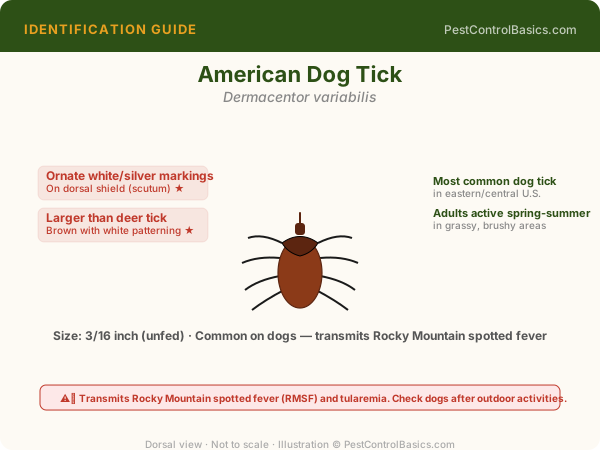
Original illustration by PestControlBasics.com. Use the labeled features above to confirm your identification.
🔍 Identification
Adults: 5-6mm unfed, 15mm engorged; brown with distinctive white/cream markings on the shield (scutum); females have whitish-patterned scutum, males have white markings throughout. Found in grassy areas, along trails, and in transitional zones between woods and open areas — different microhabitat from deer ticks which prefer leaf litter. Range: east of the Rockies and along the Pacific Coast.
🧬 Biology & Behavior
Rocky Mountain Spotted Fever (RMSF) caused by Rickettsia rickettsii — transmitted after 4-6 hours of attachment. Symptoms: fever, headache, and rash (petechial rash appears on wrists and ankles, spreads inward — appears 3-5 days after fever). Untreated mortality: 20-25%. With prompt doxycycline treatment: near-zero mortality. The name is misleading: 60%+ of US RMSF cases occur in North Carolina, Tennessee, Arkansas, Oklahoma, and Missouri.
⚠️ Damage & Health Risk
Rocky Mountain Spotted Fever — potentially fatal if not treated promptly; tick paralysis (rare — ascending paralysis that resolves after tick removal); tularemia transmission.
🔧 DIY Treatment
Daily tick checks in grassy areas; permethrin on clothing; bifenthrin lawn edge treatment in May and September. RMSF early treatment: doxycycline should be started empirically when RMSF is clinically suspected — do not wait for laboratory confirmation. Early treatment is the difference between full recovery and life-threatening illness.
👷 When to Call a Pro
Tick population management combined with awareness and prompt medical treatment is the complete prevention strategy.