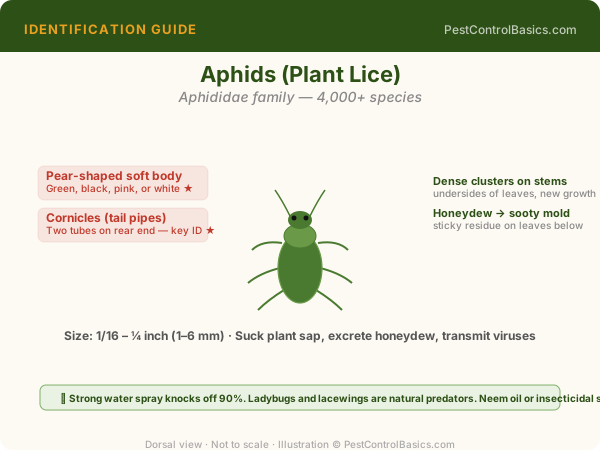
Original illustration by PestControlBasics.com. Use the labeled features above to confirm your identification.
🔍 Identification
Soft-bodied, pear-shaped insects 1-3mm. Colors vary by species: green, yellow, black, red, gray, or woolly-white. Pair of tail-pipe-like structures (cornicles) at the rear end — diagnostic. Usually found in dense colonies on new growth, buds, and leaf undersides. 4,000+ species worldwide — most are host-specific.
Common species: green peach aphid, melon aphid, black bean aphid, cotton aphid, woolly apple aphid.
🧬 Biology & Behavior
Parthenogenetic reproduction: most of the year, female aphids give birth to live female clones without mating — telescoping generations (a daughter is born already pregnant). This allows populations to double in 1-4 days under ideal conditions. Sexual reproduction and egg production only occur in fall to produce overwintering eggs.
⚠️ Damage & Health Risk
Yellowing, curling, and distortion of new growth; sticky honeydew coating leaves (supporting sooty mold); premature leaf drop; stunted growth; virus transmission (aphids vector over 150 plant viruses). Ant tending is a secondary indicator — ants protect aphids from predators for honeydew access.
🔧 DIY Treatment
First — preserve natural enemies: Lady beetles, lacewings, parasitoid wasps, and syrphid flies can control aphid populations naturally if not disrupted by broad-spectrum insecticides.
Water pressure: Strong spray of water knocks aphids off plants — effective for light infestations.
Insecticidal soap: Direct contact kill; no residual; safe for beneficials after drying.
Neem oil: Contact + IGR effect; disrupts feeding.
Pyrethrin or pyrethroids: More aggressive option; disrupts beneficial insect populations.
👷 When to Call a Pro
For aphid-transmitted virus management in commercial settings (e.g., barley yellow dwarf in grain, potato virus Y), systemic insecticides and reflective mulch for virus exclusion are standard approaches.