πŸͺ² Bark Beetles

Multiple Scolytinae spp. Β· Coleoptera: Curculionidae

Bark beetles are both natural forest ecosystem managers and devastating killers of stressed trees β€” the key is understanding the difference.

Bark BeetleTree KillerScolytinaeForestDroughtGallery Pattern
πŸͺ²
Risk Level
Tree Killer
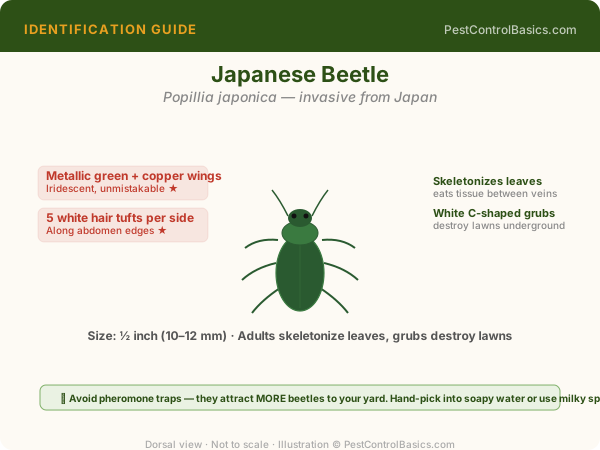
πŸ“ FIELD GUIDE ILLUSTRATION
Japanese Beetle (Popillia japonica) identification illustration with labeled anatomical features β€” PestControlBasics.com

Original illustration by PestControlBasics.com. Use anatomical labels above to confirm your identification.

πŸ”¬
PestControlBasics Editorial Team
Reviewed by Derek Giordano Β· Updated 2026

πŸ” Identification

Adults: 1-8mm; cylindrical; brown to black; hardened wing covers; clubbed antennae. Detected by: small round entry holes in bark; pitch tubes (resin masses at entry holes); gallery patterns visible under bark when removed β€” each species makes a distinctive pattern. Different species attack: ips engravers (5-7mm, 3 spines on wing tips β€” pines), mountain pine beetle (3-5mm β€” western pines), Douglas-fir beetle, and dozens of others.

🧬 Biology & Behavior

Bark beetles are primary agents of forest dynamics β€” they preferentially attack stressed, diseased, or dying trees. During drought years or large-scale stress events, bark beetle populations can irrupt and kill millions of trees, including healthy ones. The insects carry blue-stain fungi that kill the tree's vascular system. They communicate with pheromones to coordinate mass attacks.

⚠️ Damage & Health Risk

Tree death (sometimes within weeks of mass attack); blue-stain wood discoloration; hazard tree creation in managed landscapes; billions in forest value loss during outbreak years; catastrophic fire risk from standing dead timber.

πŸ”§ DIY Treatment

Prevention: maintain tree vigor (adequate water, appropriate fertilization); avoid bark wounds. Individual trees: carbaryl or permethrin trunk sprays provide some protection for high-value trees during outbreaks. No treatment once trees are successfully attacked β€” remove and use the timber or chip to break pest cycle.

πŸ‘· When to Call a Pro

For high-value landscape trees, preventive carbaryl or permethrin trunk spray by a certified arborist before outbreak conditions is the most effective individual tree protection.

❓ FAQ

Did bark beetles kill my tree, or was it already dying?
Healthy, well-watered trees resist bark beetle attack by producing resin (pitch tubes) that physically expels beetles. A healthy tree attacked by bark beetles shows large resin pitch tubes at every entry hole. A drought-stressed or diseased tree shows minimal resin response β€” it was too weak to defend itself. The pattern of pitch tubes tells the story of the tree's health.
Should I spray my pine trees for bark beetles?
Preventive trunk sprays (carbaryl or permethrin) applied to the lower 20 feet of trunk protect against bark beetle attack for one season. This is worthwhile for high-value landscape trees during drought years or when nearby trees are actively being killed. It's not a practical approach for forest-scale beetle outbreaks.
🧪 Recommended Treatment Products
Pyrethrin Aerosol Lambda-Cyhalothrin Safety & PPE Guide Bifenthrin Carbaryl (Sevin)
Full product guides with mixing rates and safety info. → Browse All 130 Pesticide Guides
🔗 Related Pests
Powderpost Beetle Click Beetle American Spider Beetle Rose Chafer
Compare similar pests to confirm your identification. → Use our ID Flowchart
πŸ“š Sources: EPA Safe Pest Control Β· NPMA Pest Guide
Published: Jan 1, 2025 Β· Updated: Apr 7, 2026

πŸ—ΊοΈ US Distribution β€” Bark Beetle

image/svg+xml
Common Occasional Not Present
States Present
49
Occasional
2
Primary Region
All agricultural regions
πŸ“Š Source: University extension services, USDA, CDC vector data, and published entomological surveys.