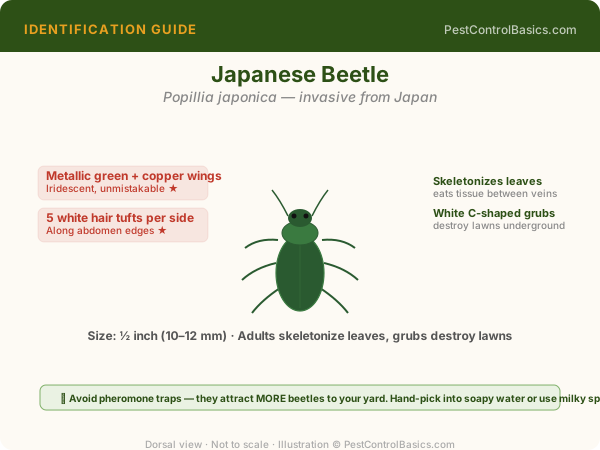
Original illustration by PestControlBasics.com. Use anatomical labels above to confirm your identification.
🔍 Identification
Brown to black; 12-45mm; elongated. Distinctive feature: a hinged joint between the thorax sections. When placed on their back, they arch and release a spine against a groove, producing the audible 'click' that flips them into the air — a predator-escape mechanism. Found indoors mostly by accident in spring/summer.
🧬 Biology & Behavior
Larvae (wireworms) are elongated, yellowish, and live in soil for 2-5 years eating roots, seeds, and organic matter — they're significant agricultural pests in their larval stage. Adults feed on nectar and pollen outdoors. Adults enter structures accidentally, attracted by outdoor lighting.
⚠️ Damage & Health Risk
No structural damage, no food contamination, no biting, no stinging. Purely accidental invader — startling but completely harmless. Larval wireworms can damage vegetable garden root crops.
🔧 DIY Treatment
Reduce exterior lighting or switch to yellow/sodium vapor bulbs (less attractive to beetles). Seal gaps under exterior doors. Manually remove any found indoors. No pesticide treatment warranted for click beetles.
👷 When to Call a Pro
Never warranted for click beetles indoors.