πŸ•·οΈ Clover Mite

Bryobia praetiosa Β· Trombidiformes: Tetranychidae

Bright red specks crawling on your window frame in spring? Almost certainly clover mites. They look alarming but are plant feeders that cannot survive indoors β€” the key is preventing them from entering.

MiteRedClover MiteSeasonalWindowsillPlant Feeder
πŸ•·οΈ
Risk Level
Seasonal Nuisance
πŸ“ FIELD GUIDE ILLUSTRATION
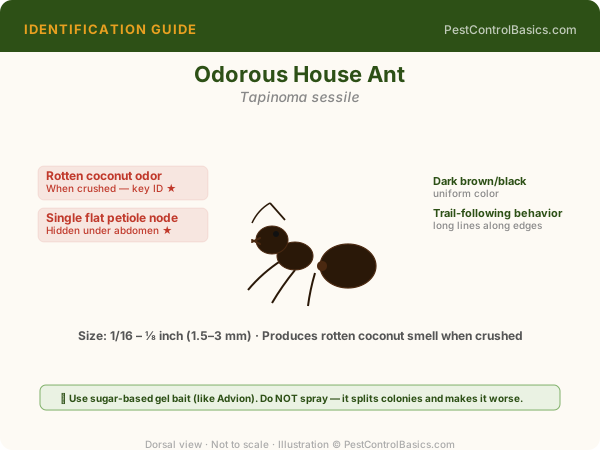
Odorous House Ant (Tapinoma sessile) identification illustration with labeled anatomical features β€” PestControlBasics.com

Original illustration by PestControlBasics.com. Use anatomical labels above to confirm your identification.
πŸ“ FIELD GUIDE ILLUSTRATION
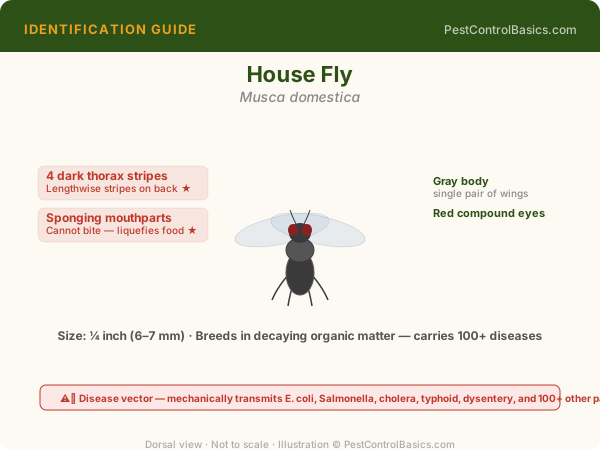
House Fly (Musca domestica) identification illustration with labeled anatomical features β€” PestControlBasics.com

Original illustration by PestControlBasics.com. Use anatomical labels above to confirm your identification.
πŸ“ FIELD GUIDE ILLUSTRATION
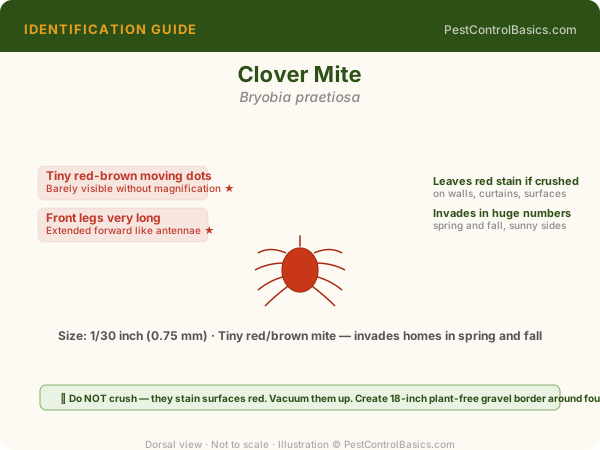
Clover Mite (Bryobia praetiosa) identification illustration with labeled anatomical features β€” PestControlBasics.com

Original illustration by PestControlBasics.com. Use anatomical labels above to confirm your identification.

πŸ”¬
PestControlBasics Editorial Team
Reviewed by Derek Giordano Β· Updated 2026

πŸ” Identification

0.75mm β€” very small; bright red to red-brown; 8 legs (arachnid); front legs distinctly longer than other legs (diagnostic feature visible with magnification); oval body. Found on sunny south and west-facing walls, windows, and foundation walls in spring and fall. NOT the same as red spider mites (plant pests) or chiggers (parasites).

🧬 Biology & Behavior

Clover mites feed on grasses, clovers, and lawn plants. They don't bite humans or animals. They invade structures in spring and fall when outdoor temperatures are moderate β€” not in summer heat or winter cold. They die within a day or two indoors without plant material to feed on. Crushing them leaves a red stain on light-colored surfaces.

⚠️ Damage & Health Risk

Red staining when crushed on walls and window frames; brief nuisance invasion in spring and fall; no biting, no disease, no breeding indoors.

πŸ”§ DIY Treatment

Do not crush (stains). Vacuum carefully. Create a plant-free zone (bare soil or gravel) 18-24 inches wide at the foundation β€” eliminates the food source at the foundation. Bifenthrin perimeter spray in early spring before peak emergence suppresses numbers significantly.

πŸ‘· When to Call a Pro

Rarely warranted β€” prevention and vacuuming is sufficient.

❓ FAQ

Do clover mites bite?
No β€” clover mites are plant feeders and cannot bite humans or animals. They lack the mouth structure for piercing skin. The red color is pigmentation, not blood. If you're being bitten by tiny red arthropods, look at chiggers (trombiculid mites), bird mites, or rat mites as the cause β€” not clover mites.
Why do clover mites appear every spring and fall but not in summer?
Clover mites prefer moderate temperatures β€” they're most active at 50-70Β°F. They go dormant (estivate) in hot summer and in winter. Spring and fall's moderate temperatures create peak activity. A band of bare soil or gravel at the foundation removes the grass food source that sustains the population near the structure.

πŸ—ΊοΈ Geographic Range & Distribution

FactorDetails
U.S. RangeAll or most U.S. states
Regional DetailDistribution varies β€” consult your local extension service for regional prevalence data.

πŸ“… Treatment Timing Guide

Treating at the right time dramatically improves results. Pest control timed to the life cycle uses less product and achieves better long-term control.

PeriodAction
SpringInspection and perimeter treatment before pest season starts.
SummerActive monitoring and targeted treatments as needed.
FallPreventive treatment before overwintering pests seek entry.

πŸ’° Professional Treatment Costs

Service TypeDIY CostProfessional Cost
Initial inspectionFree (self-inspect)$75–$150 (often credited to treatment)
One-time treatment$30–$100 in materials$150–$500
Annual service contractN/A$400–$900/year
Severe infestationOften ineffective alone$500–$2,500+

Prices vary by region, property size, and infestation severity.

❓ Common Questions About πŸ•·οΈ Clover Mite

How do I confirm I actually have this pest (not something similar)?
The most reliable confirmation is a physical specimen β€” capture one and compare to reference images on this page. For cryptic pests (bed bugs, termites), look for secondary signs: frass, shed skins, mud tubes, or bites with a specific pattern. When uncertain, a professional inspection is faster than months of misidentification.
Can I treat this myself or do I need a professional?
DIY is effective for small, accessible infestations caught early. Professionals are worth the cost when: the infestation is inside wall voids or structural elements, multiple rooms are affected, you have health-risk pests (hantavirus, venomous species), or DIY has already failed twice.
How long until the infestation is completely gone?
Expect 3–8 weeks for most infestations with proper treatment. Insects with dormant life stages (pupae, eggs) extend the timeline because those stages are impervious to most insecticides. Follow-up treatments at 2 and 4 weeks catch each new cohort as they emerge.
What's the most common mistake people make treating this pest?
Treating only the visible pest population while ignoring the harborage site, entry point, or breeding location. Killing adults provides temporary relief but the population rebuilds from hidden egg cases, pupae, or new arrivals through unaddressed entry points.

πŸ“š More on This Topic

Related guides and profiles:

πŸ”— πŸ•·οΈ Clover MiteπŸ”— πŸ•·οΈ Varroa Mite
πŸ“š Sources: EPA Termite Guide Β· NPMA Termite Info
Published: Jan 1, 2025 Β· Updated: Apr 7, 2026

πŸ—ΊοΈ US Distribution β€” Clover Mite

image/svg+xml
Common Occasional Not Present
States Present
32
Occasional
6
Primary Region
Eastern United States
πŸ“Š Source: University extension services, USDA, CDC vector data, and published entomological surveys.