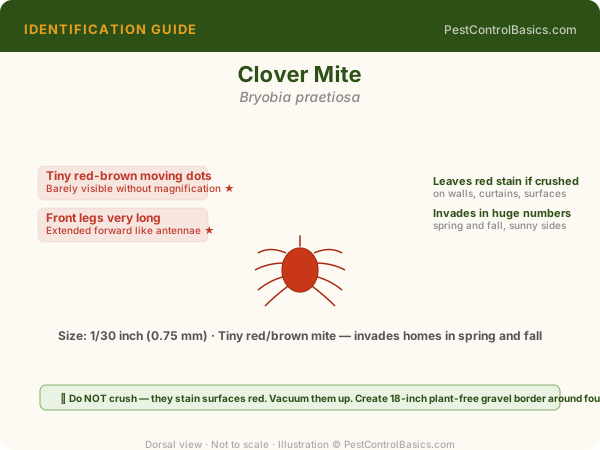
Original illustration by PestControlBasics.com. Use anatomical labels above to confirm your identification.
🔍 Identification
0.75mm; bright red-orange; visible as slow-moving specks on warm sunny walls in March-May; congregate on south and southwest-facing exterior walls in enormous numbers. Key ID: front legs noticeably longer than other legs, extending forward like antennae. Leave a red stain when crushed — important to note before cleaning.
🧬 Biology & Behavior
Clover mites overwinter as eggs on dry, south-facing surfaces — building foundations, bark, and dried vegetation. Eggs hatch in early spring when temperatures reach 55°F. Young mites climb upward and concentrate on the warmest surfaces. Buildings with south-facing grass lawns right up to the foundation consistently have the worst invasions. They enter through any gap and die indoors within 24-48 hours without plant food.
⚠️ Damage & Health Risk
Red staining on white walls and curtains when crushed (caution — wipe, don't crush). Psychological disturbance from masses of tiny moving red specks. No biting, no disease, no structural damage.
🔧 DIY Treatment
Application of bifenthrin or lambda-cyhalothrin to the south and west-facing foundation and lawn in late February/early March — before eggs hatch. Create a 12-18 inch vegetation-free gravel strip around the foundation (the most effective long-term prevention). Don't crush mites on white surfaces — use damp cloth to remove.
👷 When to Call a Pro
For persistent severe invasions: annual professional perimeter treatment in March is highly effective.