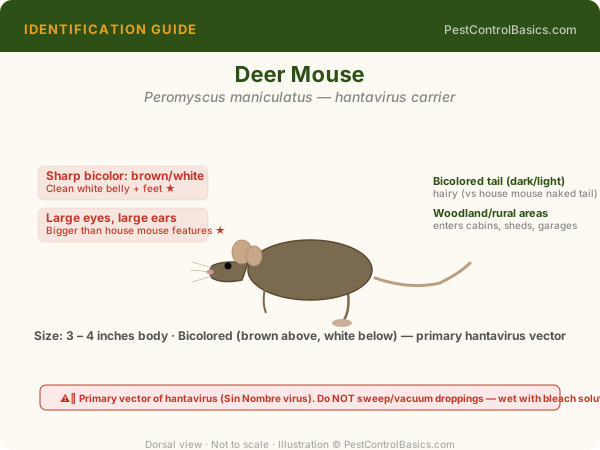
Original illustration by PestControlBasics.com. Use the labeled features above to confirm your identification.
🔍 Identification
Primary carrier in the US: deer mouse (Peromyscus maniculatus) — the two-tone mouse with white belly and feet, brown back, large eyes and ears. House mice do NOT commonly carry Sin Nombre virus. Deer mice are found throughout rural and semi-rural areas of the western US but range coast to coast. The risk is highest in the Southwest, Pacific Northwest, and Great Plains.
🧬 Biology & Behavior
Virus is shed in deer mouse urine, feces, and saliva. Transmission occurs by inhaling dried viral particles — stirred up when sweeping or disturbing nesting material. The virus can remain viable in dried rodent waste for weeks to months under favorable conditions. Incubation: 1-5 weeks. Initial symptoms resemble flu; rapidly progresses to severe pulmonary edema.
⚠️ Damage & Health Risk
Hantavirus Pulmonary Syndrome (HPS): 30-38% case fatality rate. Highest risk in rural areas where deer mice coexist with human structures (cabins, barns, outbuildings, stored equipment).
🔧 DIY Treatment
Do NOT sweep or vacuum deer mouse droppings. CDC protocol: wear N95 + gloves; wet the droppings with diluted bleach (1.5 cups bleach per gallon water); allow 5 minutes contact time; wipe up with paper towels; double-bag and discard. Air out the space for 30+ minutes before re-entry.
👷 When to Call a Pro
Professional rodent remediation for structures with extensive contamination. HEPA vacuum and PPE are standard.