🐭 Hantavirus & Deer Mice

Hantavirus (Sin Nombre virus) Β· Medical / Disease Vector

Hantavirus Pulmonary Syndrome has a 30-38% mortality rate. The critical prevention step β€” the CDC wet-cleaning protocol β€” is widely misunderstood and rarely done correctly.

HantavirusDisease VectorDeer MousePublic HealthSin NombreFatal
🐭
Risk Level
Disease Vector β€” Rodent
πŸ“ FIELD GUIDE ILLUSTRATION
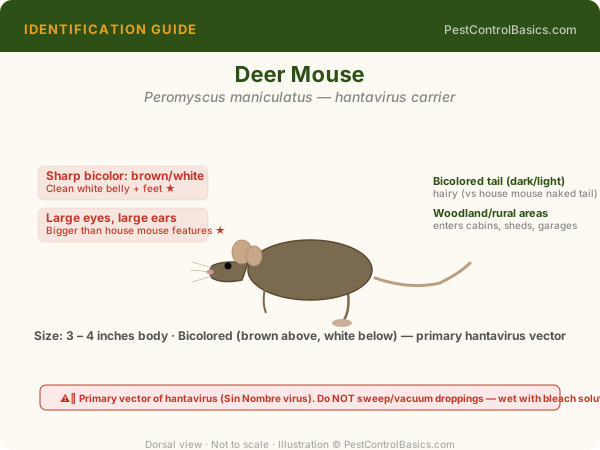
Deer mouse (Peromyscus maniculatus) identification illustration with labeled anatomical features β€” PestControlBasics.com

Original illustration by PestControlBasics.com. Use the labeled features above to confirm your identification.

πŸ”¬
PestControlBasics Editorial Team
Reviewed by Derek Giordano Β· Updated 2026

πŸ” Identification

Primary carrier in the US: deer mouse (Peromyscus maniculatus) β€” the two-tone mouse with white belly and feet, brown back, large eyes and ears. House mice do NOT commonly carry Sin Nombre virus. Deer mice are found throughout rural and semi-rural areas of the western US but range coast to coast. The risk is highest in the Southwest, Pacific Northwest, and Great Plains.

🧬 Biology & Behavior

Virus is shed in deer mouse urine, feces, and saliva. Transmission occurs by inhaling dried viral particles β€” stirred up when sweeping or disturbing nesting material. The virus can remain viable in dried rodent waste for weeks to months under favorable conditions. Incubation: 1-5 weeks. Initial symptoms resemble flu; rapidly progresses to severe pulmonary edema.

⚠️ Damage & Health Risk

Hantavirus Pulmonary Syndrome (HPS): 30-38% case fatality rate. Highest risk in rural areas where deer mice coexist with human structures (cabins, barns, outbuildings, stored equipment).

πŸ”§ DIY Treatment

Do NOT sweep or vacuum deer mouse droppings. CDC protocol: wear N95 + gloves; wet the droppings with diluted bleach (1.5 cups bleach per gallon water); allow 5 minutes contact time; wipe up with paper towels; double-bag and discard. Air out the space for 30+ minutes before re-entry.

πŸ‘· When to Call a Pro

Professional rodent remediation for structures with extensive contamination. HEPA vacuum and PPE are standard.

❓ FAQ

How do I know if I have deer mice vs house mice?
Deer mice: sharp two-tone coloring (brown/grey back, white belly and feet), large eyes, large ears, 7-10cm body. House mice: uniform grey-brown throughout, smaller ears, smaller eyes. This distinction matters because deer mice are the primary hantavirus carrier and house mice rarely carry Sin Nombre virus.
Can I get hantavirus from a mouse bite?
Bites are not the primary transmission route. Inhalation of aerosolized particles from dried urine, feces, or saliva is the main risk. Sweeping, vacuuming, or disturbing nesting material in enclosed spaces (cabins, sheds, crawl spaces) is the highest-risk activity.
πŸ“š Sources: Texas A&M Fire Ant Project Β· EPA Safe Pest Control
Published: Jan 1, 2025 Β· Updated: Apr 7, 2026

πŸ—ΊοΈ US Distribution β€” Hantavirus

image/svg+xml
Common Occasional Not Present
States Present
14
Occasional
11
Primary Region
Southeast US
πŸ“Š Source: University extension services, USDA, CDC vector data, and published entomological surveys.