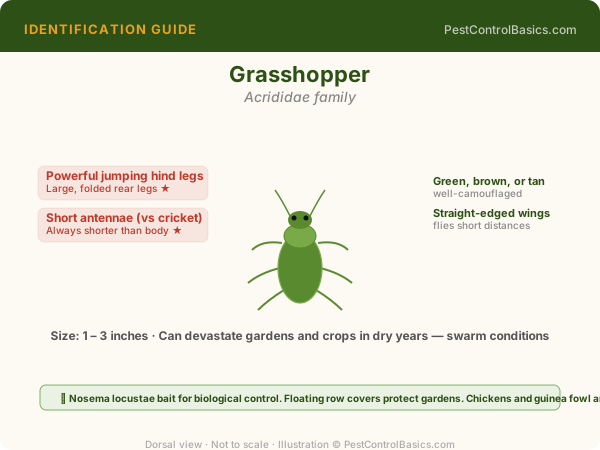
Original illustration by PestControlBasics.com. Use the labeled features above to confirm your identification.
🔍 Identification
Garden Grasshoppers: 15-50mm; brown to green; long hind legs; leaping ability. Many species; most are solitary and cause minor garden damage. Migratory Locust: The same species (e.g., S. gregaria) in a different phase — high population density triggers hormonal and behavioral changes, producing swarming, migratory locusts with different body shape and coloration. The US has no true 'locust' species currently — the last Rocky Mountain locust (Melanoplus spretus) went extinct around 1902.
🧬 Biology & Behavior
Common US grasshoppers: differential grasshopper, two-striped grasshopper, red-legged grasshopper. These cause significant crop and garden damage in drought years when populations irrupt. True locust phase-change behavior (solitary to gregarious) is well-studied in Schistocerca and Locusta — triggered by serotonin release when grasshoppers frequently touch each other's hind legs.
⚠️ Damage & Health Risk
Defoliation of garden plants; agricultural crop damage; complete defoliation during population irruptions in drought years.
🔧 DIY Treatment
Row covers for high-value garden plants. Nosema locustae (grasshopper bait) provides biological control over 3-6 weeks. Pyrethrin or carbaryl spray for direct knockdown. Kaolin clay deters feeding. Cultural: plant trap crops like clover at field margins to concentrate populations for management.
👷 When to Call a Pro
Commercial agricultural operations in high-pressure years use aerial application of malathion or carbaryl coordinated with state departments of agriculture.