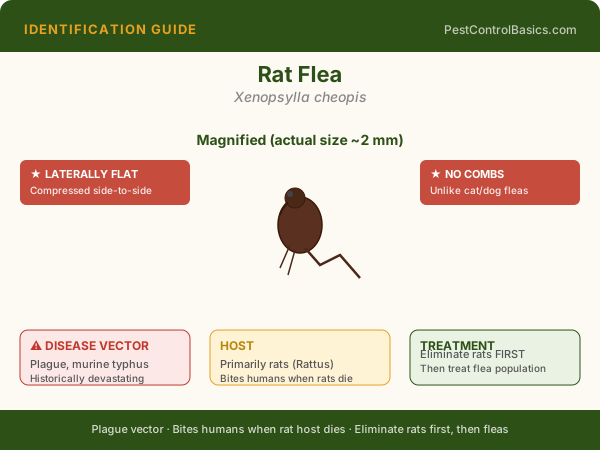
Illustrated identification guide — PestControlBasics.com
🔍 Identification
2-3mm; laterally compressed; reddish-brown; no genal comb (unlike cat flea); very long jumping legs. Found specifically on Norway rats and roof rats — primarily a rat parasite that bites humans only when its rat host is dead or absent. This is the critical epidemiological point: plague transmission to humans increases when rats die (from plague) and their fleas seek new hosts.
🧬 Biology & Behavior
The oriental rat flea is the primary vector of Yersinia pestis (bubonic plague) worldwide. When plague kills rats, fleas leave the dead host and seek warm-blooded alternatives — including humans. This is why historical plague outbreaks began with rat die-offs followed by human cases. In the western US, ground squirrel fleas (Oropsylla montana) are the primary plague vector, but Xenopsylla cheopis remains relevant globally and in rat-infested urban areas with international trade connections.
⚠️ Damage & Health Risk
Plague transmission (rare but serious — untreated bubonic plague has 30-60% mortality); murine typhus transmission (Rickettsia typhi); flea bites causing secondary infection.
🔧 DIY Treatment
Rat control is the primary intervention — eliminating rat hosts eliminates the flea problem. Standard rat control: snap traps, exclusion, bait stations. If conducting rat removal in areas with potential plague risk (proximity to known plague areas): wear gloves, apply permethrin flea spray to the area before handling dead rats, do not handle dead rats with bare hands.
👷 When to Call a Pro
In areas with confirmed plague activity, the CDC and local health departments coordinate rat control and provide guidance on personal protection.