HomePest LibraryRoof Rat
Attic Invader — Coastal SE & California
🐰

Roof Rat

Rattus rattus — Black Rat

Slender, agile, and living overhead. Roof rats enter through roofline gaps, travel along tree branches and utility lines, and nest in attic insulation. Their tail is longer than their body. Trapping at elevation — not on the floor — is the critical distinction from Norway rat control.

Key IDTail longer than body
Lives atAttic, trees, power lines — not ground
Entry pointsSoffit gaps, roof vents, upper wall openings
Trap placementAt elevation on rafters and joists
Primary rangeCoastal SE, Gulf Coast, California, Hawaii
📐 FIELD GUIDE ILLUSTRATION
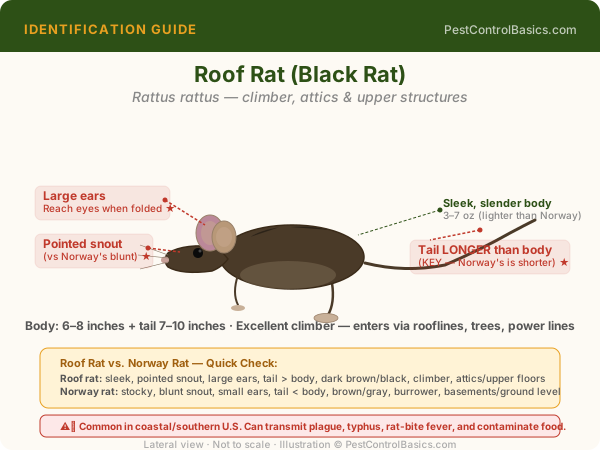
Roof rat (Rattus rattus) identification illustration with labeled anatomical features — PestControlBasics.com

Original illustration by PestControlBasics.com. Use anatomical labels above to confirm your identification.

🔍 Identification Photo

Use this photo to confirm your identification. Click to enlarge. Correct ID is the essential first step to effective treatment.

Roof rat (Rattus rattus) — slender, pointed snout, large ears; tail LONGER than body+head; agile climber; nests in attic

Roof rat (Rattus rattus) — slender, pointed snout, large ears; tail LONGER than body+head; agile climber; nests in attics and upper structures

📷 Wikipedia / Wikimedia Commons / CC BY-SA

⚠️ Photo loaded live from Wikipedia/Wikimedia Commons (CC BY-SA). Appearance varies by region, age, and sex. When uncertain, contact a licensed pest professional.

Identification

Roof rat vs. Norway rat — where the evidence is tells you

The easiest identification approach: where are you finding droppings and damage? Norway rats are ground-level creatures — basements, crawlspaces, along foundations. Roof rats are overhead creatures — attics, upper shelves, on top of stored boxes, along rafters.

The tail test: Roof rat tail is longer than its body. Norway rat tail is shorter than its body. This single measurement resolves any ambiguity.

Dropping shape: Roof rat droppings are 1/2 inch with pointed, banana-curved ends. Norway rat droppings are 3/4 inch with blunt, capsule ends.

Sound clues: Roof rats in the attic produce light scratching and running sounds in the ceiling — often heard at night as they're active. Norway rats in crawlspaces produce heavier, slower sounds along walls at ground level.

Control

Tree trimming is as important as trapping

Step 1 — Eliminate access routes: Trim every tree branch to at least 3 feet from the roofline. Roof rats use overhanging branches as their primary highway to your roof. Also address utility lines close to the structure and any vines growing on exterior walls — all are travel routes.

Step 2 — Seal the roofline: Inspect the full roofline at dusk when rats are active — watch where they enter. Common gaps: fascia-soffit joints, damaged soffit panels, roof vent gaps, and openings around cable/conduit penetrations through upper walls. Seal with hardware cloth backed by caulk or trim.

Step 3 — Trap at elevation: Attach large snap traps (T-Rex or Tomcat rat traps) to rafters and joists with wire or zip ties. Set along walls and in corners where droppings are concentrated. Check every 48 hours. Traps on the attic floor where rats rarely walk are wasted effort.

Fruit management (coastal areas): Harvest citrus and other fruit promptly. Pick up fallen fruit daily. Roof rats are "citrus rats" in Florida and California — the food source is often the primary driver of infestation pressure.

Quick Reference
Size6–8 inches + longer tail
TailLonger than body — definitive ID
BuildSlender and agile — built for climbing
NosePointed muzzle, large ears
Droppings1/2 inch, pointed ends, banana-shaped
HabitatAttics, trees, vines, dense vegetation
DietFruits, nuts, vegetables, citrus
Neophobic?Moderate — less suspicious than Norway rat
AI Bug Identifier →Find a Pro →
Roof Rat
Roof Rat
🧪 Recommended Treatment Products
Rodenticide Comparison Bromethalin Zinc Phosphide IPM Guide
Full product guides with mixing rates and safety info. → Browse All 130 Pesticide Guides

Frequently Asked Questions

How do I know if I have Roof Rat?

Signs of Roof Rat include physical sightings, droppings or frass, damage to food or materials, and unusual odors. Inspect hidden areas like wall voids, behind appliances, and in storage spaces. A flashlight inspection after dark is often most revealing.

Are Roof Rat dangerous to humans or pets?

Roof Rat can pose health risks including bites, allergic reactions, food contamination, and disease transmission. Children, elderly, and pets are especially vulnerable. Consult a pest management professional when an infestation is confirmed.

Can I eliminate Roof Rat myself?

Light infestations may be manageable with DIY baits, traps, and targeted treatments. Established infestations typically require professional intervention. Misapplied products often scatter pests and worsen the problem long-term.

How long does Roof Rat treatment take?

Timelines vary by infestation size and method. Baits may take 1–4 weeks to work through a colony. Chemical treatments often require 2–3 applications spaced 2–4 weeks apart. Monitor for 30–60 days after treatment to confirm elimination.

What attracts Roof Rat to my home?

Roof Rat are typically drawn by food sources, standing moisture, warmth, and shelter. Sealing entry points, reducing clutter, fixing leaks, and storing food in airtight containers are the most effective long-term prevention measures.

Related Resources

📚 Full Pest Library🧪 DIY vs. Pro Quiz💰 Cost Guide🌿 IPM Guide🔍 Find a Pro
🔗 Related Pests
Muskrat Pocket Gopher
Compare similar pests to confirm your identification. → Use our ID Flowchart
🔮
Reviewed by Derek GiordanoContent on PestControlBasics.com is developed with input from certified pest management professionals and cross-referenced against EPA, CDC, and university extension guidance. Last reviewed: April 2026.
📚 Sources: CDC Rodent Control · EPA Rodenticide Safety
Published: Jan 1, 2025 · Updated: Apr 7, 2026

🗺️ US Distribution — Roof Rat

image/svg+xml
Common Occasional Not Present
States Present
14
Occasional
9
Primary Region
Coastal & Southern US
📊 Source: University extension services, USDA, CDC vector data, and published entomological surveys.