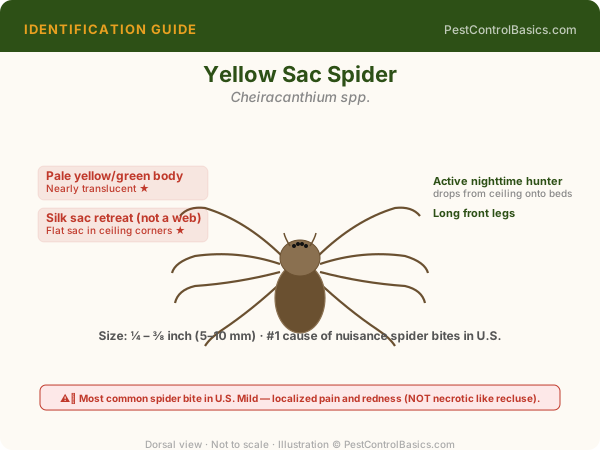
Original illustration by PestControlBasics.com. Use anatomical labels above to confirm your identification.
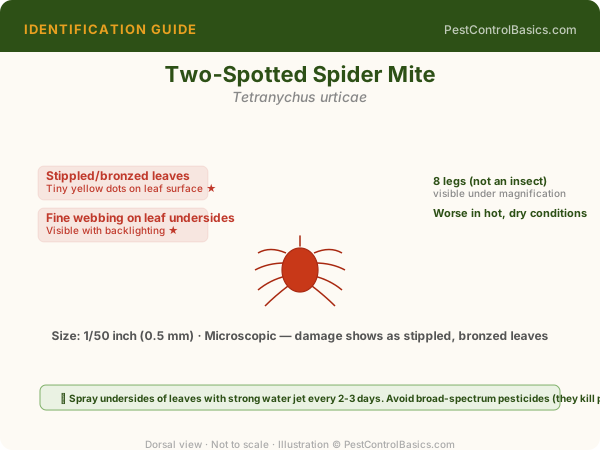
Original illustration by PestControlBasics.com. Use anatomical labels above to confirm your identification.
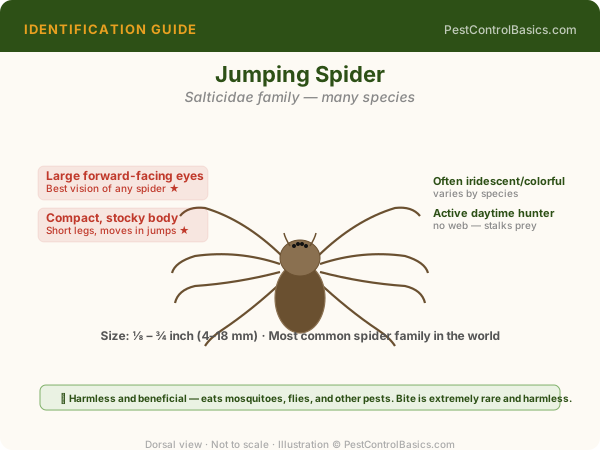
Original illustration by PestControlBasics.com. Use anatomical labels above to confirm your identification.
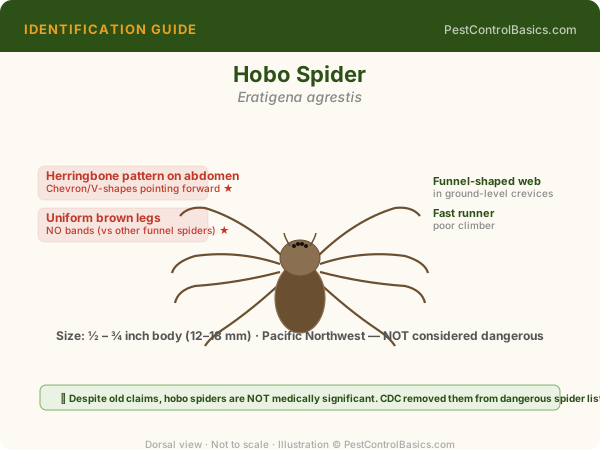
Original illustration by PestControlBasics.com. Use anatomical labels above to confirm your identification.
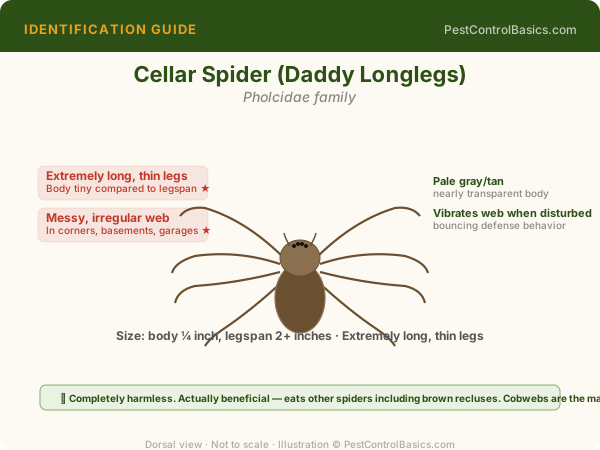
Original illustration by PestControlBasics.com. Use anatomical labels above to confirm your identification.
🔍 Identification
Two-spotted spider mite: 0.4mm; just visible to naked eye as tiny moving dots; two dark body spots. Fine silken webbing on leaf undersides and between leaves is the most visible sign. Stippled, bronzed, or yellow leaves from feeding punctures. Shake a leaf over white paper — mites fall off as tiny moving specks.
🧬 Biology & Behavior
Spider mites thrive in hot, dry, dusty conditions. Populations can double in 3-5 days in summer heat. Strong-knocking sprays of plain water remove and kill many mites. Broad-spectrum insecticides often worsen spider mite problems by killing predatory mites that naturally regulate them.
⚠️ Damage & Health Risk
Stippled, yellowing, bronzed foliage; defoliation in severe cases; fine webbing on leaves; reduced plant vigor and fruit quality; can kill heavily infested plants.
🔧 DIY Treatment
Strong water spray (removes mites and eggs). Horticultural oil or insecticidal soap applied to leaf undersides. Abamectin (Avid) for severe infestations. Bifenazate or spiromesifen. Introduce predatory mites (Phytoseiulus persimilis) in greenhouses. Avoid broad-spectrum insecticides that kill natural enemies.
👷 When to Call a Pro
Commercial greenhouses and orchards typically use predatory mite programs as primary management with chemical rotation for knockdown.