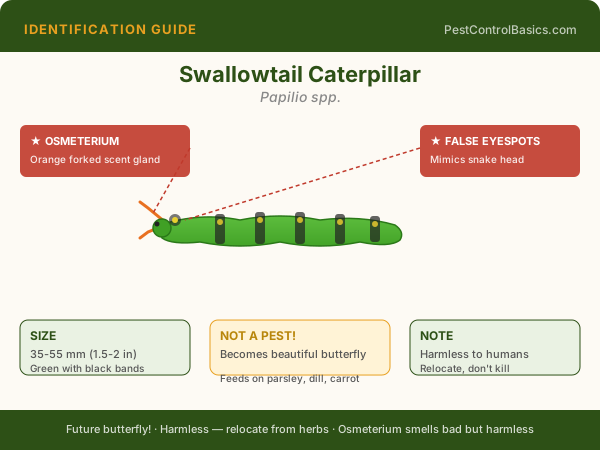
Illustrated identification guide — PestControlBasics.com
🔍 Identification
Early instars: black with white saddle (mimics bird droppings). Mature larvae: 40-50mm; bright green with yellow-spotted black bands; when disturbed, everts bright orange osmeterium (forked 'horn') behind head — emits a pungent smell to deter predators.
Hosts: carrot family plants (Apiaceae) — parsley, dill, fennel, Queen Anne's lace. Never found on unrelated plants.
🧬 Biology & Behavior
Larvae feed exclusively on carrot family plants. Adults are pollinators and prey for birds. The striking osmeterium display is pure bluff — no sting, no real toxin to humans. Complete metamorphosis: larva → chrysalis (green or brown depending on conditions) → adult butterfly.
⚠️ Damage & Health Risk
Minor defoliation of host plants — usually inconsequential. A large garden herb planting can support many larvae without serious damage. This is the most 'pesticide request' butterfly caterpillar by homeowners who don't recognize it.
🔧 DIY Treatment
Consider planting extra parsley/dill to support both your cooking and the caterpillars. If numbers are truly excessive on valuable plantings, relocate to wild carrot (Queen Anne's lace) nearby rather than killing them.
👷 When to Call a Pro
Never warranted — this is a beneficial butterfly in larval stage.