πŸͺ° Silverleaf Whitefly

Bemisia argentifolii / tabaci Β· Hemiptera: Aleyrodidae

Silverleaf whitefly has developed documented resistance to more pesticide active ingredients than almost any other insect pest. Here's what still works and why rotation is essential.

WhiteflyResistanceBemisiaSilverleafIRAC RotationGreenhouse
πŸͺ°
Risk Level
Resistant Agricultural Pest
πŸ“ FIELD GUIDE ILLUSTRATION
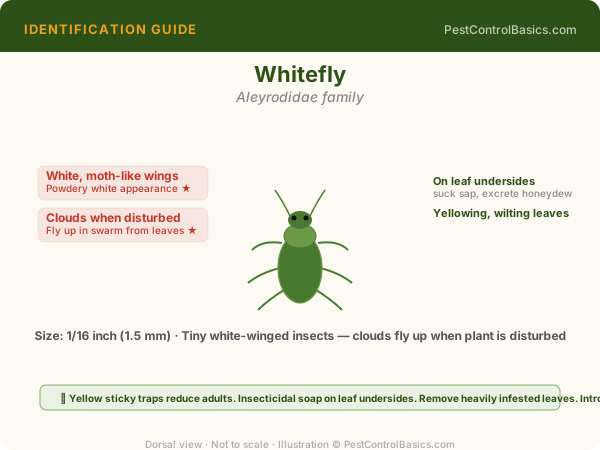
Whitefly (Aleyrodidae) identification illustration with labeled anatomical features β€” PestControlBasics.com

Original illustration by PestControlBasics.com. Use anatomical labels above to confirm your identification.

πŸ”¬
PestControlBasics Editorial Team
Reviewed by Derek Giordano Β· Updated 2026

πŸ” Identification

Adults: 1-1.5mm; white powdery wings; hold wings at angle (vs greenhouse whitefly which holds wings horizontal β€” the diagnostic difference). Nymphs: scale-like, pale yellow, on leaf undersides. Found on: tomato, pepper, cucumber, squash, melon, ornamentals, poinsettia (major problem in commercial production). Causes: direct feeding damage, honeydew and sooty mold, and critically, transmission of 100+ plant viruses β€” including tomato yellow leaf curl virus.

🧬 Biology & Behavior

Silverleaf whitefly (biotype B of Bemisia tabaci) is more damaging than greenhouse whitefly due to greater reproductive rate, wider host range, and ability to transmit geminiviruses. Documented resistance to organophosphates, carbamates, pyrethroids, and neonicotinoids in many populations β€” resistance management requires strict rotation of IRAC mode-of-action groups.

⚠️ Damage & Health Risk

Plant death from direct feeding; sooty mold on honeydew reducing photosynthesis; transmission of 100+ plant viruses; resistance to most available insecticides; billion-dollar losses in commercial vegetable and ornamental production.

πŸ”§ DIY Treatment

Rotation strategy: IRAC Group 4A (imidacloprid) β†’ 4C (sulfoxaflor) β†’ 23 (spiromesifen/Oberon) β†’ 13 (spirotetramat) β†’ back to 4A after 2 seasons. Yellow sticky traps for early detection. Botanical oils and insecticidal soap provide supplemental soft control. Never use the same IRAC group twice consecutively.

πŸ‘· When to Call a Pro

Commercial: Authorized distributor consultation for resistance management programs β€” current resistance profiling in your region determines which modes of action remain effective locally.

❓ FAQ

Why do whiteflies come back after I spray?
Silverleaf whitefly populations have developed resistance to many common products. If a product provides less than 90% mortality, the survivors carry resistance genes that are amplified in the next generation β€” populations become increasingly resistant with each application. Rotation to a completely different IRAC mode-of-action group is essential after any product failure.
What's the difference between silverleaf whitefly and greenhouse whitefly?
Wing position when resting: silverleaf whitefly holds wings at a steep angle (tent-like); greenhouse whitefly holds wings nearly flat. Silverleaf whitefly is more damaging due to virus transmission ability, greater reproductive rate, and wider pesticide resistance profile. If you're growing tomatoes or cucumbers in a greenhouse and have whitefly problems, assume silverleaf whitefly until proven otherwise.

πŸ“š More on This Topic

Related guides and profiles:

πŸ”— Fruit FlyπŸ”— House FlyπŸ”— πŸ› Whitefly β€” Species Guide & ControlπŸ”— πŸͺ° Drain Fly
πŸ“š Sources: EPA Safe Pest Control Β· NPMA Pest Guide
Published: Jan 1, 2025 Β· Updated: Apr 7, 2026

πŸ—ΊοΈ US Distribution β€” Silverleaf Whitefly

image/svg+xml
Common Occasional Not Present
States Present
49
Occasional
2
Primary Region
Continental US
πŸ“Š Source: University extension services, USDA, CDC vector data, and published entomological surveys.