Illustrated identification guide — PestControlBasics.com
🔍 Identification
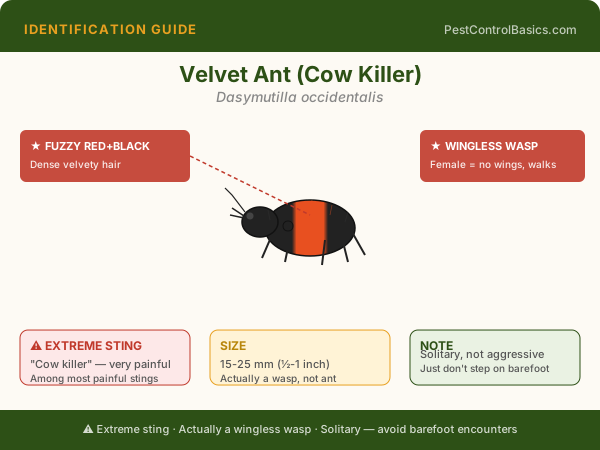
Females: wingless (they look like large ants); brilliant red/black or orange/black patterning; covered in dense 'velvet' hair; 15-20mm. Males: winged (they look like wasps), less commonly encountered. The red coloration is aposematic — warning coloration advertising the painful sting.
Found on the ground in open sandy areas, particularly in the southeast and central US.
🧬 Biology & Behavior
Female velvet ants are parasitoids of ground-nesting bees and wasps — they find bumblebee and ground bee nests, penetrate the cells, and lay eggs on the host larvae. Females are ground-foraging and solitary. Males fly and visit flowers. Adults feed on nectar.
⚠️ Damage & Health Risk
The sting: on the Schmidt Pain Index, cow killer ranks #3 of 4 — 'Bold and unrelenting. Somebody is using a drill to excavate your ingrown toenail.' Pain lasts 30 minutes. No colony means no mass attack risk. Single females wandering in your yard are the only encounter.
🔧 DIY Treatment
No treatment warranted or appropriate — velvet ants are beneficial parasitoids and population control of ground-nesting bees. If a single female is found indoors, capture in a jar and release outside. Do not attempt to pick up with bare hands.
👷 When to Call a Pro
Never warranted.