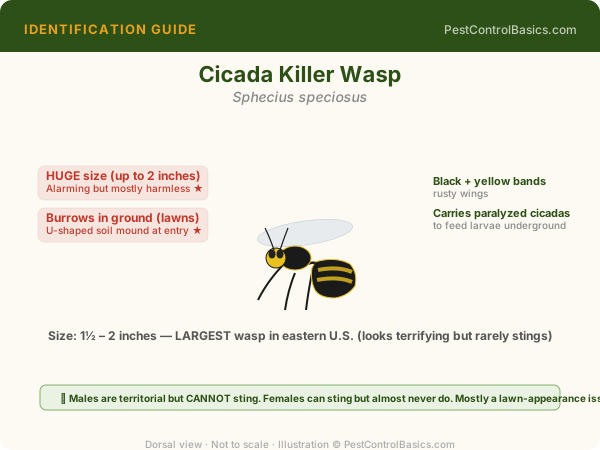
Original illustration by PestControlBasics.com. Use the labeled features above to confirm your identification.
🔍 Identification Photo
Use this photo to confirm your identification. Click to enlarge. Correct ID is the essential first step to effective treatment.
Cicada killer (Sphecius speciosus) — enormous (1.5 inches); solitary ground-nesting wasp; males cannot sting; females rarely sting unless handled
📷 Wikipedia / Wikimedia Commons / CC BY-SA⚠️ Photo loaded live from Wikipedia/Wikimedia Commons (CC BY-SA). Appearance varies by region, age, and sex. When uncertain, contact a licensed pest professional.
What cicada killers actually do
Female cicada killers hunt annual cicadas in trees and shrubs, stinging them to paralyze (not kill) them, then carrying or dragging them back to burrow entrances. The cicada is too heavy to fly with — females often laboriously climb vegetation to glide with their cargo, making multiple attempts to transport cicadas that may weigh twice as much as they do.
The burrow entrance (3/4 inch diameter hole with a kidney-shaped pile of excavated soil) leads to a series of cells, each provisioned with 1–3 paralyzed cicadas and a single wasp egg. The egg hatches, the larva feeds on the living cicada, and overwinters as a pupa to emerge the following July.
Males establish territories and aggressively patrol them — but they have no stinger. What appears to be aggressive posturing from a large "bee" is completely harmless display behavior. Males may hover within inches of your face or dive at your head. They cannot sting you. This is genuinely one of the largest differences between apparent threat and actual danger in North American insects.
When and how to treat burrow areas
For most homeowners, the correct answer is to do nothing. Cicada killers are temporary (active for 4–6 weeks in July–August), solitary, and ecologically valuable as cicada population controllers. They will not sting you or your children during normal outdoor activity.
If burrow numbers are high: Cicada killers prefer dry, sandy, or compacted soil with sparse vegetation cover. The best long-term deterrent is thickening the lawn in affected areas — dense turf with good grass coverage is unattractive for burrowing. Improve irrigation and overseed bare or thin lawn areas in fall.
Direct burrow treatment (if needed): Apply carbaryl or permethrin dust into burrow entrances at night using a puffer duster. Treatments are most effective when the female is inside provisioning. Seal treated burrows with soil after 48 hours.