🐝 Velvet Ant (Cow Killer)

Dasymutilla occidentalis Β· Hymenoptera: Mutillidae

The velvet ant is one of the most striking insects you'll encounter β€” brilliant red and black, covered in dense velvet-like hair, and in possession of a stinger that's earned the common name 'cow killer.'

WaspSolitaryStingerBeneficialHymenopteraVelvet Ant
🐝
Risk Level
Painful Stinger
πŸ”¬
PestControlBasics Editorial Team
Reviewed by Derek Giordano Β· Updated 2026
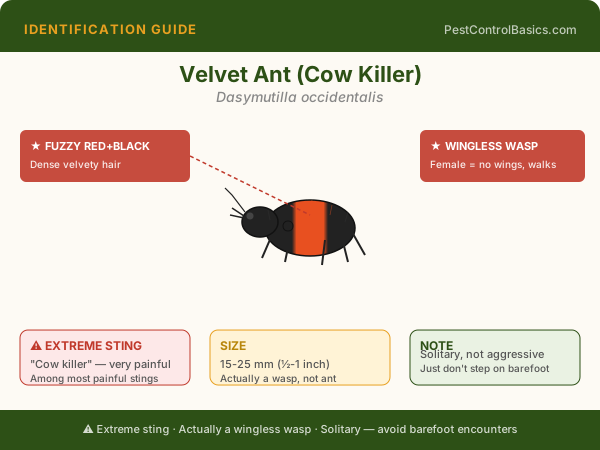
Velvet Ant identification guide illustration

Illustrated identification guide β€” PestControlBasics.com

πŸ” Identification

Females: wingless (they look like large ants); brilliant red/black or orange/black patterning; covered in dense 'velvet' hair; 15-20mm. Males: winged (they look like wasps), less commonly encountered. The red coloration is aposematic β€” warning coloration advertising the painful sting.

Found on the ground in open sandy areas, particularly in the southeast and central US.

🧬 Biology & Behavior

Female velvet ants are parasitoids of ground-nesting bees and wasps β€” they find bumblebee and ground bee nests, penetrate the cells, and lay eggs on the host larvae. Females are ground-foraging and solitary. Males fly and visit flowers. Adults feed on nectar.

⚠️ Damage & Health Risk

The sting: on the Schmidt Pain Index, cow killer ranks #3 of 4 β€” 'Bold and unrelenting. Somebody is using a drill to excavate your ingrown toenail.' Pain lasts 30 minutes. No colony means no mass attack risk. Single females wandering in your yard are the only encounter.

πŸ”§ DIY Treatment

No treatment warranted or appropriate β€” velvet ants are beneficial parasitoids and population control of ground-nesting bees. If a single female is found indoors, capture in a jar and release outside. Do not attempt to pick up with bare hands.

πŸ‘· When to Call a Pro

Never warranted.

❓ FAQ

Is the velvet ant actually an ant?
No β€” velvet ants are actually wasps (Mutillidae family). The females are wingless, which makes them look like large ants. The bright coloration and fuzzy appearance are distinctive once seen. Only females sting; males are winged and can't sting.
Do velvet ants actually kill cows?
No β€” the 'cow killer' name is folklore based on the intensity of the sting. While the sting is extremely painful, it's not medically dangerous to healthy humans or livestock. The name reflects the perceived severity, not actual lethality.

πŸ—ΊοΈ Geographic Range & Distribution

FactorDetails
U.S. RangeAll 50 states
Regional DetailFire ants limited to Southeast/Southwest. Carpenter ants: Northeast and Pacific Northwest. Pavement ants: nationwide. Argentine ants: California and South.

πŸ“… Treatment Timing Guide

Treating at the right time dramatically improves results. Pest control timed to the life cycle uses less product and achieves better long-term control.

PeriodAction
February–MarchApply perimeter treatment before spring colonies emerge.
June–AugustPeak foraging season β€” bait stations most effective now.
SeptemberPre-winter perimeter treatment to prevent fall invasions.

πŸ’° Professional Treatment Costs

Service TypeDIY CostProfessional Cost
Initial inspectionFree (self-inspect)$75–$150 (often credited to treatment)
One-time treatment$30–$100 in materials$150–$500
Annual service contractN/A$400–$900/year
Severe infestationOften ineffective alone$500–$2,500+

Prices vary by region, property size, and infestation severity.

❓ Common Questions About 🐝 Velvet Ant (Cow Killer)

How do I confirm I actually have this pest (not something similar)?
The most reliable confirmation is a physical specimen β€” capture one and compare to reference images on this page. For cryptic pests (bed bugs, termites), look for secondary signs: frass, shed skins, mud tubes, or bites with a specific pattern. When uncertain, a professional inspection is faster than months of misidentification.
Can I treat this myself or do I need a professional?
DIY is effective for small, accessible infestations caught early. Professionals are worth the cost when: the infestation is inside wall voids or structural elements, multiple rooms are affected, you have health-risk pests (hantavirus, venomous species), or DIY has already failed twice.
How long until the infestation is completely gone?
Expect 3–8 weeks for most infestations with proper treatment. Insects with dormant life stages (pupae, eggs) extend the timeline because those stages are impervious to most insecticides. Follow-up treatments at 2 and 4 weeks catch each new cohort as they emerge.
What's the most common mistake people make treating this pest?
Treating only the visible pest population while ignoring the harborage site, entry point, or breeding location. Killing adults provides temporary relief but the population rebuilds from hidden egg cases, pupae, or new arrivals through unaddressed entry points.
πŸ“š Sources: Texas A&M Fire Ant Project Β· EPA Safe Pest Control
Published: Jan 1, 2025 Β· Updated: Apr 7, 2026

πŸ—ΊοΈ US Distribution β€” Velvet Ant

image/svg+xml
Common Occasional Not Present
States Present
14
Occasional
11
Primary Region
Southeast US
πŸ“Š Source: University extension services, USDA, CDC vector data, and published entomological surveys.